Learning to read and memorize the Quran presents unique hurdles for non-Arabic speakers, from unfamiliar sounds to complex rules of recitation and recall. These Islamic Quran memorization and recitation challenges span pronunciation, rhythm, connection rules, and the struggle to retain verses with meaning.
For a non-Arabic speaker, the journey of learning the Quran is noble, but it’s also uniquely tough. The sounds, the script, the structure of memorization—it can feel overwhelming, like a mountain you’re not sure how to climb.
I want to tell you one thing first: What you are feeling is completely normal. This struggle isn’t a sign of failure; it’s a sign that you’re tackling something truly profound. The challenges are real, but they are not unbeatable.
Let’s walk through them together, one step at a time.
The First Quran Reading Challenge You’ll Face is New Sounds
The very first barrier isn’t the script; it’s the phonetics. Arabic has several sounds that simply do not exist in the English language, and your tongue and throat are not yet trained to produce them.
The ‘Ayn (ع) and ‘Haa’ (ح) Hurdle
I often see students substitute the letter ‘Ayn (ع) with a simple ‘A’ sound, or the ‘Haa’ (ح) with a regular ‘H’ like in “house.”
This is because these sounds are not made in the mouth; they originate deep in the throat.
The ‘Ayn is a constriction in the middle of your pharynx, and the ‘Haa’ is a breathy, unvoiced sound from the same area.
It feels unnatural because it is unnatural… for an English speaker.
My advice is to stop thinking of it as a letter and start feeling it as a physical exercise. Place your hand on your throat, listen to a native speaker pronounce it, and try to mimic the vibration and the source of the sound.
This takes time. Be patient with your muscles; they are learning a new form of gymnastics.
The same applies to the heavy ‘Qaf’ (ق), which comes from the very back of the soft palate, far behind the English ‘K’.
Read Also: How to Improve Quran Recitation Voice?
1. Heavy vs. Light Letters are Critical Quran Reading Challenges
Once you start mastering the individual letters, you’ll encounter the next major hurdle: the concept of Tafkheem (heavy/full mouth) and Tarqeeq (light/empty mouth).
This is a Quran reading challenge that can change the entire meaning of a word.
In English, the letter ‘S’ is just ‘S’. But in Arabic, you have a light ‘Seen’ (س) and a heavy ‘Saad’ (ص). ‘Seen’ is pronounced with a smile, your tongue flat.
‘Saad’ is pronounced by raising the back of your tongue, creating a fuller, rounder sound, as if your whole mouth is heavy. The same goes for ‘Taa’ (ت) versus the heavy ‘Taa” (ط).
Many students struggle to hear the difference at first, let alone produce it. This is where you absolutely need a feedback loop.
You must practice with a teacher or a skilled partner who can stop you and say, “That was a ‘Seen,’ I need a ‘Saad’.” This isn’t just about an accent; it’s about the integrity of the words you’re reciting.
This kind of dedicated, one-on-one correction is exactly what our Learn Quran with Tajweed programs are built for. It’s nearly impossible to hear your own mistakes with these letters; you need a trained ear to guide you.
Enroll Now in Quranica’s Tajweed Course
2. The Vowel Length Quran Reading Challenge for Learners
In Arabic, changing the length of a vowel can change the entire meaning of a sentence. A simple fatha (a short ‘a’ sound) is one “beat.” A fatha followed by an Alif (a long ‘aa’ sound) is two “beats.”
When reciting, this is not optional. Stretching a short vowel or cutting a long vowel short is a significant error. I’ve heard students accidentally change a statement into a question, or change a name of Allah, simply by not holding the vowel for its correct length (this is called Madd).
Your first step is to listen to a skilled Qari (reciter) and tap your finger to the “beats.” Hear the short, quick vowels and the long, flowing ones. You must train your ear to recognize the rhythm before you can expect your mouth to produce it.
Read Also: How to Recite Quran?
3. The “Connecting” Hamza is Another Quran Reading Challenge
As you get more confident, you’ll want to read continuously instead of one word at a time. And that’s when you’ll run into the Hamzat al-Wasl (ٱ), that little ‘Saad’ shape on top of an Alif. Students freeze. “Do I pronounce it or not?”
I call this the “bridge” Hamza. The rule is simple: if you start reading from that word, you pronounce the Hamza (usually as an ‘A’ or ‘I’).
But if you are connecting it from the word before, the Hamza becomes silent, and you just “bridge” right over it. Think of the phrase “Bismillah-ir-Rahman-ir-Raheem.”
You don’t say “Bismillah al Rahman.” The *al-*Hamza disappears, and the ‘i’ from ‘Bismillah’ flows right into the ‘r’ of ‘Rahman’.
This challenge is really about shifting your mindset. You must stop seeing words as isolated blocks and start seeing them as links in a chain. This is the key to fluent recitation.
4. The Quran Recitation Challenge of Pausing and Stopping
A common hurdle I see is the fear of stopping. Students learning to read often feel they have to get through an entire ayah (verse) in one breath.
This leads to them rushing, making mistakes, and running out of air.
Here’s a vital piece of advice I give everyone: the Quran is meant to be read with Tarteel (slow, measured recitation), not speed.
It is perfectly acceptable, and often recommended, to stop at the appropriate signs (like the small م, قلى, or ج). Even if there is no stop sign, it is better to pause on a complete word than to rush and distort the meaning.
The goal is clarity and reflection, not a race. Learning where to stop gracefully is a skill in itself, one that ensures both the sound and the meaning of the Quran are preserved.
5. The Shaddah (ـّ) is a Quran Recitation Challenge That Needs Practice
Ah, the Shaddah. This little symbol is one of the most persistent Quran reading challenges for new students.
In English, we might have double letters in writing (like “letter”), but we only pronounce one. The Shaddah is different. It signifies a doubled consonant, meaning you have to pronounce the letter twice.
The mistake I hear most often is one of two things: either the student ignores it (reading “Rabi” instead of “Rab-bi”) or they add a full stop (reading “Rab…bi”), which breaks the flow.
The correct way is to “lean” on the letter. You must first “land” on the letter with a sukun (a stop) and then immediately pronounce the letter with its vowel.
For example, in the word “إِيَّاكَ” (Iyyāka), you aren’t saying “I-ya-ka.” You are saying “Iy-yā-ka,” merging the “y” sound from the end of the first syllable into the “y” sound at the beginning of the next.
It’s a seamless, emphasized sound. This requires practice to make it feel natural and not like a hiccup.
6. Mastering the “Bounce” in Your Quran Recitation
When these five letters ق, ط, ب, ج, and د have a sukun, they must “bounce.” This is called Qalqalah (echoing).
The challenge is twofold.
First, students don’t do it at all, and the letter’s sound gets “swallowed.”
Second, and more commonly, they overcompensate and “bounce” it with a vowel.
For instance, in “أَحَدٌ” (Ahad), when stopping, they’ll say “Ahad-uh” or “Ahad-eh.” This is incorrect.
The Qalqalah is a subtle, quick rebound, an echo without an accompanying vowel. It’s a very precise sound that requires a trained ear and a lot of teacher correction.
7. Memorizing Without Meaning is a Fundamental Quran Memorization Challenge
This is, perhaps, the single greatest hurdle for a non-Arab student. You are working to memorize sequences of sounds that, at first, have no inherent meaning to you.
It’s like trying to memorize a long, random string of numbers. Your brain has nothing to “hook” the words onto.
An Arabic speaker hears a verse and can connect it to a story, a related word, or a grammatical structure they’ve known since childhood.
Your brain, however, is trying to remember “ka,” “la,” and “ma” purely by sound and order.
This is why a student can spend an hour memorizing a page, only to find it has vanished by the next day. The memory was shallow. To overcome this, you must integrate basic meaning into your Hifz.
Before you memorize a single verse, read a simple translation. Know the story. Are you memorizing a command? A description of Jannah? A dialogue between Musa (peace be upon him) and Pharaoh? You don’t need to be a scholar, but you must give your mind an anchor of meaning.
This is precisely why we often advise our Hifz students to simultaneously enroll in a Quranic Arabic or Online Quran Tafseer course. When the meaning clicks, the words stick. You’re no longer memorizing sounds; you’re memorizing a message.
Enroll Now in Our Online Tafseer Course
8. The Quran Memorization Challenge of Memorizing Your Mistakes
This is one of the most subtle and dangerous traps in Hifz, one I have to correct with students constantly. When you are just starting out, you are so focused on getting the words in the right order that you are not paying close attention to your recitation (Tajweed).
Here is the problem: your brain memorizes the sound and flow of what you practice. If you practice a verse for an hour with a pronunciation error—say, making a “heavy” letter “light,” or not performing a Ghunnah (nasalization)—you have not just memorized the verse. You have memorized the mistake.
The mistake becomes part of the “tune” in your head. Then, when a teacher finally corrects you, it’s not a simple fix. Your brain fights the correction because the wrong way now feels right. It is ten times harder to unlearn a memorized mistake than it is to learn it correctly the first time.
This is why I am insistent: do not memorize a single new verse until you have recited it perfectly to a qualified teacher. Your Hifz must be built on a correct foundation, or the whole structure will be faulty.
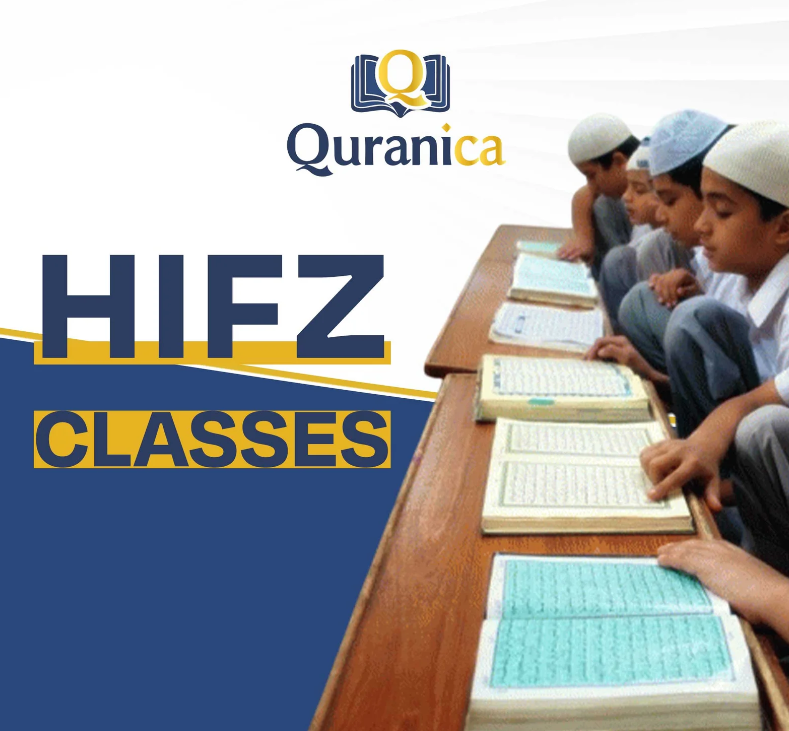
This non-negotiable principle is why our Quran Memorization and Hifz programs are so rigorous. We insist on pairing you with a qualified, Ijazah-holding tutor who will perfect your recitation before they let you memorize the error.
Enroll Now in Quranica’s Hifz program
9. The Great Quran Memorization Challenge of Similar Verses
As you progress, you will encounter the Mutashabihat—the “look-alike” verses. These are ayahs that are identical, or nearly identical, but appear in different parts of the Quran with slight variations.
You might memorize a verse in Surah Al-Baqarah perfectly, only to get to Surah Aal-‘Imran and find a verse that starts the same way but ends differently.
This is where the mind “crosses its wires.” You’ll be reciting one Surah and accidentally jump to the other.
This isn’t a failure of your memory; it’s a well-known technical challenge of Hifz. The solution is not just repetition; it’s precision. You must create a “trigger” for your brain. When you memorize these verses, you must actively note the difference.
Get a dedicated notebook. On one page, write the verse from Al-Baqarah. On the facing page, write the similar one from Aal-‘Imran.
Circle the exact point of difference (e.g., “in this one, it says ‘wa’ and in this one it doesn’t”). Reviewing these ‘look-alikes’ side-by-side is a specific skill you must develop.
Learn how to make your child memorize Quran.
10. Retention is Another Quran Memorization Challenge
It is a common sight: a student who is brilliant at new memorization but poor at retention.
They can memorize a new page every day. But if you ask them to recite the page they learned last week, it’s shaky. If you ask for the page they learned last month, it’s gone.
This is the “leaky bucket” syndrome. You are pouring new water into a bucket that has holes. Your new Hifz is pushing out your old Hifz.
Revision is not part of Hifz. Revision is Hifz. Your “new” memorization is only the first, easiest step. The real work is the daily, grinding, but ultimately beautiful work of revision.
You must dedicate more time to reviewing your old portions than you do to learning your new lesson.
If you memorize 20 minutes a day, you must review 30, 40, or even 60 minutes a day. Your old Hifz is the foundation, and if the foundation cracks, the entire building will fall. This is the difference between someone who “memorized” the Quran and someone who is a Hafidh (a preserver) of the Quran.
Start Your Quranic Path Today with Quranica
The challenges we’ve discussed—from the elusive ‘Ayn to the “leaky bucket” of revision—are real. But I want to assure you again that they are not walls; they are simply hurdles you can clear with the right partner.
At Quranica, we’ve built our entire platform to be that partner, specializing in the unique struggles of non-Arab learners. We don’t just teach the Quran; we teach you.
Our strength is our people. Your instructors aren’t just native Arabic speakers; they are:
Al-Azhar Graduates
Many are graduates of Al-Azhar University, holding degrees in Islamic Studies, Arabic Language, and Quranic Sciences.
Ijazah-Holders
They are certified masters of recitation, holding an Ijazah (a license to teach) with an unbroken chain of transmission back to the Prophet (PBUH).
Experts in Teaching Non-Arabs
They are trained specialists who know the common pitfalls for English speakers. They have the precise techniques to help you master throat letters, perfect your Madd, and finally grasp the beauty of the Quran.
- Master the beautiful pronunciation with Learn Quran with Tajweed
- Unlock the profound wisdom in our Tafseer Course
- Build a rock-solid foundation with Islamic Studies
- Or achieve the ultimate goal of Quran Memorization
Explore our full range of courses.
Book your free evaluation class and start your first real lesson today.
Conclusion
Mastering Quranic recitation begins with learning new sounds, distinguishing heavy and light letters, and understanding how vowel length shapes meaning. Skills like handling the connecting Hamza, pausing correctly, applying Shaddah, and producing subtle Qalqalah all require time, repetition, and corrective feedback.
Memorization adds its own layer of difficulty, especially when verses feel like unfamiliar sounds or when similar ayahs appear across different Surahs. Building a connection to meaning, keeping a comparison notebook for look-alike verses, and avoiding the trap of memorizing mistakes all strengthen long-term accuracy.
True Hifz depends not only on learning new pages but on protecting old portions through consistent revision. With patient guidance, structured practice, and an understanding of these common challenges, learners can gradually transform their recitation into something steady, clear, and deeply rooted.

0 Comments