Helping a child master Arabic pronunciation requires the right resources to decode the script. By utilizing sensory aids like color-coded Mushafs, digital reading pens, and interactive apps, parents can transform an intimidating struggle into an engaging, productive learning journey that builds confidence and accuracy.
Getting a seven-year-old to sit still is a challenge. Getting them to sit still and pronounce a throat letter like ‘Ain’ (ع)—which doesn’t even exist in their native English language—is a whole other level of parenting.
A parent hands their child a standard, black-and-white Mushaf, asks them to recite, and watches as the child’s eyes glaze over.
The kid is trying, but the text looks like a wall of intricate lines, and the sounds feel impossible to mimic.
You need the right strategy. And often, that strategy comes down to the equipment you are using.
1. Essential Physical Quran Learning Tools For Kids
For an English-speaking child, the Arabic script is purely visual art until they learn to decode it. If the page is intimidating, the brain shuts down.
Color-Coded Tajweed Mushaf
The most critical tool you can invest in is a Color-Coded Tajweed Mushaf.
A color-coded Mushaf acts like a traffic light system for your child’s brain. It separates the pronunciation rules from the letters themselves.
For example, when they see red, they know to “stop and stretch” (Madd). When they see green, they know to make a nasal sound (Ghunnah).
This bypasses the need to intellectually remember every rule while struggling to read. It becomes a reflex.
We, at Quranica, have seen students who struggled for months with Ikhfa (hiding the ‘N’ sound) suddenly get it because they stopped looking for the rule and just followed the color.
Read Also: How Long Does It Take To Learn The Quran?
2. Interactive digital Quran learning tools for kids
We know many of us worry about screen time, but if we use screens for games, we should definitely use them for Deen.
The trick is using technology that encourages production, not just passive consumption.
A. Quran Reading Pen
One of the best investments for a non-Arab household is a Quran Reading Pen.
Here is the specific problem it solves: You, the parent, might not be a Tajweed expert. When your child practices at home, who corrects them? If they practice a mistake for a week, that mistake becomes permanent (we call this fossilized error).
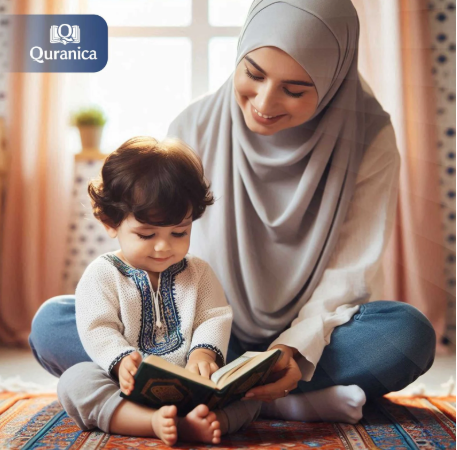
A Quran pen allows the child to point at a specific Ayah—or even a specific word—and hear it recited perfectly.
The key is to use the “Repeat” function. Have your child listen to a difficult word, pause, say it, and then listen again. It acts as a tireless teacher that never gets frustrated with repetition.
However, there is one thing a digital pen cannot do: it can’t look at your child and say, ‘Hey, lift your tongue a little higher.’ It can model the sound, but it can’t fix the mouth position. That’s the gap we fill in our Tajweed for kids classes. We don’t just listen; we watch and correct the mechanics of the mouth so the mistake doesn’t happen again.
Enroll Your Child Now in Quranica’s Tajweed Course for Kids
B. Audio-Looping Apps
You should also look for Audio-Looping Apps. There are many out there, but the feature you strictly need is the ability to select a range of verses and loop them indefinitely.
For Hifz (memorization), the brain needs rhythmic repetition. An app that plays Ayah 4-5 twenty times to your child is where the memorization happens.
Read Also: Quran Learning Games
3. Visual Quran learning tools for kids to fix pronunciation
English speakers have a very “forward” mouth placement. They speak with their lips and the front of their mouth.
Arabic, however, uses the throat and the back of the tongue heavily. This is why your child struggles with heavy letters like Sad (ص) versus light letters like Sin (س).
A. Articulation Point (Makharij) Flashcards
To fix this, you need Articulation Point (Makharij) Flashcards. Don’t just get cards with the letter on them. Get the ones that show a diagram of the head and where the tongue should be.
Show your child the picture: “See how the back of the tongue goes up for the heavy letter? Let’s try to make our tongue look like that.” It turns an abstract sound into a physical target.
B. Tajweed Rule Chart
Another massive help is a Tajweed Rule Chart placed right at their eye level where they pray or practice.
“وَرَتِّلِ ٱلْقُرْءَانَ تَرْتِيلًا”
“Wa rattili al-qur’ana tartila”
“And recite the Qur’an with measured recitation.”
Allah commands us to recite with distinct, measured clarity. A chart acts as a cheat sheet.
When your child forgets what the small ‘meem’ symbol means, they shouldn’t have to close their Mushaf and ask you.
They can glance at the wall, see the symbol on the chart, and self-correct. This builds independence.
Read Also: How to Learn Reading Quran?
4. Auditory Quran learning tools for kids for better listening
We have to talk about the sound environment. The easiest way to ruin a child’s confidence is to force them to mimic a reciter with a deep, adult voice and a breathless pace. It’s physically impossible for their small lungs to keep up.
Playlist of “Teacher” (Muallim) Recitations
The best tool here is a curated playlist of “Teacher” (Muallim) Recitations.
Specifically, look for recordings of Sheikh Al-Minshawi with the Children. This is the gold standard. In these recordings, the Sheikh recites, and a chorus of children repeats after him.
Why is this a “tool” and not just listening? Because of the psychology involved. When your child hears another child’s voice reciting correctly, the subconscious barrier breaks down. They realize, “Oh, a kid sounds like that. I can do that.” It removes the intimidation factor.
Use a simple Bluetooth speaker dedicated only to this. Keep it in the living room. Play it at low volume in the background.
You aren’t forcing them to sit and listen; you are familiarizing their ear with the cadence of the Quran. Over time, they will start humming verses while doing other things—that is the first step to solid memorization.
5. Motivational Quran Learning Tools for Kids to Keep Them Going
The excitement of a new Mushaf wears off after about three days. That’s when you need tools designed purely for psychological momentum.
For a non-Arab child, the “reward” of understanding the Arabic isn’t immediate, so we need to externalize the progress.
A. Visual Progress Trackers
Forget the standard checklist where you just tick a box. Use a “Color-in Tracker.” This is a chart where every Surah is represented by a shape (like a flower or a star) divided into segments.
When the child memorizes a verse, they don’t just check it off; they color it. This turns a boring task into an art project.
We’ve seen kids push to memorize three extra verses just because they wanted to finish coloring a specific flower on their chart. It gives them a visual “win” that they can see from across the room.
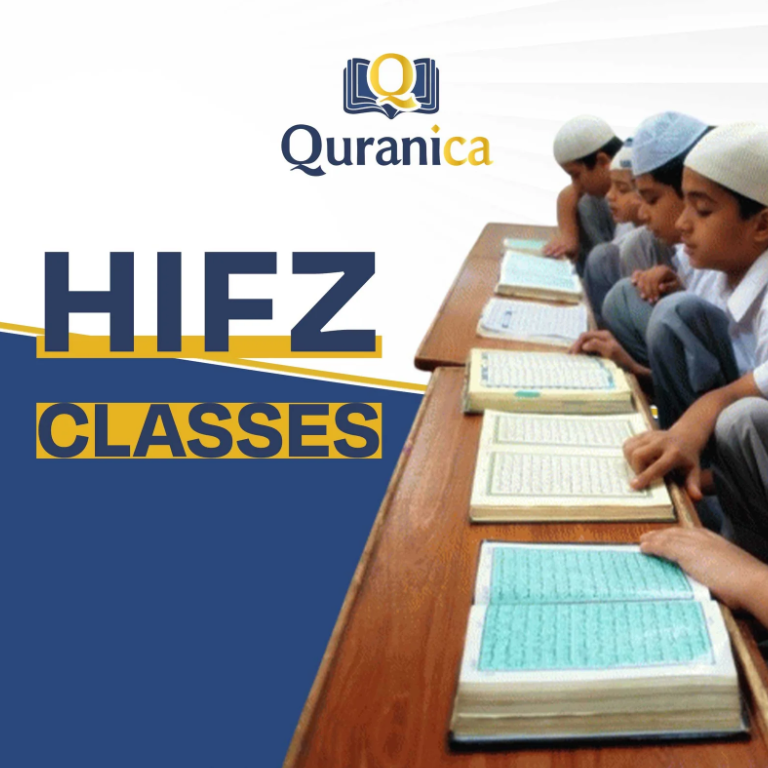
Charts are great for tracking, but the real fuel for memorization is accountability. A child is much more likely to finish their revision if they know their favorite teacher is waiting to hear it. In our Quran Hifz classes for kids, we combine these visual trackers with a supportive mentorship that keeps the momentum going, even on days when they don’t feel like practicing.
Enroll Your Kid Now in Quranica’s Hifz classes for Kids
B. “Streak” Based Apps
If you are using apps, look for ones that prioritize “Streaks” over volume. This is the Duolingo effect applied to Quran. The goal isn’t to read one Juz today; it’s to not break the 40-day chain.
Tools like Quran Companion or similar tracking apps use this psychology well. It shifts the focus from “I have to do this hard task” to “I don’t want to lose my number.”
6. Environmental Quran Learning Tools For Kids
If your child tries to memorize in front of the TV or in a messy playroom, they are fighting a losing battle against distraction.
The “Quran Corner” Setup
You don’t need a spare room. You just need a dedicated 4×4 foot space that signals to the brain: It is time to focus.
Lighting
Invest in a warm, dedicated reading lamp. It spotlights the Mushaf and naturally dims the distractions around them.
The Book Stand
A book stand does two things: it treats the Quran with respect (adab), and physically, it improves posture.
When a child hunches over a book on their lap, their diaphragm is compressed, making breath control—and therefore Tajweed—much harder. A book stand keeps the chest open.
Learn how to make your child memorize the Quran.
7. Reflective Journaling Tools For Kids (Pre-Teens & Teens)
As your child hits 10 or 11, the challenge shifts. It’s no longer just about pronunciation; it’s about relevance. “Why am I reading this?” becomes the big question.
Tadabbur (Reflection) Journal
At this stage, a Tadabbur (Reflection) Journal becomes the most powerful tool in your arsenal.
You aren’t looking for a diary. You want a structured journal that asks simple questions like:
- “What is one word in this Surah that stood out to you?”
- “How can this verse help me at school tomorrow?”
For a non-Arab teen, the gap between reading Arabic and understanding the message is huge. A journal bridges that gap.
It forces them to slow down and look at the translation. It turns the Quran from a book of sounds into a book of guidance.
This creates a safe space for them to ask ‘Why?’. If you see your pre-teen asking deep questions about the meanings, don’t let that curiosity fade. It’s the perfect time to introduce them to Islamic studies for kids. We take those questions seriously and help them connect the Quran’s values to their daily life in school and at home.
Enroll Your Kid Now in Quranica’s Islamic Studies for Kids program

8. Educational Board Games As Quran Learning Tools For Kids
We often treat Quran learning as a solitary, serious act. But for kids, play is their primary language. If you can introduce the Quran into their Friday night family game time, you change their relationship with the Book from “homework” to “bonding.”
A. Quran board games
There are excellent Quran board games available now (like Quran Challenge or 5 Pillars) that test knowledge in a low-stakes environment.
Why is this a “learning tool”? Because it breaks the fear of being wrong. In a classroom, getting an answer wrong feels embarrassing.
In a board game, getting an answer wrong just means you don’t get the token. It keeps the mood light.
B. Arabic Alphabet Matching Games
For younger kids, look for Arabic Alphabet Matching Games. These are essentially standard “memory” card games but with Arabic letters.
It builds visual recognition speed. If a child can spot a ‘Thal’ (ذ) instantly in a game, they won’t stumble over it when reading a Surah.
Invest in a Caring and Dedicated Teacher for Your Child
You can buy all the gadgets in the world, but nothing replaces a compassionate teacher who smiles when your child gets it right and patiently corrects them when they struggle.
At Quranica, we don’t just hire “tutors.” We connect your child with role models.
Why parents trust Quranica for their non-Arab children:
Our teachers are native Arab speakers and graduates of Al-Azhar University. They don’t just know the text; they know the science behind it.
They hold Ijazah (licenses) to teach the Quran, ensuring your child learns the authentic recitation passed down through generations.
We have years of experience specifically with non-Arab children. We know how to bridge the language gap and make Arabic sounds approachable, not scary.
Give your child the best start Now?
Don’t just take our word for it. Let your child experience the difference of a professional, caring teacher.
Explore our most popular paths for children:
- Build the Foundation: Qaida Noorani for Kids or Learn Arabic for Kids.
- Commit to Memory: Quran Hifz Classes for Kids or Juz 30 Memorization.
- Understand the Deen: Islamic Studies for Kids and Five Pillars of Islam for Kids.
Explore our full range of courses.
Conclusion
Success in Quranic education begins with resources that decode the language, such as color-coded scriptures that simplify Tajweed rules visually.
Pairing these with technology like smart reading pens and audio-looping apps ensures children receive consistent, accurate correction and the rhythmic repetition necessary for lasting memorization.
Beyond digital aids, physical tools like articulation flashcards and proper book stands address the physiological challenges of Arabic pronunciation while protecting posture.
Sustaining this effort requires a distraction-free dedicated space and visual progress trackers that turn daily practice into a rewarding, visible achievement rather than a chore.





0 Comments