Dua after reading Quran is not just a beautiful habit—it is the moment when your heart is most open, your soul is most present, and your connection with Allah is at its strongest. After finishing recitation, the Quran leaves a spiritual echo in your heart, and making dua at this time is one of the most powerful ways to seal your reading with blessing, understanding, and acceptance.
Many Muslims read the Quran but miss this precious opportunity to turn recitation into transformation. The dua after reading the Quran helps you ask Allah to make His words light in your heart, guidance in your life, and proof in your favor on the Day of Judgment. It is the moment where knowledge becomes action, and recitation becomes living guidance.
For non-Arabic speaking Muslims, this dua is especially important. Even if you struggle with Arabic, your sincerity, presence, and intention matter more than perfect words. In this article, you will learn the authentic dua after Quran recitation, its meaning in English, when to say it, and how to make it part of your daily Quran routine.
If you want your Quran reading to change you—not just comfort you—then never close the Mushaf without dua. This guide will show you exactly how to end your Quran reading
In a nutshell: After completing a Quran recitation, Muslims turn to heartfelt dua (supplication) as a spiritual response to Allah’s words. This moment of reflection expresses gratitude, seeks acceptance, and asks for transformation through the Quran’s light and guidance. These post-recitation prayers connect worshippers to divine mercy, knowledge, and lasting spiritual growth.
There is a unique quiet that settles in the heart after you read the last ayah and gently close the Mus’haf. It is a moment of profound peace, a feeling of completion, and the lingering warmth of having been in conversation with your Lord.
But as that stillness settles, another feeling often follows: a whisper of vulnerability.
Was my recitation correct? Was my heart truly present? O Allah, please accept this flawed and humble effort.
This moment is not an end. It is the second half of the worship. The supplication after reading is just as vital as the one before. It is the act of sealing your worship, turning to Allah with gratitude, and pleading for acceptance.
Why We Conclude Our Recitation with Dua
Reading the Quran is a profound act of worship. The dua that follows is your personal response to the divine message you’ve just received. It’s a moment for:
1. Dua After Reading Quran for Gratitude (Shukr)
To thank Allah for the immense privilege of being able to read His words. Not everyone is given this key, this ability to connect so directly.
2. Dua After Reading Quran for Seeking Acceptance (Qubool)
To humbly ask Allah, “O my Lord, please accept this recitation from me. Accept my effort, forgive my mistakes in pronunciation, and overlook my mind’s wandering.”
3. Dua After Reading Quran for Asking for Transformation
This is the most critical part. We ask that the Quran doesn’t just remain on our tongues, but that it enters our hearts, illuminates our lives, and becomes a Hujjah (proof) for us, not against us, on the Day of Judgment.
A Beautiful Dua After Reading Quran in Arabic
This dua is a complete conversation in itself. It encompasses gratitude, a plea for mercy, and a request for guidance through the Quran.
اللَّهُمَّ ارْحَمْنِي بِالْقُرْآنِ، وَاجْعَلْهُ لِي إِمَامًا وَنُورًا وَهُدًى وَرَحْمَةً. اللَّهُمَّ ذَكِّرْنِي مِنْهُ مَا نُسِّيتُ، وَعَلِّمْنِي مِنْهُ مَا جَهِلْتُ، وَارْزُقْنِي تِلَاوَتَهُ آنَاءَ اللَّيْلِ وَأَطْرَافَ النَّهَارِ، وَاجْعَلْهُ لِي حُجَّةً يَا رَبَّ الْعَالَمِينَ.
“Allahummar-hamni bil-Qur’an, waj-‘alhu li imaman wa nooran wa hudan wa rahmah. Allahumma dhakkirni minhu ma nusitu, wa ‘allimni minhu ma jahiltu, war-zuqni tilawatahu aana-‘al-layli wa atraaf-an-nahaar, waj-‘alhu li hujjatan ya Rabbal-‘alameen.”
“O Allah, have mercy on me by the Quran, and make it for me a guide, a light, a guidance, and a mercy. O Allah, remind me of that which I have forgotten, teach me of that which I am ignorant, and grant me the ability to recite it during the hours of the night and the parts of the day, and make it for me a proof, O Lord of the Worlds.”
This beautiful dua after reading Quran in Arabic is a complete spiritual curriculum. You are asking for:
- Mercy, for the Quran to be the source of Allah’s mercy upon you.
- Guidance, for it to be your Imam (leader) and your light.
- Knowledge, for Allah to teach you, making you a true student in a lifelong Islamic Studies.
- Consistency, for the blessing of being able to return to it day and night, perhaps even in a Quran Memorization and Hifz program.
- Salvation, for it to be your Hujjah (proof) on the Day of Judgment.
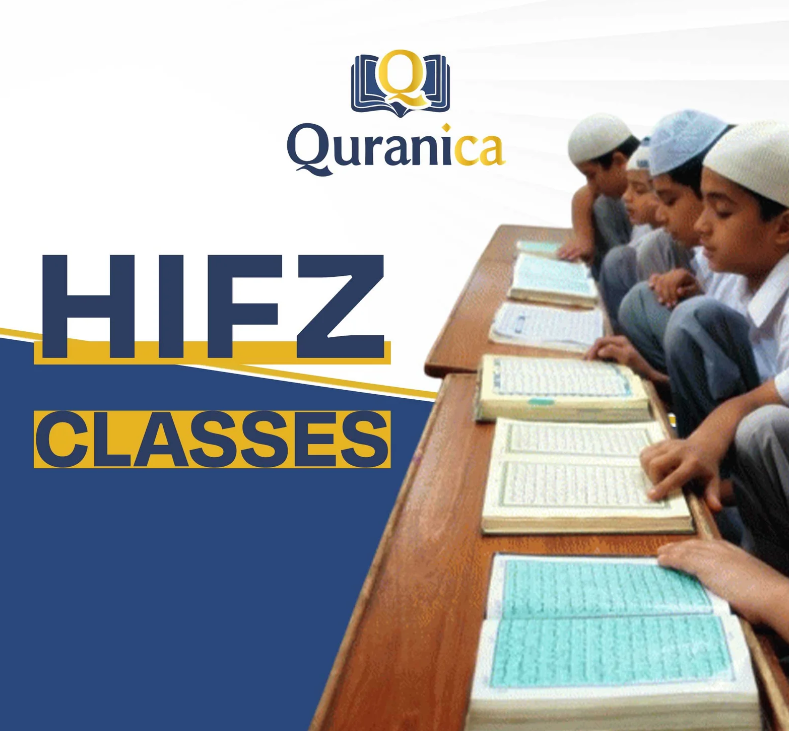
Enroll Now in Quran Memorization and Hifz programs
What To Say After Reading Quran
The words of the righteous before us often give voice to the exact feelings we have in our hearts.
Here are some of these profound duas that you can make your own, turning to Allah with your hands raised after you have closed His book.
“تقبل اللهم مني تلاوة القرآن واغفر زللي”
“Taqabbal-Allahumma minni tilawat-al-Quran waghfir zalali.”
“O Allah, accept from me the recitation of the Quran and forgive my slips.”
This is perhaps the most immediate and heartfelt plea. It is the humble acknowledgment that our effort was imperfect. Our minds may have wandered, or our tongues may have slipped.
“اجعل اللهم القرآن شفيعاً لي يوم ألقاك”
“Aj’al-Allahumma-l-Qur’ana shafi’an lee yawma alqak.”
“O Allah, make the Quran an intercessor for me on the Day I meet You.”
With this prayer, your focus shifts from the act of reading to the eternal outcome. You are asking for this Quran—this time you spent with it, the verses you struggled to learn, the chapters you committed to memory in a Quran Memorization and Hifz program—to be your shafi’.
“اللَّهُمَّ إِنِّي قَرَأْتُ بَعْضَ مَا قَضَيْتَ لِي مِنْ كِتَابِكَ… فَلَكَ الْحَمْدُ وَلَكَ الشُّكْرُ وَالْمِنَّةُ عَلَى مَا قَدَّرْتَ وَوَفَّقْتَ.”
“Allahumma inni qara’tu ba’da ma qadayta lee min kitabik… falakal-hamdu walakash-shukru wal-minnatu ‘ala ma qaddarta wa waffaqt.”
“O Allah, I have read some of what You have decreed for me from Your Book… So to You belongs all praise, all thanks, and all grace for what You have ordained and granted success in.”
This is a profound shift in perspective. It is the recognition that the ability to even open the Quran and read a single verse was not from our own power, but purely a gift of tawfiq (success) from Him.
It is an expression of pure, unadulterated gratitude, acknowledging that Allah is the one who destined this moment for you and gave you the ability to fulfill it.
“اجعلني اللهم ممن يُحِلُّ حلالكَ، ويُحَرِّمُ حرامكَ… واجعل القرآن شفاءً ورحمةً… وارفعني بكل حرفٍ دَرَسْتُهُ في أعلى عليين.”
“Aj’alni-Allahumma mimman yuhillu halalak, wa yuharrimu haramak… waj’alil-Qur’ana shifa’an wa rahmah… warfa’ni bikulli harfin darastuhu fee a’la ‘illiyin.”
“O Allah, make me among those who declares lawful Your halal and forbids Your haram… And make the Quran a healing, a mercy… and elevate me with every letter I have studied, to the highest ‘Illiyin.”
This is the ultimate goal. This dua connects recitation to implementation. You are pleading for the Quran to transform you, to make you a person who lives by its guidance.
Read Also: Rules for Reading and Reciting the Quran
The Most Powerful Dua After Reading Quran is Your Own
While the dua above is beautiful, do not let it be the only thing you say.
The moments just after you have finished reading the Quran are a special time when your heart is softened and open. Use this time to speak to Allah in your own language, with your own words.
You’ve just read His message to you. Now, give Him your reply.
- “O Allah, I just read Your words about patience; please grant me patience in my life.”
- “O Allah, Your verses about Paradise filled my heart with hope; please make me one of its people.”
- “O Allah, reading Your words brought me so much peace; please ease the anxiety in my heart.”
This is how the Quran becomes a living, breathing part of your life—a true companion.
Read Also: Dua Before Reading Quran
Start Your Blessed Quran Journey with Quranica
At Quranica, we understand the path of learning the Quran, especially for our non-Arab brothers and sisters.
Learn from native Arab teachers, many educated at the prestigious Al-Azhar University.
Our instructors have years of experience teaching Quran, Tajweed, Arabic, and Islamic Studies specifically to non-Arabs like you.
Many hold Ijazah, a traditional certification granting authority to teach the Quran with a direct chain back to the Prophet Muhammad (PBUH).
Whether you are taking your very first steps or seeking to deepen your understanding, we have a path for you:
- Start with the fundamentals in our Online Quran Classes for Beginners and Noorani Qaida.
- Perfect your connection to the Quran with Learn Quran with Tajweed.
- Tafsir Course to understand the deeper meanings of verses like these.
- Start the noble goal of memorization through Quran Memorization and Hifz programs.
- Islamic Studies Online Course to gain a broader understanding of your faith.
Explore our full range of courses.
Conclusion
The dua after reading the Quran is an intimate dialogue with Allah — a moment of gratitude for being granted the chance to recite His words and to seek His mercy and acceptance.
It turns reading into reflection, allowing the Quran to settle deeply within the heart.
Through various supplications, believers ask for forgiveness, guidance, healing, and elevation, linking their recitation to real-life transformation and spiritual accountability on the Day of Judgment.
Each dua reinforces the Quran’s role as a source of light, healing, and divine connection.The most powerful dua is the one spoken personally from the heart.
0 Comments