In a nutshell: Reading Quran comes with a set of spiritual and practical manners designed to prepare the heart, calm the mind, and honor the sacred text. These etiquettes shape how one approaches intention, purity, posture, and reflection. Together, they turn recitation into a meaningful encounter with divine guidance.
The manners and etiquette of reading Quran—its adab—aren’t just formalities. They are the keys that prepare our hearts to receive the message. They are acts of love and reverence that turn simple recitation into a living conversation with our Creator.
Let’s explore this framework, which is divided into the preparation of the heart, the conduct of the body, and the engagement of the soul.
1. A Core Quranic Etiquette is Renewing Your Intention
Before your fingers even touch the page, pause. Take a breath and check your heart.
Why are you reading quran? Is it for show, or to win an argument, or simply to pass the time? Or are you reading quran to seek Allah’s guidance, to find peace, to heal your heart, or simply to be in His company?
The Prophet (ﷺ) taught us, “Actions are judged by intentions.” A pure intention—reading solely for the sake of Allah—transforms the entire act. It changes it from a simple habit into a profound act of worship, one that will echo in your soul long after you close the Mushaf.
Bring Your Full Presence (Khushu)
Khushu is humble, focused concentration. This is your audience with the King. Put your phone on silent and in another room.
Find a quiet space. You wouldn’t check your notifications while in a meeting with a world leader, so how can we do so when engaging with the Lord of the Worlds? Give the Quran your undivided attention.
Read Also: Scientific and Spiritual Benefits of Reading Quran
2. Physical Purity is a Key Manner of Reading Quran
This is perhaps the most well-known manner of reading Quran. Before we recite from the Mushaf, we should be in a state of physical purity by making wudu (ablution).
This isn’t just about physical cleanliness. Wudu is a spiritual preparation. As you wash your limbs, you are also washing away the dust and distractions of the dunya (the world).
It’s a physical act that sends a powerful signal to your mind: “I am now entering a sacred state. I am preparing to meet with my Lord.”
Allah (SWT) tells us of the Quran’s protected nature:
“لَّا يَمَسُّهُ إِلَّا الْمُطَهَّرُونَ”
(Lā yamassuhū illal-muṭahharūn)
“None touch it except the purified.” (Al-Waqi’a 56:79)
While scholars have various interpretations of this verse, the spirit of it is clear. We should approach His words in our cleanest, purest state, both inwardly and outwardly.
This connection between physical acts and spiritual readiness is the beautiful essence of our Deen. Understanding why we do what we do—from Wudu to Salah—is a key part of that inner purity. It’s a journey of knowledge that we explore deeply in Quranica’s Islamic Studies course.
Enroll Now in Quranica’s Islamic Studies course

Read Also: Benefits of Reading Quran at Night, Morning, and at Fajr
3. Using the Siwak (Miswak) is Another Etiquette of Reading Quran
Before we speak to a king, we make sure we are presentable. Before we use our mouths to recite the words of Allah, it is a beautiful Sunnah to purify it.
The Prophet (ﷺ) loved the siwak and encouraged us to use it, especially before prayer and reciting the Quran.
He taught us that when a believer stands to pray (and recite) after using the siwak, an angel draws near to listen.
The angel draws so close that it places its mouth on the reciter’s mouth, and every word that comes out goes straight into the angel’s heart.
This beautiful manner cleanses the mouth and, more importantly, signifies our readiness to pronounce the purest of words.
4. Seeking Refuge is a Spiritual Etiquette Before Reading Quran
The Quran is a light, and Shaytan despises that light. The moment you decide to connect with Allah, he will try to fill your mind with distracting thoughts, sudden anxieties, or a feeling of heaviness.
That is why Allah (SWT) gives us a direct command:
“فَإِذَا قَرَأْتَ الْقُرْآنَ فَاسْتَعِذْ بِاللَّهِ مِنَ الشَّيْطَانِ الرَّجِيمِ”
(Fa’idhā qara’tal-Qur’āna fasta’idh billāhi minash-shaytānir-rajīm)
“So when you recite the Qur’an, [first] seek refuge in Allah from Satan, the expelled [from His mercy].” (An-Nahl 16:98)
Beginning with “A’udhu billahi minash-shaytanir-rajim” is like raising a spiritual shield. It is an acknowledgment that we are weak and that we cannot achieve this connection without Allah’s protection.
Read Also: Where to Stop While Reading The Quran? – Rules of Waqf and Ibtida
5. The Basmalah Is Not Recited At Surah At-Tawbah’s Beginning
A beautiful and essential etiquette for the reciter is to observe the Basmalah (saying “Bismillāhir-Rahmānir-Rahīm”).
This is the divine marker that separates the Surahs. The companions (RA) knew a Surah had ended and a new one begun when they heard the Prophet (ﷺ) recite it.
There is one exception: Surah At-Tawbah (also known as Bara’ah). The Basmalah is not recited at its beginning.
When the companions compiled the Mushaf, they were uncertain if Surah Al-Anfal and Surah At-Tawbah were two distinct Surahs or one long one, as the Prophet (ﷺ) passed away before clarifying this.
Placing the Basmalah would definitively separate them, while omitting it might imply they were one. They left it as we see it today, as a sign of their precise adherence to what they received.
A note on practice: Since the Basmalah is considered an ayah at the start of the Surahs, it is good practice to pause. First, seek refuge (“A’udhu billahi…”) and pause. Then, recite the Basmalah and pause. Then, begin the Surah. This gives each part its due respect.
If you are beginning your recitation from the middle of a Surah, the Isti’adha (seeking refuge) is sufficient.
6. The Manner of Beautiful Quranic Recitation (Tartil)
This is not a race. The goal is never to see how fast you can finish a juz’ or a surah. The goal is to let the Quran enter your heart.
Allah (SWT) commanded His beloved Prophet (ﷺ) to recite with tartil:
“وَرَتِّلِ الْقُرْآنَ تَرْتِيلًا”
(Wa rattilil-Qur’āna tartīlā)
“And recite the Qur’an with measured recitation.” (Al-Muzzammil 73:4)
Tartil means to recite slowly, clearly, and thoughtfully. But what did that sound like?
Umm Salamah (RA), the Prophet’s wife, described his recitation as “a reading that was clear, letter by letter.”
When Anas (RA) was asked about the Prophet’s (ﷺ) reading, he replied, “It was elongated.” He then demonstrated, reciting “Bismillāhir-Rahmānir-Rahīm,” elongating the “Bismillāh,” the “Rahmān,” and the “Rahīm” (with their natural madd).
Tartil is the key that unlocks Tadabbur (reflection). It is reciting in a way that allows the heart to be truly present and deeply moved.
This is why so many of us dedicate ourselves to learning the rules of Tajweed. It is not just about technical rules; it is the art of giving the Quran its due right.
If your heart is pulling you to beautify your recitation for Allah’s sake, a dedicated guide can make all the difference. This is a journey we deeply cherish at Quranica, especially in our Tajweed Course.
Enroll Now in Quranica’s Tajweed Course

7. Manners of Posture When Reading the Quran
One of the great mercies of Islam is that you can connect with the Quran anywhere. Allah (SWT) describes believers as those who:
“الَّذِينَ يَذْكُرُونَ اللَّهَ قِيَامًا وَقُعُودًا وَعَلَىٰ جُنُوبِهِمْ”
(Alladheena yadhkurūnallāha qiyāman wa qu’ūdan wa ‘alā junūbihim)
“Who remember Allah while standing or sitting or [lying] on their sides…” (3:191)
You can read while standing, walking, or resting. However, the ideal manner, when you set aside dedicated time for recitation, is to sit with the same respect you would show a revered elder.
Sit with focus, tranquility, and khushu (humble concentration). This physical posture of respect helps align the heart.
Read Also: Benefits and Rewards of Reading Quran Daily
8. Facing the Qiblah During Quran Recitation is a Recommended Manner
Many of our pious predecessors and scholars also mentioned a simple, beautiful action to enhance our focus when reading the Quran: facing the Qiblah.
The Qiblah is our center, our point of unity and focus in prayer. By turning our bodies toward it to read the Quran, we are physically aligning ourselves with our spiritual center.
While the specific hadith often quoted in this regard—“The best [or ‘most noble’] of sittings is that in which the Qiblah is faced”—is considered weak by hadith scholars, the principle itself is sound.
It is not a requirement, of course, as we are encouraged to remember Allah in all postures.
But it is an expression of seeking the best (ahsan) state, a way to signal to our own hearts that this is a moment of special importance. If you are able to, facing the Qiblah simply adds to the sense of reverence and focus.
9. Avoiding Rushing the Quranic Text is a Manner of Respect
In our section on Tartil, we mentioned that reading the Quran is not a race. This manner is so important that the Prophet (ﷺ) gave us a specific guideline.
He (ﷺ) said, “He does not understand (la yafqahu) who reads the Quran in less than three days.”
This is a profound piece of advice. The Quran is an ocean of meanings, and it’s impossible to grasp them if you are speeding through.
This doesn’t mean it’s forbidden to review your memorization (muraja’ah) quickly, or to scan the text when searching for a specific proof.
But for a true, heartfelt recitation—the kind that builds your iman—the etiquette is to savor the text. Give it time to land in your heart.
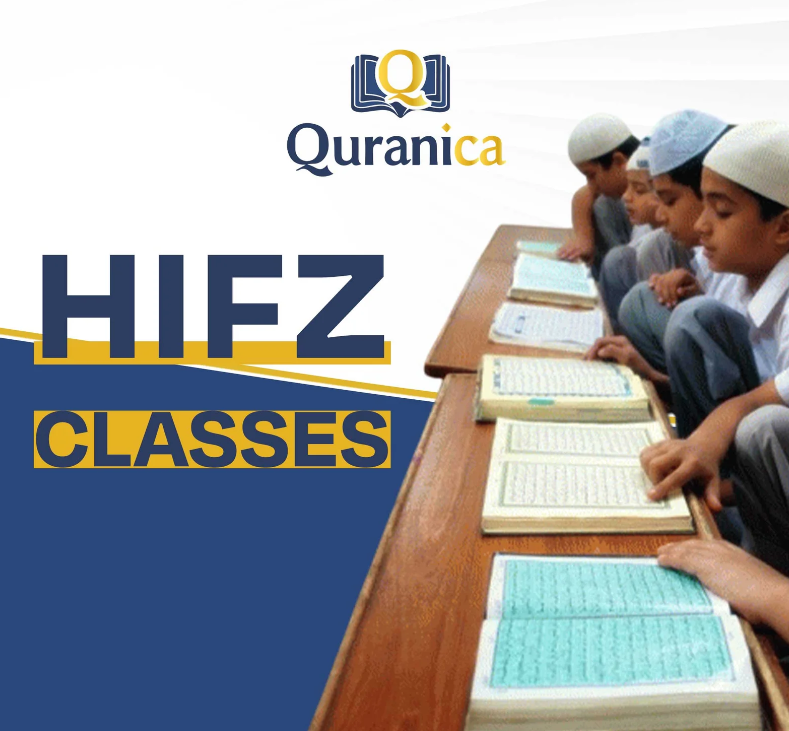
It’s often said that the first step to a responsive heart is recitation, the next is understanding, and the ultimate is carrying it within you. Our Quran Memorization (Hifz) programs are designed to help you on this sacred path, step by step, building that lifelong bond.)
Enroll Now in Quranica’s Hifz program
10. The Highest Quranic Etiquette is Reading with Reflection (Tadabbur)
This is the entire purpose. The Quran was not sent to be chanted at graves or hung on walls as decoration. It was sent as a guide for the living.
Tadabbur is the act of deep reflection. As you read, pause and think.
- What is Allah telling me in this verse?
- How does this apply to my life, my struggles, my hopes?
If you read a verse about Jannah (Paradise), let your heart fill with hope and ask Allah for it.
If you read a verse about the Fire, feel a senseof awe and fear, and seek His refuge. This is the connection Allah (SWT) asks of us:
“أَفَلَا يَتَدَبَّرُونَ الْقُرْآنَ أَمْ عَلَىٰ قُلُوبٍ أَقْفَالُهَا”
(Afalā yatadabbarūnal-Qur’āna am ‘alā qulūbin aqfāluhā)
“Then do they not reflect upon the Qur’an, or are there locks upon [their] hearts?” (47:24)
Don’t let your reading be locked out. Use a good translation in your own language alongside the Arabic to help you unlock the meanings. Learn how to start reading Quran daily.
11. Allowing the Quran to Move You
When you truly practice Tadabbur (reflection), a natural and profound etiquette follows: allowing your heart to respond.
The Quran is a living message. It is meant to shake you, to comfort you, to humble you, and to inspire you. Allah (SWT) praises those who, when they hear His words, are deeply moved:
“وَيَخِرُّونَ لِلْأَذْقَانِ يَبْكُونَ وَيَزِيدُهُمْ خُشُوعًا”
(Wa yakhirrūna lil’adhqāni yabkūna wa yazīduhum khushū’ā)
“And they fall upon their faces weeping, and it increases them in humble submission.” (17:109)
This is the Sunnah of our Prophet (ﷺ) himself. He once asked his companion Ibn Mas’ud (RA) to recite to him.
When Ibn Mas’ud reached a verse in Surah An-Nisa, the Prophet (ﷺ) said, “That is enough.” Ibn Mas’ud looked up and saw the Prophet’s eyes streaming with tears.
This isn’t about forcing tears. It’s about unblocking your heart and giving the Quran permission to work its miracle within you.
We suggest using Dua before reading Quran to open your heart and focus your thoughts before approaching the Quran. Similarly, making Dua after reading Quran is a beautiful act.
12. The Prostration of Quranic Recitation (Sajdat al-Tilawa)
As you read, you will encounter 15 verses in the Quran marked as a sajdah (prostration). The etiquette here is beautiful: we are invited to physically act on our humility.
When you recite or hear one of these verses, it is a highly recommended Sunnah to perform a single prostration. This is an immediate, physical response to Allah’s greatness.
While you can simply say “Subhana Rabbiyal A’la” (Glory to my Lord, the Most High), there is a stunning du’a (supplication) taught by the Prophet (ﷺ) for this moment.
He heard from a companion about a dream of a tree prostrating and saying: “O Allah, record for me with You a reward for it, and remove from me with it a burden, and make it for me with You a treasure, and accept it from me as You accepted it from Your servant Dawud.”
13. Manners of Handling the Physical Quran (Mushaf)
The physical Mushaf, which contains these divine words, is sacred. We treat it with the utmost respect.
A. Elevate the Mushaf
Never place the Mushaf directly on the floor. It should always be on a clean, elevated surface, like a small stand (rihal), a pillow, or a high shelf.
B. Handle the Mushaf with care
Don’t toss it, or leave it open and unattended, or place other books (like textbooks or notebooks) on top of it. The Word of Allah is above all other words.
When you finish, close it gently and return it to its respectful place.
These small, physical actions are expressions of the love and reverence we hold in our hearts for the Quran itself.
Your Quran Deserves More Than Habitual Reading
You now know the etiquettes of reading the Quran.
But ask yourself honestly:
How many of these etiquettes do you actually practice consistently?
Do you recite with confidence?
Do you know whether your pronunciation is correct?
Do you understand what Allah is saying while you read?
Or have you simply become used to reading without truly experiencing the beauty, precision, and depth of the Quran?
Most Muslims don’t intentionally neglect the Quran.
They simply never had someone teach them how to read, recite, and understand it properly.
Imagine opening the Quran tomorrow and reading with:
✅ Correct Tajweed
✅ Greater focus and khushu’
✅ A deeper understanding of the verses
✅ A qualified teacher guiding you step-by-step
✅ A structured plan designed around your schedule
At Quranica, our mission is simple:
To help Muslims around the world move beyond merely finishing pages and start building a lifelong relationship with the Book of Allah.
Whether you’re a beginner, improving Tajweed, studying Tafseer, or returning to the Quran after years away, we’ll help you progress with clarity and confidence.
🔥 Thousands wish they had started earlier.
Don’t make the Quran another goal you’ll postpone.
Take one small step today that may transform your relationship with Allah’s Book for years to come.
👉 Start your FREE Quranica Trial Class today:
Start Your Path From Manners to Quran Mastery with Quranica
At Quranica, we are not just a platform; we are your partners on this path. We are dedicated to helping you build a connection with the Book of Allah that is deep, personal, and, above all, correct.
We bridge the gap between your heart’s desire and the authentic knowledge you seek.
Here is what makes our community special:
Authentic, Expert Tutors
Our teachers are native Arabic speakers, many of whom are graduates of the prestigious Al-Azhar University. They live and breathe this knowledge.
Certified & Experienced
They are Ijazah holders, meaning they have a certified chain of transmission back to the Prophet (ﷺ) in recitation. They have years of experience teaching non-Arabs just like you.
A Path for Everyone
Whether you are just beginning with our Noorani Qaida course, perfecting your Tajweed, delving into Quranic Arabic, or embarking on the sacred journey of Hifz (Memorization), we have a structured, supportive path for you.
- Learn Quranic-Arabic Course
- Arabic lessons for beginners
- Learn Quran with Tajweed
- Quran Memorization and Hifz Programs
- Online Quran Tafseer Course
- Islamic Studies Online Course
Explore our full range of courses.
Book your free evaluation class and start your first real lesson today.

As you continue your journey of reading Quran, remember that the real beauty of the Qur’an appears when recitation is combined with proper Tajweed, understanding, and consistent guidance from qualified teachers. Many Muslims in the UK, the United States, Europe, Australia, Norway, Sweden, and the UAE are now moving beyond casual recitation and choosing structured learning to strengthen their connection with the Qur’an.
If you want to improve your reading Quran skills and learn the correct etiquette, pronunciation, and meanings, joining organized programs or community classes can make a huge difference. You can explore educational resources and local programs through respected institutions such as In the UK:
• Islamic Centre of England – London
• Islamic Dawah Centre (IDC)
In the United States:
• Islamic Center of America – Dearborn, Michigan
• Islamic Center of Southern California – Los Angeles
• Islamic Cultural Center of New York.
Conclusion
Approaching the Quran begins with sincerity, presence, and physical purity, supported by practices like wudu, siwak, seeking refuge, and reciting the Basmalah. These steps help the reader shift into a state of calm reverence.
The act of recitation itself carries its own etiquette—reading with clarity, pacing, reflection, and respect for posture and direction. Avoiding haste allows the verses to settle deeply, opening the door to real understanding and heartfelt response.
Respect for the physical Mushaf and engagement with prostration verses further nurture humility and connection. These etiquettes, rooted in prophetic guidance, help the believer build a lasting, transformative relationship with the Quran.


0 Comments