In a nutshell: Learning to read the Quran starts with understanding the difference between the Arabic text as divine revelation and translations as human interpretations. Beginners progress by mastering the 28 Arabic letters, their sounds, and shapes, then applying vowels and learning how letters connect to form words. Tajweed rules add beauty and accuracy to recitation, while short surahs help build confidence.
Before you learn the first letter, your journey begins in your heart. Setting a pure intention is the spiritual foundation that gives life and blessing to your efforts.
This guide provides a clear, step-by-step path to help you begin your relationship with the words of Allah, taking you from the first letter to your first verse.
Take a quiet moment before you begin and say, “O Allah, I am doing this for Your pleasure,” to ensure your effort is a continuous act of worship.
Step 1: Learning Arabic Alphabet for Absolute Beginners Who Want to Read Quran
Your practical journey to reading the Quran starts with its 28 letters. Mastering their sounds and shapes is the non-negotiable first step that unlocks everything else.
1. Getting to Know the 28 Letters
The Arabic alphabet, containing 28 letters, is the key to reading the Quran. Your first task is to familiarize yourself with the name, shape, and basic sound of each one, from Alif (ا) to Yaa (ي).
2. Grouping Letters by Shape to Learn Faster
You can simplify learning by noticing that many letters share the same basic shape. They are distinguished only by the number and position of dots (nuqat), which makes them easier to memorize in groups.
For example, the letters ب (Baa), ت (Taa), and ث (Thaa) all share the same “boat” shape. This method of pattern recognition helps you learn the alphabet much more quickly.
3. Understanding Correct Pronunciation (Makharij)
Each Arabic letter has a precise point of articulation (makhraj) in the throat, tongue, or lips.
Learning this from the start is the difference between reciting correctly and incorrectly, as a small change in sound can change the meaning.
4. Differentiating Between Similar Sounds
Many letters may sound alike to a non-native speaker. Paying close attention to the makhraj is crucial to tell them apart, especially with letters that have both a “light” (muraqqaq) and a “heavy” (mufakham) version.
Consider the letters ‘ت’ (taa) and ‘ط’ (ṭaa). While both have a ‘t’ sound, the ‘ت’ is light, pronounced with a flat tongue, whereas the ‘ط’ is heavy, pronounced by raising the back of the tongue. Mastering these subtle differences is essential for accurate recitation.
Mastering these subtle differences is essential for accurate recitation.
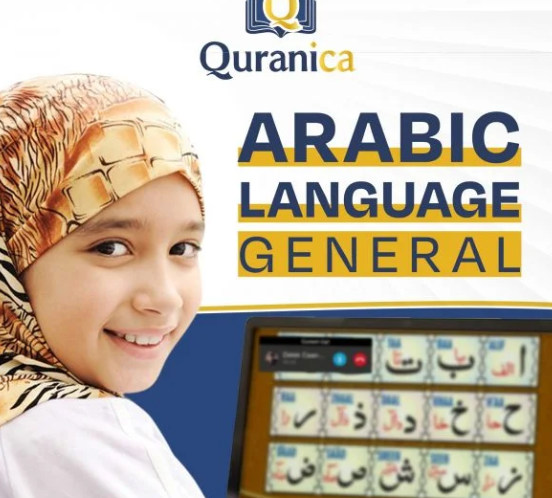
While mastering the alphabet is your key to reading, building a complete foundation in Arabic opens the door to a deeper connection with the Quran.
If you’re ready to move beyond just reading and truly engage with the language, our Arabic Lessons for Beginners course is designed to build your skills in listening, speaking, reading, and writing with expert native tutors from Al-Azhar.
Step 2: Read Quran with Arabic Vowels (Harakat)
Arabic letters are given sound by short vowels known as Harakat. These simple markings tell you how to pronounce each letter, turning silent characters into living words.
1. The Three Primary Vowels (Fatha, Kasra, Dammah)
These are the foundational sounds that bring letters to life. The Fatha ( ــَــ ) provides an ‘a’ sound, the Kasra ( ــِــ ) an ‘i’ sound, and the Dammah ( ــُــ ) a ‘u’ sound.
Consider the word “كُتِبَ” (kutiba), which means “it was written.” You can see the Dammah on the first letter, the Kasra on the second, and the Fatha on the third, creating the sounds ku-ti-ba.
2. The Doubled Vowels (Tanween)
Tanween is when you see a doubled vowel marking at the end of a word. This adds a ‘n’ sound to the vowel, creating the sounds “-an” ( ــًــ ), “-in” ( ــٍــ ), or “-un” ( ــٌــ ).
“قُلْ هُوَ اللَّهُ أَحَدٌ”
“Qul huwal-laahu aḥadun”
“Say, ‘He is Allah, [who is] One.'” (Al-Ikhlas: 1).
The double Dammah on the last letter of “أَحَدٌ” (aḥadun) creates the “-un” sound.
3. The Doubled Letter (Shaddah)
The Shaddah ( ــّــ ) is a small marking that looks like a ‘w’ placed above a letter. It signifies that the letter should be stressed or doubled in pronunciation, with a brief pause and then a release.
“إِيَّاكَ نَعْبُدُ وَإِيَّاكَ نَسْتَعِينُ”
“Iyyāka na’budu wa iyyāka nasta’īn”
“It is You we worship and You we ask for help.” (Al-Fatihah: 5).
The Shaddah on the letter ‘ي’ in “إِيَّاكَ” (iyyāka) tells us to pronounce it as ‘iy-yāka’.
Step 3: Connect Letters and Read Simple Quranic Words
Once you know the individual letters, the next step is to learn how they connect to form words. Most Arabic letters change their shape slightly depending on their position in a word.
1. How Quranic Letters Change Shape in a Word
Letters have an initial, medial, and final form that allows them to flow together. Your teacher will show you how each letter looks at the beginning, middle, and end of a word, which is a simple and logical process.
For example, the letter ‘باء’ (Baa) is written as ‘بـ’ at the beginning, ‘ـبـ’ in the middle, and ‘ـب’ at the end. This seamless connection is what gives Arabic script its beautiful, flowing appearance.
2. The Non-Connecting Letters in Mushaf
There are six letters in the alphabet that only connect to the letter before them (on the right), but never to the letter after them (on the left). These are Alif (ا), Dal (د), Dhal (ذ), Ra (ر), Zay (ز), and Waw (و).
In the word “دَرَسَ” (darasa), meaning “he studied,” the ‘د’ and ‘ر’ do not connect to the letters that follow them. Recognizing these six letters is a key shortcut to reading words correctly.
3. Reading a Simple Quranic Connected Word
To read a word, you simply identify each letter by its core shape and apply the vowel sound. You blend the sounds from right to left to form the complete word.
Let’s take the letters ‘ع’ (Ayn), ‘م’ (Meem), and ‘ل’ (Laam). When joined to form the word “عَمِلَ” (‘amila), meaning “he worked,” they connect seamlessly.
Seeing how individual letters join together is a major milestone in your learning.
4. Deconstructing a Word from the Quran
Let’s look at the first word of Surah Al-Falaq, “قُلْ” (qul), meaning “Say.” It is formed from two letters: ‘قاف’ (Qaaf) and ‘لام’ (Laam).
The ‘قـ’ is the initial form of the letter, and it is joined by the final form of ‘ل’. This shows how even a simple two-letter command in the Quran is built from these basic rules.
Read Also: Quran Reading Schedule and Planner
Step 4: Learn Basics of Tajweed to Read Quran Beautifully
Tajweed is the science of reciting the Quran correctly and beautifully. While it is a deep science, learning just a few basic rules will immediately improve your recitation.
1. A Basic Rule of Elongation (Madd)
Madd rule requires you to elongate the sound of a vowel for two counts. This occurs when a letter with a short vowel (fatha, kasra, dammah) is followed by its corresponding long vowel letter (ا, ي, or و).
For example, in the word “قَالَ” (qaala), the fatha on the letter ق is followed by an Alif (ا).
“وَإِذْ قَالَ رَبُّكَ لِلْمَلَائِكَةِ”
“Wa ‘iz qaala Rabbuka lil-malaaa’ikah”
“And [mention, O Muhammad], when your Lord said to the angels…” (Al-Baqarah: 30).
Here, the sound ‘qaa’ is held for two counts, which is different from a shorter sound like in the word ‘qad’.
2. Another Basic Rule of Clear Pronunciation (Izhar)
Izhar means “to make clear.” This rule applies when a silent Noon (نْ) or a Tanwin is followed by one of the six “throat letters” (ء, هـ, ع, ح, غ, خ).
In this case, the Noon sound must be pronounced clearly and distinctly, without any nasal sound (ghunnah).
Look at the phrase “مَنْ خَفَّتْ” (man khaffat) in the following verse:
“وَأَمَّا مَنْ خَفَّتْ مَوَازِينُهُ فَأُمُّهُ هَاوِيَةٌ”
“man khffat mawāzīnuhu fa-um’muhu hāwiyah”
“And as for one whose scales are light, His refuge will be an abyss.” (Al-Qari’ah: 9).
Here, the ‘n’ sound in “مَنْ خَفَّتْ” (man khaffat) is pronounced clearly because it is followed by the throat letter ‘خ’ (Khaa).
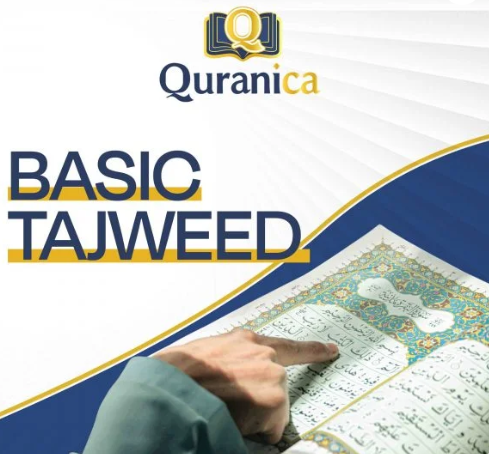
If you feel ready to move from these introductory concepts to a full, step-by-step understanding of the rules in a supportive environment, our Learn Tajweed for Beginners course was created specifically for you.
Step 5: Start Reading the Quran by Focusing on the Short Surahs
The best way for a beginner to build confidence is to start with the shortest chapters (surahs) of the Quran.
These are found at the very end, in the section known as Juz’ Amma.
1. Why Start with Short Surahs?
These chapters are brief, easier to memorize, and often have a clear, powerful rhythm. Successfully reading and understanding your first full chapter is a tremendous motivator.
2. Your First Surahs to Read
Begin with chapters like Surah Al-Ikhlas, Surah Al-Falaq, and Surah An-Nas. These are chapters that Muslims recite daily in their prayers, so learning to read them has an immediate practical benefit.
Take the first verse of Surah Al-Ikhlas and read it word by word, applying your knowledge.
The verse is: قُلْ هُوَ اللَّهُ أَحَدٌ (Qul huwa Allahu ahad)
- First word: قُلْ (Qul) – a letter with a Dammah followed by a letter with a Sukoon.
- Second word: هُوَ (Huwa) – two letters, both with short vowels.
- Third word: اللَّهُ (Allahu) – the blessed name of Allah.
- Fourth word: أَحَدٌ (Ahad) – three letters with short vowels and ending with tanween (a concept you will learn).
By breaking it down, the verse becomes manageable and easy to approach.
Step 6: Get the Help of a Qualified Teacher to Read the Quran
The Quran was passed down from one person to another, from the Angel Jibril to the Prophet, and from the Prophet to his companions. Learning with a teacher honors this tradition and is the most effective way to learn.
1. Immediate Feedback and Correction
A qualified teacher listens to your recitation and provides immediate feedback. They can catch subtle mistakes in pronunciation that a book or an app would never be able to identify.
2. Guidance and Motivation
A teacher provides a structured learning path and keeps you motivated. They can answer your questions, simplify difficult concepts, and encourage you when you feel stuck, making the journey much smoother.
Read Also: How to Start Reading Quran Daily?
Let Quranica Guide You From Your First Letter to Fluent Recitation
You have just taken the first blessed step on a beautiful path. Now, imagine walking the rest of that path with a guide who knows the way by heart. At Quranica, we don’t just teach; we accompany you on your journey with the Book of Allah.
This sacred knowledge is best received from a living teacher, and we have gathered the finest for you:
Authentic, Native Tutors
Learn from native Arab teachers, proud graduates of the prestigious Al-Azhar University. They bring the language of the Quran to life, teaching you the nuances that only a native speaker can.
Certified & Experienced
Every teacher holds an Ijazah, a certification connecting them to an unbroken chain of scholars back to the Prophet (ﷺ). They specialize in guiding non-Arab students with patience and expertise.
A Quranic Path for You
Whether you are ready to Learn Quran Reading, perfect your pronunciation with our Learn Tajweed for Beginners course, or even begin Juz 30 Memorization, we have a structured path designed for your success.
- Online Quran Classes for Beginners: Start your journey with the basics.
- Learn Quran with Tajweed: Beautify your recitation according to the rules.
- Quran Memorization and Hifz: Embark on the blessed path of memorizing Allah’s words.
- Online Quran Tafseer Course: Dive deeper into the meaning and interpretation of the Quran.
- Learn Arabic Online Course: Unlock the beauty of the Quran’s original language.
- Quranic Arabic to deepen your understanding to the specific language styles in Quran.
Explore our full range of courses.
Join a Quranica course today!
Conclusion
The Arabic Quran is the unchanged word of Allah, while translations are human interpretations meant to aid understanding but not replacements.
Grouping letters by shared shapes and learning correct pronunciation (makharij) help beginners progress faster, while distinguishing between similar sounds ensures accurate recitation.
These markings—Fatha, Kasra, and Dammah—bring words to life. Mastery of tanween and shaddah deepens reading accuracy, enabling verses to be read with proper rhythm and stress.
Understanding how letters change shape based on position, and recognizing non-connecting letters, allows students to read flowing Quranic script. Practice with simple words and verses reinforces this skill.
Tajweed rules and short surahs provide beginners with confidence. Learning elongation (madd) and clear pronunciation (izhar) enhances beauty and accuracy.
0 Comments