
Madd in Tajweed is the rule of sound elongation using the letters Alif, Waw, and Yaa under specific vowel conditions. It’s categorized into Madd Al-Asli (natural, 2 counts) and Madd Al-Far’i (secondary, 2–6 counts), triggered by Hamzah or Sukoon. Key types include Muttasil, Munfasil, Badal, Aarid, and Laazim, each with distinct rules. Madd al-Leen, Silah, Iwad, and Tamkeen add further precision.
Without Madd, the recitation can feel rushed and flat. But with it, we unlock a flowing, resonant beauty that was the hallmark of the Prophet’s (ﷺ) own recitation.
This guide is dedicated to helping you understand this elegant art of prolongation, so you can adorn your own recitation with the brilliance it deserves.
What is Madd in Tajweed?
Madd in the science of Tajweed is simply the act of prolonging or lengthening the sound of certain letters.
The classical Arabic definition states: “المد هو إطالة الصوت بحرف من حروف المد”. Let’s explore this simple, yet comprehensive definition.
المد (al-Madd) means “the prolongation.”
هو إطالة الصوت (huwa itaalat as-sawt) means “it is the lengthening of the sound.”
Finally, بحرف من حروف المد (bi-harfin min huroof al-madd) clarifies that this lengthening happens specifically “with one of the letters of Madd.”
Therefore, this rule of prolongation, al-Madd, isn’t applied randomly; it is tied to specific letters and conditions, which we will now explore.
1. The Three Madd Letters (Huroof al-Madd)
The three primary Madd letters Tajweed are: Alif (ا), Waw (و), and Yaa’ (ي). However, they only function as Madd letters when specific conditions are met.
A. The Alif (ا)
The Alif is a letter of Madd only when it has no vowel (i.e., it is sakin) and the letter before it carries a fatha (a short ‘a’ vowel sound, ﹷ ). The Alif itself is always sakin in this case.
“قَالَ”
“Qaala”
“…He said…”
Here, the sound of the letter Qaaf (ق) is prolonged because it has a fatha and is followed by a Madd Alif.
B. The Waw (و)
The Waw becomes a letter of Madd when it is sakin (ـْ) and the letter before it carries a dammah (a short ‘u’ vowel sound, ـُ ).
“يَقُولُ”
“Yaqoolu”
“…says…”
Notice how the sound of the Qaaf (ق) is lengthened by the Waw sakinah that follows its dammah.
C. The Yaa’ (ي)
The Yaa’ acts as a letter of Madd when it is sakin (ـْ) and the letter before it carries a kasrah (a short ‘i’ vowel sound, ـِ ).
“قِيلَ” “
Qeela”
“And when it was said…”
In this example, the kasrah on the Qaaf (ق) is prolonged by the Yaa’ sakinah, creating the “qee” sound.
2. The Madd Symbol in the Quran
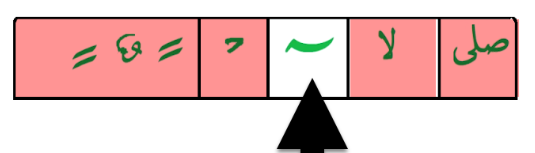
The symbol madd tajweed uses is a small tilde sign (~) placed above one of the Madd letters. This symbol helps you identify when a longer prolongation is required.
When you see this tilde, it signifies that the Madd must be prolonged for more than the natural.
The Two Main Categories of Madd: Al-Madd Al-Asli vs. Al-Madd Al-Far’i
Think of every rule of Madd as belonging to one of two main households. Understanding these two categories will bring great clarity to your study.
The first category is Al-Madd Al-Asli (The Natural Madd), which is the default and simplest form.
The second is Al-Madd Al-Far’i (The Secondary Madd), which is an extension of the natural Madd, but it occurs only for specific reasons.
Part 1: Al-Madd Al-Asli (The Natural Madd)
This is the Madd in its most basic and organic state. It is the foundation upon which all other types of Madd are built.
The rule for Al-Madd Al-Asli is simple: it occurs whenever you have one of the three Madd letters (ا, و, ي) meeting its condition, as long as it is not followed by a Hamzah (ء) or a Sukoon (ْ). It is called “natural” because it doesn’t need any other cause to exist.
Its length is always fixed at two counts, or two harakat. A harakah is the time it takes to say a single short vowel, like opening and closing your finger at a moderate pace.
An Example of Al-Madd Al-Asli
“فِيهَا”
“Feeha”
“…therein…”
This single word contains Madd Asli with the Yaa’ (fee) and with the Alif (ha), both held for two counts.
Part 2: Al-Madd Al-Far’i (The Secondary Madd)
Now we enter the second household, where the Madd is prolonged beyond its natural state. This happens only when a specific cause appears after the Madd letter.
This “secondary” Madd is triggered by one of two causes: either a Hamzah (ء) or a Sukoon (ْ).
The presence of one of these two letters after a Madd letter is what requires us to prolong the sound for more than the standard two counts.
The first practical step to making your recitation more beautiful is to become proficient in this. In order to give students a solid foundation, we go into great detail on this fundamental subject in our Learn Tajweed for Beginners Course at Quranica.
Types of Madd Far’i Caused by a Hamzah (ء)
The Hamzah is a strong letter, and its presence after a Madd letter has a significant impact. It creates three distinct types of Madd that we must learn to recognize.
1. Al-Madd Al-Muttasil (The Connected Madd)
Al-Madd Al-Muttasil is called “connected” because the cause and the Madd letter are inseparable.
Its rule is that a Madd letter is followed by a Hamzah (ء) within the same single word. When you see this, you must prolong the sound. The required length is 4 or 5 harakat.
An Example of Madd Al-Muttasil
“جَاءَ”
“Jaaa’a”
“…when came…”
Here, the Madd letter Alif is followed by a Hamzah in the same word, requiring a 4 or 5 count prolongation.
2. Al-Madd Al-Munfasil (The Separated Madd)
As its name suggests, this Madd occurs across two words.
The rule for the “separated” Madd is that a Madd letter appears at the end of a word, and the very next word begins with a Hamzah (ء). The length is also 4 or 5 harakat.
An Example of Madd Al-Munfasil
“يَا أَيُّهَا”
“Yaaa ayyuha”
“O you who…”
The Madd Alif at the end of “Yaa” is followed by a Hamzah at the start of “ayyuha,” creating Madd Munfasil.
3. Al-Madd Al-Badal (The Substitute Madd)
This Madd is unique because the cause comes before the Madd letter, not after.
Al-Madd Al-Badal occurs when a Hamzah (ء) comes directly before a Madd letter.
Al-Madd Al-Badal is called “substitute” Madd because in most cases, the Madd letter is a substitute for an original second Hamzah. Its length is 2 harakat, just like Madd Asli.
An Example of Madd Al-Badal
“ءامَنُوا”
“Aamanoo”
“…believed…”
The word “Aamanoo” originally was “A’manoo” (أَأْمَنُوا). The first Hamzah is voweled and the second is sakin, so the second Hamzah was substituted with an Alif, creating Madd Badal.
Types of Madd Far’i Caused by a Sukoon ( ْ )
Just as the Hamzah causes prolongation, so does the Sukoon. A sukoon is the absence of a vowel, and its presence after a Madd letter creates its own beautiful set of rules.
1. Al-Madd Al-Aarid Lissukoon (The Temporary Madd)
This is one of the most common types of Madd you will use in your recitation when you pause.
Al-Madd Al-Aarid Lissukoon occurs when you stop on a word where a Madd letter is followed by a letter that has a vowel.
By stopping, you apply a temporary Sukoon to that final letter. This allows you to prolong the Madd for 2, 4, or 6 harakat.
An Example of Madd Aarid
“نَسْتَعِينُ”
“Nasta’een”
“…we ask for help”
When reciting and stopping on this word, the final ‘noon’ gets a temporary sukoon, allowing you to prolong the Yaa’ Madd for 2, 4, or 6 counts.
2. Al-Madd Al-Laazim (The Necessary Madd)
This is the longest and most emphatic of all prolongations.
Al-Madd Al-Laazim is called “necessary” because every single Quran reciter and scholar agrees that its length is mandatory.
The rule is that a Madd letter is followed by a permanent Sukoon in the same word. The length is always 6 harakat.
The Necessary Madd, or Al-Madd Al-Laazim, is divided into four sub-categories based on whether it occurs in a word or a letter, and whether the sukoon is “heavy” or “light.”
A. Madd Laazim Kalimi (Word-based) with Examples
Madd Laazim Kalimi occurs within a regular word of the Quran.
Madd Laazim Kalimi Muthaqqal (Heavy)
This is when the Madd letter is followed by a permanent Sukoon that is part of a Shaddah (ـّ). A Shaddah is actually two letters: one sakin and one voweled.
“الطَّامَّةُ”
“At-taaammah”
“The overwhelming calamity…”
The Alif is followed by a Meem with a Shaddah, creating the necessary 6-count Madd.
Madd Laazim Kalimi Mukhaffaf (Light)
This is when the Madd letter is followed by a clear, permanent Sukoon (not a Shaddah). This is rare in the Quran.
“آلْآنَ”
“Aaal’aana”
“…Now?…” (Yunus: 91)
The first Alif Madd is followed by a Laam with a clear Sukoon, necessitating a 6-count pull.
B. Madd Laazim Harfi (Letter-based) with Examples
Madd Laazim Harfi is found exclusively in the Huroof Muqatta’at (disjointed letters) at the beginning of some Surahs.
Madd Laazim Harfi applies to letters whose spelled-out names contain a Madd letter followed by a Sukoon.
Madd Laazim Harfi Muthaqqal (Heavy)
The name of the letter is spelled out, and its final sakin letter merges (idgham) into the first letter of the next spelled-out letter.
“الـم”
“Alif Laaaammeeem”
“Alif, Lam, Meem.” (Al-Baqarah: 1)
The letter ‘Laam’ (لَامْ) ends in a sakin ‘meem’, which merges into the ‘meem’ beginning the letter ‘Meem’ (مِيمْ). This creates a heavy, 6-count Madd on the Alif in ‘Laam’.
Madd Laazim Harfi Mukhaffaf (Light)
The name of the letter is spelled out, and its final sakin letter is pronounced clearly without merging into what follows.
“ق ۚ وَالْقُرْآنِ الْمَجِيدِ”
“Qaaaf. Wal qur’aanil majeed”
“Qaf. By the glorious Qur’an.” (Qaf: 1)
The letter ‘Qaaf’ (قَافْ) is spelled out. Its Madd Alif is followed by a final, clear Sukoon on the ‘faa’, resulting in a light 6-count Madd.
3. Madd al-Leen (The Soft Madd)
This Madd is named for its soft and easy sound.
Madd al-Leen occurs only when you stop on a word ending with a letter that follows a “soft” Waw or Yaa. The letters of Leen are a Waw Sakinah (وْ) or Yaa Sakinah (يْ) that are preceded by a letter with a Fatha. The lengths are 2, 4, or 6 harakat.
An Example of Madd al-Leen
“خَوْفٍ”
“Khawf”
“…fear…”
When stopping on this word, the Waw Leen (وْ preceded by a fatha) is followed by the temporary sukoon on the ‘faa’, creating Madd al-Leen.
Such complex yet beautiful rules are where guidance becomes essential, and they are covered in great detail in Quranica’s Advanced Tajweed Course.
Other Specific Types of Madd in Tajweed
Finally, let us touch upon a few special cases of Madd. These rules add the final layer of polish to a truly masterful recitation.
1. Al-Madd Al-Iwad (The Compensation Madd)
Al-Madd Al-Iwad is a beautiful “compensation” given when we stop.
Al-Madd Al-Iwad occurs only when you pause on a word that ends in a fatha tanween (ـً).
You replace the tanween sound with a Madd Alif and prolong it for 2 harakat. Note that this does not apply to words ending in a Ta’ Marbutah (ةً).
“غَفُورًا رَّحِيمًا”
“Ghafooran Raheema” (when stopping on the second word)
“…Forgiving and Merciful.”
If you stop on the word “Raheema,” the “-an” sound is dropped and compensated with a 2-count Madd Alif.
2. Madd Tamkeen (The Enablement Madd)
Madd Tamkeen rule is to “enable” the proper articulation of consecutive similar letters.
Madd Tamkeen primarily occurs when a Yaa’ with a Shaddah and Kasrah (يِّ) is followed by a Yaa’ Madd letter. The Madd is held for 2 counts to ensure the sound is clear and not slurred together.
“النَّبِيِّينَ”
“An-Nabiyyeen”
“…the prophets…”
The Madd on the Yaa’ after the doubled ‘Yaa’ is held for 2 counts to enable its correct pronunciation.
3. Madd al-Silah (The Connecting Madd)
Madd al-Silah rule is unique to the pronoun of the 3rd person singular masculine: hu (ـهُ) and hi (ـهِ). It “connects” the pronoun to the next word with a short prolongation.
A. Madd al-Silah Sughra (Lesser) with Example
Madd al-Silah occurs when the pronoun (ـهُ/ـهِ) is between two voweled letters and is not followed by a Hamzah.
Madd al-Silah Sughra is prolonged for 2 harakat.
“إِنَّهُ كَانَ”
“Innahoo kaana”
“Indeed, he was…”
A small Waw (و) is added after the ‘hu’ to indicate the 2-count Madd.
B. Madd al-Silah Kubra (Greater) With Example
Madd al-Silah Kubra occurs when the pronoun (ـهُ/ـهِ) is between two voweled letters and is followed by a Hamzah.
Madd al-Silah Kubra is treated like Madd Munfasil and prolonged for 4 or 5 harakat.
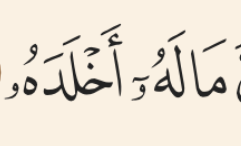
“مَالُهُ أَخْلَدَهُ”
“Maaluhooo akhladah”
“…his wealth will make him immortal.”
The Madd symbol (~) above the small Waw indicates this is the greater connecting Madd.
To check your progress and refine your skills, using dedicated tools like Quranica’s Tajweed Test and Practice resources can be incredibly helpful.

Madd Tajweed Rules Chart
To help you organize these beautiful rules in your mind, I have prepared a summary chart.
This chart consolidates the types of Madd, their causes, and their lengths into one convenient place. May it bring you clarity and confidence in your recitation.
| Madd Type | Category | Cause | Length (Harakat) | Example |
| Al-Madd Al-Asli (Natural) | Asli | No Hamzah or Sukoon after Madd letter | 2 | قَالَ |
| Al-Madd Al-Muttasil (Connected) | Far’i | Madd letter followed by a Hamzah in the same word | 4 or 5 | جَاءَ |
| Al-Madd Al-Munfasil (Separated) | Far’i | Madd letter at the end of a word, Hamzah at the start of the next word | 4 or 5 | يَا أَيُّهَا |
| Al-Madd Al-Badal (Substitute) | Far’i | Hamzah before the Madd letter | 2 | آمَنُوا |
| Al-Madd Al-Aarid Lissukoon (Temporary) | Far’i | Madd letter followed by a temporary Sukoon due to stopping | 2, 4, or 6 | نَسْتَعِينُ |
| Madd al-Leen (Soft) | Far’i | Leen letter ( وْ or يْ after a Fatha) followed by a temporary Sukoon due to stopping | 2, 4, or 6 | خَوْفٍ |
| Al-Madd Al-Laazim Kalimi Muthaqqal (Heavy Word) | Far’i | Madd letter followed by a Shaddah in a word | 6 | الطَّامَّةُ |
| Al-Madd Al-Laazim Kalimi Mukhaffaf (Light Word) | Far’i | Madd letter followed by a permanent Sukoon in a word | 6 | آلْآنَ |
| Al-Madd Al-Laazim Harfi Muthaqqal (Heavy Letter) | Far’i | In Huroof Muqatta’at, when a letter’s name has a Madd followed by an assimilated Sukoon | 6 | الـم (in لَامْ) |
| Al-Madd Al-Laazim Harfi Mukhaffaf (Light Letter) | Far’i | In Huroof Muqatta’at, when a letter’s name has a Madd followed by a clear Sukoon | 6 | ق ۚ (in قَافْ) |
| Al-Madd Al-Iwad (Compensation) | Other | Stopping on a word ending in Fatha Tanween (ـً) | 2 | عَلِيمًا |
| Madd Tamkeen (Enablement) | Other | A Madd letter follows a similar letter with a Shaddah (e.g., يِّ followed by ي) | 2 | النَّبِيِّينَ |
| Madd al-Silah Sughra (Lesser Connecting) | Other | Pronoun ‘hu/hi’ (هُ/هِ) between two vowels, not followed by a Hamzah | 2 | إِنَّهُ كَانَ |
| Madd al-Silah Kubra (Greater Connecting) | Other | Pronoun ‘hu/hi’ (هُ/هِ) between two vowels, followed by a Hamzah | 4 or 5 | مَالُهُ أَخْلَدَهُ |
How to Learn Madd Tajweed Rules?
Learning the rules of Madd can seem like a grand task, but I assure you it is a journey of small, rewarding steps.
1. Build a Strong Foundation
Your first and most important goal should be to master Al-Madd Al-Asli, the Natural Madd. This two-count prolongation is the most frequent Madd in the entire Quran. Practice identifying the three Madd letters and their conditions until you can spot them instantly.
Listen to master reciters like Sheikh Mahmoud Khalil Al-Hussary and focus only on hearing these simple, two-beat stretches.
2. Learn in Logical Categories
Begin by focusing only on identifying the two causes of Al-Madd Al-Far’i: the Hamzah (ء) and the Sukoon (ْ).
For a while, do not worry about the specific names or lengths. Simply train your eyes to see a Madd letter and then look for what comes after it.
Once you are comfortable spotting the cause, you can then focus on one category at a time, such as the three types of Madd caused by a Hamzah.
3. Seek Guidance from a Qualified Teacher
A qualified teacher, especially a native Arab instructor from a place like Al-Azhar, can provide you with immediate, personalized feedback. They can hear the subtle differences in your prolongation that you might miss on your own.
This direct correction, known as talaqqi, ensures you are applying the rules correctly and protects you from repeating hidden mistakes.
4. Practice with Patience and Consistency
Dedicate twenty minutes every day to focus solely on Madd. Choose one or two verses and slowly recite them, pausing to identify every Madd rule you can find.
Say its name, state its length, and then apply it. Remember that this effort is an act of worship, and every letter you recite correctly will be rewarded, insha’Allah.
Perfect Your Prolongation with Quranica
Mastering Madd transforms your recitation from simple reading into a heartfelt conversation with your Lord.
Here at Quranica, we are blessed with a dedicated team whose passion is to help non-Arabs like you connect with the Quran.
Authentic Teachers
Many of our instructors are native Arab speakers, graduates of esteemed institutions like Al-Azhar University, bringing genuine expertise and passion.
Qualified & Experienced
We have teachers holding Ijazah (certification to teach Quran recitation) and possess extensive experience specifically in teaching Quran and Arabic to non-Arabs. We understand the challenges and joys of your learning journey.
Personalized Learning
We strive to tailor the experience to your needs and pace.
Value
We aim to provide high-quality education with competitive pricing.
Whether you are just beginning or seeking to deepen your existing knowledge, we have courses designed for you:
- Online Quran Classes for Beginners: Start your journey with the basics.
- Learn Quran with Tajweed: Beautify your recitation according to the rules.
- Quran Memorization and Hifz: Embark on the blessed path of memorizing Allah’s words.
- Online Quran Tafseer Course: Dive deeper into the meaning and interpretation of the Quran.
- Learn Arabic Online Course: Unlock the beauty of the Quran’s original language.
- Quranic Arabic to deepen your understanding to the specific language styles in Quran.
Explore our full range of courses.
Conclusion
Madd in Tajweed refers to the elongation of sounds using specific Arabic letters—Alif (ا), Waw (و), and Yaa’ (ي)—when certain conditions are met. Each letter plays a role only when preceded by particular vowel marks: fatha for Alif, dammah for Waw, and kasrah for Yaa’.
There are two main categories: Madd Al-Asli (natural), which occurs in the absence of Hamzah or Sukoon and lasts for two counts; and Madd Al-Far’i (secondary), which involves prolongation due to the presence of a Hamzah or Sukoon and varies in length.
Madd caused by Hamzah includes three types: Madd Al-Muttasil (within one word), Madd Al-Munfasil (across two words), and Madd Al-Badal (substitution), each with rules based on the Hamzah’s position and typically extended to 2–5 counts.
Sukoon-related Madd includes Madd Al-Aarid Lissukoon (when pausing), Madd Al-Laazim (mandatory 6-count Madd with permanent Sukoon), and Madd al-Leen (soft Madd occurring with Waw or Yaa preceded by a fatha).
Additional types like Madd Al-Iwad, Tamkeen, and Silah fine-tune pronunciation and enhance fluency. These rules are essential for beautifying recitation and are explored deeply in courses and resources like Quranica’s Tajweed programs.

0 Comments