In a nutshell: The small jeem (ج) in the Quran is a Tajweed symbol meaning “permissible stop.” It indicates that the reciter may either pause or continue reading without affecting the verse’s meaning. Understanding this mark deepens one’s recitation accuracy and connection to the Quranic message.
If you’ve been reading the Mushaf, you have almost certainly seen it: a tiny ‘ج’ (jeem) placed above a word. It’s a common point of curiosity for many who are learning to recite, and I’m so glad you’re asking about it.
That small symbol is one of the most common pause signs, and understanding it is a beautiful step in learning to recite the Quran correctly. It’s not just a grammatical mark; it’s a guide to help you deliver the message of the Quran as it was intended.
What Does The Small Jeem (ج) Mean in the Quran?
The jeem (ج) is an abbreviation for the Arabic word Ja’iz (جائز), which simply means “permissible” or “allowed.”
Its full name in the science of Tajweed is Al-Waqf al-Ja’iz.
What is the Function of the Small Jeem (ج) Mean in the Quran?
The function function of the small Jeem in the Mushad is straightforward: It is permissible to stop at this sign, and it is also permissible to continue reciting. Both choices are considered correct.
This makes it a sign of equal choice. Neither stopping nor continuing is strongly preferred over the other.
This is different from other signs, like the small meem (م) which signals a required stop, or the laa (لا) which generally forbids stopping at that specific point.
Why Does “Permissible” Even Need a Sign in Mushaf?
The (ج) sign is often placed at a point where a reciter might naturally hesitate, wondering if a pause would break the sentence or disrupt the meaning.
The small jeem in Mushaf is there to reassure you. It’s a message from the scholars saying, “It is safe to pause here if you need to take a breath. The meaning will be preserved.”
This precision is a beautiful example of how Tajweed is about so much more than just pronunciation; it’s about grasping the meaning as much as the sound. Understanding this nuance is a perfect example of why formal Tajweed learning is so vital.
Enroll Now in Quranica’s Tajweed Course

Examples of the Small Jeem (ج) Sign in the Quran
Let’s look at a few clear examples you can find for the small Jeem (ج) in the Mushaf.
1. An Example of the Ja’iz Stop from Surah Al-Mulk, (67:19)
Let’s look at a beautiful example from Surah Al-Mulk. Allah (SWT) says:
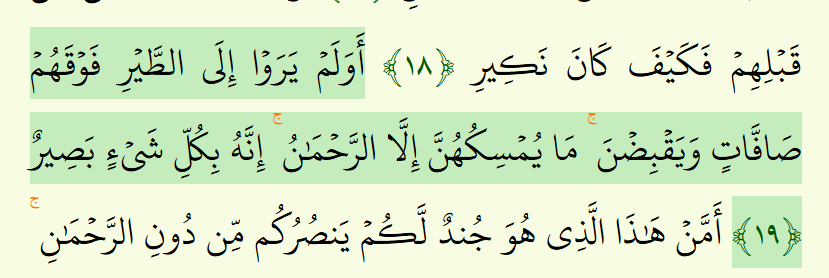
“Awa lam yaraw ilá t-tayri fawqahum ṣāffātin wa yaqbiḍn(a) mā yumsikuhunna illā r-raḥmān”
“Do they not see the birds above them, spreading their wings and folding them in? None holds them aloft except the Most Merciful.” (Surah Al-Mulk, 67:19)
You can see the small ‘ج’ right after the word ‘yaqbiḍn’ (وَيَقْبِضْنَ). This signals to you that it is perfectly fine to stop here and take a breath before continuing. It is also perfectly fine to read the full sentence in one go if you are able.
2. An Example of the Ja’iz Stop From Surah Al-Kahf (18:13)
Here, Allah (SWT) is about to tell the story of the Companions of the Cave:
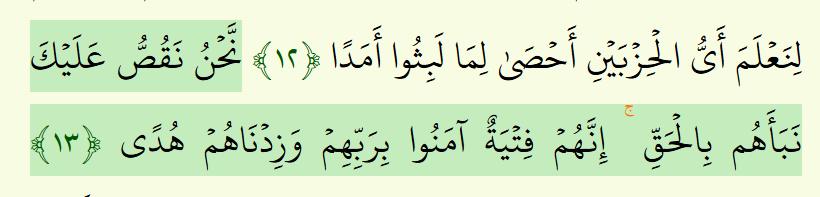
“Naḥnu naquṣṣu ʿalayka naba’ahum bi-l-ḥaqq(i) (ج) innahum fityatun āmanū bi-rabbihim wa zidnāhum hudā”
“We relate to you, [O Muhammad], their story in truth. (ج) Indeed, they were youths who believed in their Lord, and We increased them in guidance.” (Surah Al-Kahf, 18:13)
The ‘ج’ appears after the word ‘bi-l-ḥaqq’ (in truth). This signals that the opening statement “We relate their story in truth” is a complete thought.
You are permitted to pause there before Allah (SWT) begins the story itself.
3. An Example of the Ja’iz Stop From Surah Al-Hujurat (49:10)
In this verse, Allah (SWT) establishes a fundamental principle of brotherhood in Islam:
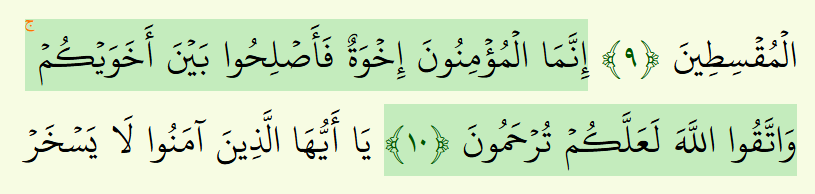
“Innamā-l-mu’minūna ikhwatun fa’aṣliḥū bayna akhawaykum (ج) wa-t-taqū-l-lāha laʿallakum turḥamūn”
“The believers are but brothers, so make settlement between your brothers. (ج) And fear Allah that you may receive mercy.” (Surah Al-Hujurat, 49:10)
The ‘ج’ is placed after ‘akhawaykum’ (your brothers). This allows you to pause after the command to make peace, separating it slightly from the next, related command to ‘fear Allah’. Both stopping and continuing maintain the meaning perfectly.
4. An Example of the Ja’iz Stop From Surah An-Nahl (16:127)
Here, Allah (SWT) is giving comfort and instruction to the Prophet (peace be upon him):
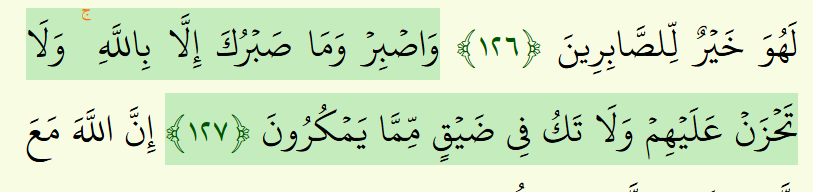
“Wa-ṣbir wa mā ṣabruka illā bi-llāh(i) (ج) wa lā taḥzan ʿalayhim wa lā taku fī ḍayqim mimmā yamkurūn”
“And be patient, [O Muhammad], and your patience is not but through Allah. (ج) And do not grieve over them and do not be in distress over what they conspire.” (Surah An-Nahl, 16:127)
The ‘ج’ comes after ‘bi-llāh’ (through Allah). This gives you the choice to pause, absorbing the profound statement about the source of patience, before continuing to the next set of instructions (“do not grieve…”).
Recognizing the Jeem Sign Is Just the Beginning of Your Tajweed Journey
Recognizing the jeem sign is a fantastic step. It shows you are paying close attention to the details of the Mushaf. But this sign is just one piece of a complete, intricate system.
True mastery and connection with the Quran come when you understand how all these signs—along with the rules of ghunnah, madd, and idgham—work together in harmony.
Mastering these rules transforms your recitation from simple reading to a deeply spiritual practice.
Read Also: What Do the Small Letters in the Quran Mean?
Start Learning Tajweed with Quranica
Don’t just learn—understand. At Quranica, we connect you with the Tajweed. Our difference is our people:
Al-Azhar Graduates
Learn from native Arab tutors educated at the world’s most prestigious seat of Islamic learning.
Ijazah-Certified
Every teacher is certified with an Ijazah to pass down the Quranic sciences correctly.
Affordable & Focused
We specialize in teaching non-Arabs, offering competitive prices for world-class instruction.
Whether you are just beginning with our Online Quran Classes for Beginners, want to perfect your Learn Quran with Tajweed, aim for Quran Memorization and Hifz, or wish to learn the language of the Quran through our Learn Arabic Online Course or Quranic-Arabic classes, we have dedicated teachers ready to guide you.
Explore our full range of courses.
Conclusion
The small jeem (ج) serves as a gentle guide for readers, signaling that both stopping and continuing are correct. It helps maintain the beauty and meaning of the recitation while allowing natural breathing points.
Its placement shows how precisely the Quran has been preserved—not only in words but also in rhythm and meaning. Each mark reminds readers that Tajweed is about understanding, not just sound.
By recognizing the jeem and similar signs, learners enhance their fluency and appreciation of Quranic recitation. Mastering these subtle symbols brings them closer to the eloquence and depth of Allah’s words.


0 Comments