Learning to read the Quran becomes far simpler once you follow a clear, structured path that builds from the Arabic letters to full, confident recitation. This guide outlines the key skills—Makharij, vowels, connections, Tajweed, and proper stopping—needed to read accurately.
We know why you’re here. You’ve felt that deep pull toward the Quran, but when you look at the Arabic script, it feels like a daunting wall of unfamiliar shapes.
Maybe you’ve even tried to start before and got stuck on the subtle but crucial difference between letters like {س} (Seen) and{ص} (Saad).
The good news is that learning to read the Quran is a systematic skill, not a mystical gift. It requires the right method, not just sheer memorization.
At Quranica, we’ve broken down this seemingly difficult task into five clear, practical steps that work for thousands of non-Arabic speakers. Forget the generic advice—here is the expert roadmap for how to learn reading Quran quickly and correctly.
1. Mastering the Arabic Alphabet and Their Makharij to Learn Reading Quran
The very first step is to focus on the 29 basic letters, but with a critical difference: you must learn the letter’s sound where it comes from.
This concept is called Makharij al-Huruf (the exit points of the letters). Rushing this stage is the number one reason students struggle later.
If your Makharij is weak, your recitation will always struggle with clarity and accuracy, which changes the meaning of the words.
Focus on Confusing Pairs
Arabic has pairs of letters that look similar but sound completely different because they use a different part of your mouth, or a different tongue position.
A good teacher will focus on this immediately.
| Letter Type | Examples | Technical Focus | Quranic Example |
| Heavy (مُفَخَّم) | {ص} (Saad), {ط} (Tah) | Raising the back of the tongue toward the soft palate (roof of the mouth). | {وَالصَّابِرِينَ} (waṣ-ṣābirīn) – (Al-Baqarah 2:177) The {ص} must be full. |
| Light (مُرَقَّق) | {س} (Seen), {ت} (Ta) | Flattening the tongue, allowing the sound to be crisp and thin. | {وَالسَّمَاءِ} (was-samā’i) – (Al-Buruj 85:1) The {س} is light and sharp. |
| Throat Letters | {ح} (Haa), {ه} (Ha) | {ح} comes from the middle of the throat (friction). {ه} comes from the lowest part (air/whisper). | {رَحِيمٌ} (Raḥīm) vs. {هُوَ} (Huwa). Confusing them changes attributes of God. |
Practice saying {ط} (Tah) and {ت} (Ta) side-by-side until your mouth automatically assumes the heavy position for {ط} and the light position for {ت}.
This foundational stage is best mastered through a structured, visual method. That is why at Quranica, we use the proven Noorani Qaida methodology in our dedicated beginner courses.
This approach breaks down the letters, vowels, and connections perfectly, ensuring your start is strong and error-free.
Enroll Now in Quranica’s Noorani Qaida
Read Also: How Long Does It Take To Learn The Quran?
2. Leran Reading Quran with Vowel Marks (Harakat) and Lengthening (Mudood)
Once you can produce the isolated letter sounds correctly, you move to the core movement of Arabic: the vowels.
Arabic vowel marks, or Harakat, are small symbols that give the letter its short sound.
A. The Short Vowels
- Fathah ( َ ): Short ‘a’ sound (e.g., {كَ} ka).
- Kasrah ( ِ ): Short ‘i’ sound (e.g., {كِ} ki).
- Dammah ( ُ ): Short ‘u’ sound (e.g., {كُ} ku).
Take a single letter, like {ر} (Ra), and drill the three sounds quickly: Ra-Ri-Ru.
B. The Lengthening (Mudood)
This is the rule of long vowels (or Mudood). A common error is not extending these sounds, which destroys the rhythm of the recitation. Long vowels are held for two counts.
| Short Vowel + Lengthening Letter | Length | Quranic Example |
| {Fathah} + {ا} (Alif) | Two Counts | {قَالُوا} (Qālū) – (Al-Baqarah 2:14) The ‘Qa’ sound is stretched. |
| {Dammah} + {و} (Waw) | Two Counts | {يُؤْمِنُونَ} (Yu’minūn) – (Al-Baqarah 2:3) The ‘nūn’ sound is stretched. |
| {Kasrah} + {ي} (Yā’) | Two Counts | {فِيهَا} (Fīhā) – (Al-Baqarah 2:25) The ‘Fī’ sound is stretched. |
Consider the difference in the rhythm of the first verse of Surat Al-Fatiha:
{بِسْمِ اللَّهِ الرَّحْمَٰنِ الرَّحِيمِ}
Bismi Allāhi Ar-Raḥmāni Ar-Raḥīm
Notice how no sounds are stretched until the very end, {الرَّحِيمِ} (Ar-Raḥīm), where the ‘Mī’ is held due to the long {ي} (Yā’).
3. Connecting the Letters and Understanding Word Shapes
A huge hurdle for every student learning to read Quran is how letter shapes change when they join words.
An Arabic letter has up to four potential forms: isolated, beginning, middle, and end. The goal of this stage is to move from sounding individual letters (S-a-l-a-m) to reading the whole word as a unit (Salām).
The Mechanics of Connection
Your training material (like a Qaida Nooraniyyah) must drill this connection process. You aren’t learning new letters; you are learning how the same letter presents itself in a word.
Example: The letter {ع} (‘Ayn)
- Isolated: {ع}
- Beginning: {عَلَى} (‘Alā) – It loses its tail.
- Middle: {فَعَلَ} (Fa‘ala) – It takes a unique hooked shape in the middle.
- End: {تَجْمَعُ} (Tajma‘u) – It returns to its full, isolated shape but is connected to the preceding letter.
Focus on two- and three-letter words, recognizing the beginning/middle/end shapes, and smoothly blending their Makharij and Harakat together.
Look at this part of the verse:
{يُكَذِّبُونَ}
Yukadhdhibūn
You must instantly recognize the joined shapes: {ي} (initial), {ك} (middle), {ذ} (middle, but non-joining), {ب} (middle), {و} (middle/lengthening), {ن} (final).
Read Also: Quran Learning Games
4. Learning Essential Tajweed Rules for Recitation
You don’t need to memorize all the rules of Tajweed before you start, but you must introduce the basic concepts that affect sound, timing, and most importantly, the flow of the sound.
Rules of Noon Sakinah and Tanween
This is where reading gets complex, but it’s essential for correct sound. Noon Sakinah ({نْ}) and Tanween (double vowels like {ًا}, {ٍ}, {ٌ}) have four possible rules when they meet the next letter:
- Idh-hār (Clarity): The {نْ} sound is pronounced clearly. (e.g., if the next letter is {ع} or {ح}).
- Iqlāb (Change): The {نْ} sound changes to {م} (Meem) if the next letter is {ب} (*Bā’).
- Idghām (Merging): The {نْ} sound merges completely or partially with the following letter.
- Ikhfā’ (Hiding): The {نْ} sound is hidden and pronounced with a slight nasal sound (a Ghunnah).
Quranic Example (Iqlāb):
{مِن بَعْدِ}
mim ba‘di
Here, the {نْ} in {مِن} is not read as ‘min’; it changes to a {م} sound before the {ب} (Bā’), becoming ‘mim ba’di’. This technical rule dramatically improves the flow.
The Force of Shaddah
The Shaddah ( ّ ) is a crucial marking that indicates a letter is doubled, giving it force. The letter is sounded once with the previous vowel and then again with its own vowel.
{ثُمَّ}
Thumma
The {م} (Meem) is doubled; you must pause momentarily and press on it. This doubling is crucial for both meaning and rhythm.
If you are already reading and these rules feel overwhelming, it means you are ready for the next level. Our Tajweed Recitation Courses are specifically designed to move you past simple reading and integrate these precise rules—like the Iqlāb shown above—into your muscle memory, transforming your reading into beautiful Tartīl.
Enroll Now in Quranica’s Tajweed Course
Read Also: Quran Learning Tools For Kids
5. Leaning Tafkhim and Tarqiq to Read Quran Correctly
A sign of a reciter is the consistency of their letter thickness—not just knowing the heavy letters, but ensuring that a heavy letter does not contaminate the light letters around it, and vice versa.
State of Letter Thickness
| State | Terminology | Description | Example |
| Thickening | Tafkhīm (تفخيم) | Letters that are always heavy, like {ط}, {ق}, {ص}. | {صِرَاطَ} (Ṣirāṭa) – The {ص} and {ط} are thick. |
| Thinning | Tarqīq (ترقيق) | Letters that are always light, like {ت}, {ك}, {س}. | {تَبَارَكَ} (Tabāraka) – All letters are light. |
The Critical Case of the Letter {ر} (Rā’)
The letter {ر} (Rā’) is unique because its state of thickness changes based on the vowel before it. This rule is often challenging for non-Arabs.
Heavy (Tafkhīm) {ر}
If the {ر} has a Fathah ({َ}) or Dammah ({ُ}), or if the preceding letter has these vowels. The tongue is raised.
{رَبِّ}
(Rabbi)
The {ر} is heavy because it has a Fathah.
Light (Tarqīq) {ر}
If the {ر} has a Kasrah ({ِ}). The tongue is lowered.
{رِجَالٌ}
(Rijālun)
The {ر} is light because it has a Kasrah.
Mastering this distinction is key to achieving the beautiful flow (Tartīl) that is commanded:
{وَرَتِّلِ الْقُرْآنَ تَرْتِيلًا}
Wa rattili al-Qur’āna tartīlā
“And recite the Qur’an with measured recitation.”
If you feel like your tongue is constantly “tied” our Learn Quran Reading course is designed specifically to help beginners build this muscle memory from scratch, step by step.
Enroll Now in Quranica’s Learn Quran Reading Course
6. How to Learn Reading Qruan with Stop and Start Points
Simply reading the words is not enough; you must learn where to stop when you run out of breath and where to restart without breaking the meaning.
This is the difference between reading Arabic prose and reciting the Quran. This skill is called Waqf (Stopping) and Ibtidā’ (Starting).
The Mechanics of Stopping (Waqf)
When you stop on a word, its vowel is usually dropped, and the letter is sounded with a Sukoon (silent).
Stop on a Jarr (pull) motion, meaning you stop the flow of sound completely, except for {تَاء الْمَرْبُوطَة} (Tā’ al-Marbūṭah), which is always read as a soft {ه} (Ha) sound when stopping.
- Word: {صَلَاةٌ} (Ṣalātun)
- Stop: {صَلَاة} (Ṣalāh)
The Importance of Markers
The Mushaf (printed Quran) provides small symbols to guide the reciter. These are not always mandatory rules, but indications of a better place to stop or continue.
- {م} (Mīm): An obligatory stop (Waqf Lāzim). Continuing may change the meaning.
- {ج} (Jīm): A permissible stop. Stopping is equally good as continuing.
- {لا} (Lā): Do not stop here.
7. The Core of Quran Reading is Talaqqi (Receiving) and Repetition
You may know the rules intellectually, but your mouth cannot be trained without a human teacher.
This methodology is called Talaqqi (literally, to receive), and it is how the Quran has been passed down for 1,400 years.
The Role of Listening (Talaqqi)
You must hear the sound, imitate it, and have the teacher immediately correct your Makhraj or your timing (Tawqeet).
Only a person with expertise can hear the subtle difference between your {ذ} (Dhal) and the correct {ظ} (Dhaa) and guide your tongue and lips precisely.
The Prophet Muhammad (peace be upon him) received the Quran through Talaqqi from the Angel Gabriel, and he in turn taught the Companions this way. We follow that same unbroken chain.
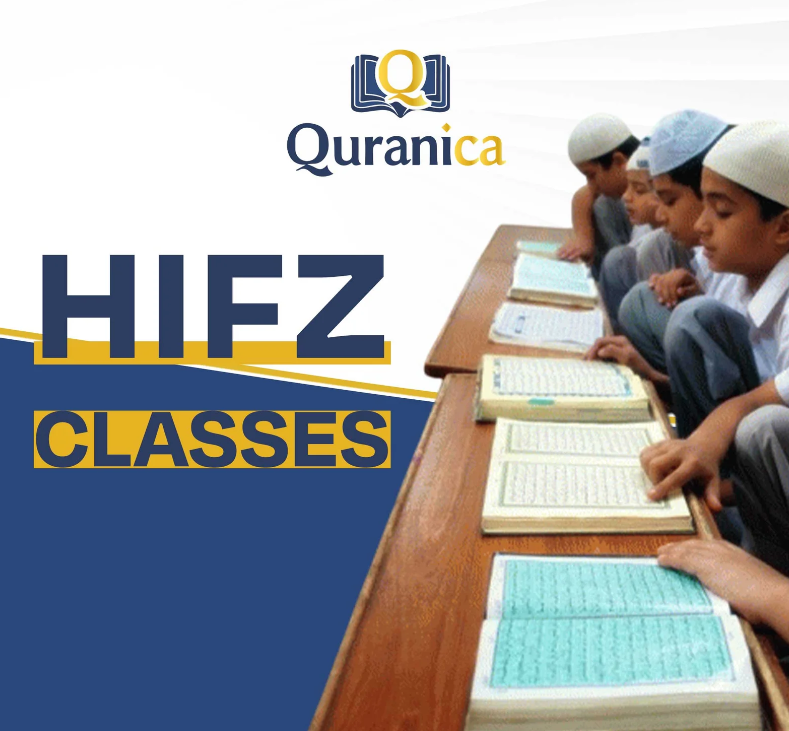
This Talaqqi method is non-negotiable, especially for those pursuing Quran Memorization (Hifz). Accurate recitation is the bedrock of strong memorization.
If you are looking to commit verses to your heart and earn the reward of the reciter, your Hifz journey must start with perfect Talaqqi, which we prioritize in every one of our specialized Hifz programs.
Enroll Now in Quranica’s Memorization and Hifz programs
The Requirement of Repetition
The final step is to read, repeat, and review. Find short Surahs like Surah Al-Ikhlas or Al-Nas that contain a variety of letter combinations and basic rules.
Practice them until they flow naturally without conscious effort over the rules.
Begin Your Quran Reading Journey with Quranica
Reading the Quran correctly requires someone who can hear your mistakes and guide your tongue muscles—a human touch that no app or video can replace.
Here at Quranica, we don’t just offer classes; we offer genuine mentorship:
Native Expertise
All our instructors are native Arabic speakers, many of whom have studied the Arabic language, Tajweed, and Quranic Sciences at Al-Azhar University. They hold Ijazahs (certified permissions) to teach the Quran, ensuring you receive the authentic chain of recitation.
Experience with Non-Arabs
They specialize in teaching non-Arabic speakers, understanding exactly how to solve common issues like differentiating between {ق} and {ك}.
Competitive & Flexible
We offer private, flexible scheduling with competitive pricing, making authentic Quranic learning accessible worldwide.
Our Specialized Courses Include:
Noorani Qaida & Basic Reading: For absolute beginners (Adults and Kids).
Learn Quran with Tajweed: Perfecting your recitation for spiritual and technical accuracy.
Quran Memorization (Hifz) Programs: Structured programs for all levels, from Juz 30 to the entire Quran.
Learn Arabic Online: Because understanding the language deepens the impact of the reading.
Explore our full range of courses.
Book your free evaluation class and start your first real lesson today.
Conclusion
Building a strong foundation in letter sounds, vowels, and their connections allows learners to move from hesitant decoding to natural reading of Quran. Mastering these basics also prevents common pronunciation mistakes that affect meaning and fluency.
As skills progress, Tajweed rules, proper thickness of letters, and correct stop-and-start points refine the recitation until it becomes smooth, measured, and faithful to the Quranic tradition. These elements turn simple reading into true Tartīl.
Consistent practice, guided feedback, and the traditional method of Talaqqi ensure that every sound is shaped correctly and confidently.
0 Comments