
Madd Muttasil is a fundamental Tajweed rule where a vowel (Alif, Waw, or Ya’) followed by a Hamza in the same word must be stretched for 4 or 5 counts. Known as “Wajib” (obligatory), this rule ensures proper pronunciation and is marked by a tilde (~) in the Quran. Real examples include “جَاءَ” and “سُوءَ”, and mastering it requires listening to expert reciters, practicing consistently, and learning with a teacher.
Bismillah. Let’s talk about one of the first things that separates simple reading from true Tajweed: knowing exactly how long to stretch a vowel. I promise you it’s based on very clear and simple rules.
We will start with the most important of these: Madd Wajib Muttasil. The name itself tells you it’s “obligatory” and “connected.” Understanding this one rule is a giant leap forward in your recitation, and today, we will make it simple for you.
What is Madd Muttasil?
Let’s break down the name, as it tells us everything we need to know. We already know Madd means “stretch.” The second word, Muttasil (الْمُتَّصِل), is an Arabic word that means “connected” or “joined.”
So, Madd Al-Muttasil is simply the “Connected Stretch.” Why connected? Because the reason for the stretch is directly connected to the letter being stretched, all within the same single word.
1. The Rule of Madd Muttasil
The rule is this: Madd Al-Muttasil occurs whenever a Madd letter is followed immediately by a Hamza (ء) within the same word.
2. Why is it Called Madd Wajib Muttasil?
You will often hear this rule referred to as “Madd Wajib Muttasil.” The addition of the word “Wajib” (واجب) is significant, as it denotes the ruling of this madd, meaning it is “obligatory” or “required.”
All scholars of recitation agree that this madd must be applied whenever its conditions are met.
Unlike some other types of madd where the length can be optional, elongating Madd Muttasil is a necessity for a correct recitation, and leaving it out is considered a clear mistake.
Mastering these obligatory rules is a cornerstone of proper recitation, and it’s a key focus in our Quranica’s Learn Tajweed for Beginners Course.
The Two Conditions of Madd Muttasil
Two simple ingredients coming together to create a beautiful sound. If both are present, you have Madd Al-Muttasil.
1. A Madd Letter
The first ingredient is one of our three familiar Madd letters (حُرُوفُ الْمَدِّ):
- An Alif (ا) that is preceded by a letter with a Fathah (ـَ).
- A Waw (و) with a Sukun (ـْ) that is preceded by a letter with a Dammah (ـُ).
- A Ya’ (ي) with a Sukun (ـْ) that is preceded by a letter with a Kasrah (ـِ).
2. A Hamza (ء) in the Same Word
The second ingredient is the cause, or the sabab (سَبَب), of the stretch. For Madd Al-Muttasil, that cause is a Hamza (ء).
The crucial part—and this is what makes it “Muttasil”—is that this Hamza must come right after the Madd letter, inside the very same word.
So, we’ve found our Madd letter and a Hamza connected to it in one word. Now what? We stretch! But for how long?
How Long is Madd Muttasil?
The duration of Madd Muttasil is agreed upon by scholars, making it consistent and straightforward to apply. This elongation is measured in harakat (counts or beats).
You must elongate Madd Muttasil for 4 or 5 counts. While both lengths are correct, it is vital to be consistent throughout your recitation with whichever duration you choose to follow.
A “count” is roughly the time it takes to say a single letter with a vowel, like saying “ba” (بَ). So, when you see the word جَاءَ (“jā’a”), you would stretch the “jāāāā'” sound for the length of about four or five “ba”s. Stick to either 4 or 5 counts throughout your recitation.
Here’s a wonderful tip that makes identifying Madd Al-Muttasil incredibly easy.
How to Spot Madd Muttasil in the Mushaf
In most copies of the Quran (Mushaf), you will find a small “tilde” or wave symbol (~) placed directly above the Madd letter that needs this special elongation.
When you see this little wave sign followed by a Hamza (ء) in the same word, it’s like a helpful flag from the scribe, reminding you: “Hey! It’s time for a beautiful, connected stretch here!”
Examples of Madd Wajib Muttasil from the Quran
The best way to solidify your understanding is by seeing and practicing real examples from the Word of Allah.
Notice the pattern in each example: a madd letter, a hamza, and the tilde sign (~) above them, all within a single word.
Let’s look at examples for each of the three madd letters to see this beautiful rule in action.
1. Examples of Madd Muttasil with Alif (ا)

“was-samā’i waṭ-ṭāriq”
“By the sky and the night comer” (At-Tariq: 1)
Here, the Alif (ا) in “السَّمَاءِ” is followed by a Hamza, creating a clear case of Madd Muttasil.
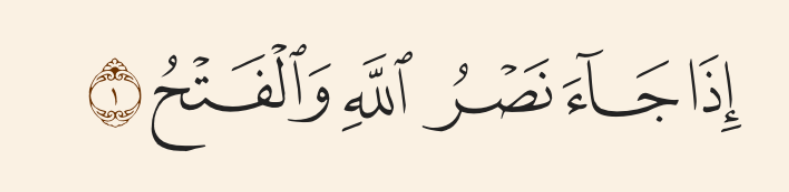
“Idha jā’a naṣru-llāhi wal-fatḥ”
“When the victory of Allah has come and the conquest” (An-Nasr: 1)
In the word “جَاءَ,” the madd letter Alif is immediately followed by a Hamza, fulfilling the condition perfectly.
2. Examples of Madd Muttasil with Waw (و)
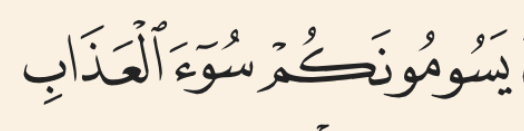
“yasūmūnakum sū’al-‘adhāb”
“…afflicting you with the worst torment” (Al-Baqarah: 49)
The Madd letter Waw (و) in “سُوءَ” is followed by a Hamza, requiring an elongation of 4-5 counts.
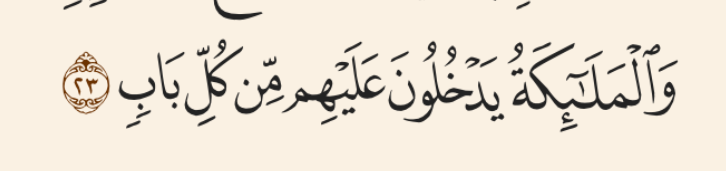
“wal-malā’ikatu yadkhulūna ‘alayhim min kulli bāb”
“…and the angels will enter upon them from every gate” (Ar-Ra’d: 23)
In “وَالْمَلَائِكَةُ,” the madd with Alif is also a Madd Muttasil, showing how common this rule is.
3. Examples Madd Muttasil with Ya (ي)
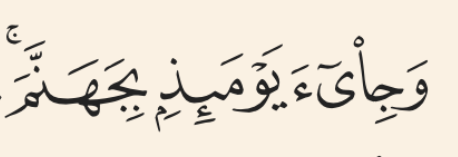
“wa jī’a yawma’idhim bijahannam”
“And brought [within view], that Day, is Hell” (Al-Fajr: 23)
The Madd letter Ya (ي) in “جِيءَ” is directly followed by a Hamza, making it a perfect example of Madd Muttasil.
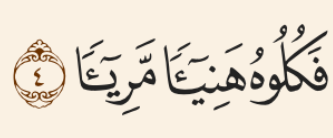
“fakulūhu hanī’an marī’an”
“…eat it in satisfaction and ease.” (An-Nisa: 4)
In the word “هَنِيئًا,” the Madd letter Ya is followed by a Hamza, signaling an obligatory elongation.
Practicing with a qualified teacher is the best way to solidify your recognition skills. You can get instant feedback in our Quranica’s Tajweed Test and Practice sessions.

Read more about: Madd Munfasil Rules, Letters, And Types With Examples
The Difference Between Madd Muttasil and Madd Munfasil
The key distinction lies in the location of the Hamza. In Madd Muttasil, which means “connected,” the madd letter and the Hamza are found together inside a single word, like “جَاءَ”.
In contrast, Madd Munfasil, meaning “separated,” occurs when the madd letter is at the very end of one word and the Hamza is at the beginning of the next word, like in “إِنَّا أَعْطَيْنَاكَ”.
Therefore, while both are caused by a Hamza following a madd letter, their connection—or separation—across one or two words is what sets them apart and gives them their unique names and rules.
How to learn Madd Muttasil?
Learning any Tajweed rule is a rewarding process that requires patience and the right approach. With Madd Muttasil, mastering it involves training your ears, your tongue, and your consistency.
Here is a simple, step-by-step method I recommend to all my students to help them perfect this obligatory madd.
1. Listen Attentively
The first step is always listening (Sama’a). Find a recording of a qualified Qari (reciter) known for their precise Tajweed, such as Sheikh Mahmoud Khalil Al-Hussary or Sheikh Muhammad Siddiq Al-Minshawi.
As you listen, follow along in the Mushaf and pay close attention to how they elongate the sound whenever you see the tilde (~) over a letter followed by a Hamza. Train your ear to recognize the 4-5 count duration.
2. Imitate and Record Yourself
After listening carefully, try to imitate (Taqleed) the Qari. Recite the same verses out loud, focusing on matching their elongation of Madd Muttasil as closely as possible.
A wonderful technique is to record yourself reciting and then play it back, comparing it with the professional recitation. This helps you hear your own mistakes and make adjustments.
3. Focus on Repetition
Practice (Tikrar) is the key that unlocks mastery. Don’t try to learn everything at once. Instead, pick a few verses or a short surah rich with examples of Madd Muttasil and repeat them daily.
Surahs like At-Tariq, An-Naba, or An-Nazi’at are excellent for this purpose. Consistent repetition builds muscle memory in your mouth and makes the rule feel completely natural over time.
4. Get Corrected by a Teacher
Finally, and most importantly, have your recitation corrected (Tashih) by a qualified teacher. Self-study is beneficial, but only a teacher can provide you with the personalized feedback needed for perfection.
They can tell you if your elongation is too short, too long, or inconsistent. This human guidance is invaluable and is the surest way to ensure you are applying the rule of Madd Muttasil correctly.
Master Madd Muttasil Rule with Quranica
Perfecting rules like Madd Muttasil transforms your recitation from simple reading to a beautiful, spiritual act of worship.
At Quranica, we believe that this sublime connection with the Quran is accessible to everyone, no matter where you are on your journey.
Our teachers are not just experts; they are native Arabic speakers and graduates of the prestigious Al-Azhar University.
They carry the sacred Ijazah (license to teach) and have years of heartfelt experience guiding non-Arab students just like you.
Whether you’re interested in our Advanced Tajweed Course, our Online Ijazah Course, or our Hifz Program for Adults, we have the expertise to help you achieve your goals.
- Learn Quran with Tajweed (for all levels)
- Quran Memorization (Hifz) Programs
- Ijazah Course
- Islamic Studies
- Ten Qirat
- Arabic Lessons for Beginners
Explore our full range of courses.
Conclusion
Madd in Tajweed refers to the elongation of vowel sounds during Quranic recitation. Among its various types, Madd Muttasil—or the Connected Madd—is a key rule learners must grasp, appearing frequently in the Quran. This type of madd stretches a vowel when followed by a Hamza within the same word.
The rule of Madd Muttasil is simple: a madd letter (Alif, Waw, or Ya’) must be directly followed by a Hamza in the same word. It is called “Wajib” (obligatory) because scholars agree this stretch must be applied for a correct recitation. Skipping it is considered a mistake.
The madd duration should be either 4 or 5 counts, and whichever one you choose, consistency is vital. The Mushaf usually marks this rule with a tilde (~) above the madd letter, making it easy to spot during recitation.
Real Quranic examples include words like “جَاءَ”, “سُوءَ”, and “جِيءَ”, showing the madd letter and Hamza side-by-side. Understanding these examples reinforces the rule and its correct application.

0 Comments