
Committing to memorize the Quran in 2 years is a balanced and achievable goal. It is designed for sustainability and long-term retention.
This timeline is suited for professionals, students, or parents who must integrate Hifdh (memorization) into a busy life without facing burnout.
This guide outlines the precise, step-by-step method to help you succeed, focusing on the realistic daily commitment this pace requires.
Let’s break down the realistic expectations and powerful benefits of this sustainable approach to Hifdh.
What Is The Weekly Quota To Memorize The Quran In 2 Years?
The most effective 2-year plan involves memorizing approximately six new pages per week.
The standard Madinah Mushaf has 604 pages. Memorizing 6 pages per week (6 pages x 104 weeks = 624 pages) completes the entire Quran in 24 months.
This schedule provides a comfortable buffer and is the mathematical core of your 2-year plan.
How do I structure this weekly quota?
You should memorize one new page per day for six days (e.g., Sunday through Friday).
Dedicate the seventh day (e.g., Saturday) entirely to intensively revising those six new pages. This day is for consolidation, not new memorization.
This 6-day-on, 1-day-off model provides the perfect balance of progress and retention.
Why Is A 2-Year Timeline So Effective For Retention?
This pace allows your brain to properly consolidate new information. It effectively moves the verses from your short-term to your long-term memory.
Unlike rapid memorization, which often leads to rapid forgetting, this slower, steadier method builds a much stronger and more durable foundation.
You are not just “cramming” information; you are giving each page time to settle before you add more.
Is This 2-Year Plan Truly Suitable For A Busy Schedule?
Yes, this is its greatest advantage. Memorizing one page per day can often be accomplished in a single, focused session of 45 to 60 minutes.
This is far more manageable for someone balancing work, family, or university studies than a plan that demands 3-4 hours daily.
It also allows for flexibility. If you miss a day, you can catch up on your revision day without derailing your entire schedule.
The Preparatory Steps for Your 2-Year Quran Memorization Journey
Before you memorize your first verse, setting a solid foundation is essential for a smooth 2-year journey.
These preparatory actions ensure your effort is accepted, your recitation is correct, and your tools are consistent.
1. How do I purify my intention (Niyyah)?
You must dedicate this act solely for the sake of Allah, seeking His pleasure, His closeness, and His reward in the Hereafter.
Do not seek worldly status, to be called “Hafidh,” or to impress others. Constantly renew this intention, as the 2-year journey is long and sincerity can waver.
Remember the hadith: “Actions are (judged) by intentions,” so this is the most critical step for your Hifdh to be accepted.
2. Why must I find a qualified Quran teacher (Shaykh)?
You absolutely cannot learn the Quran correctly on your own, especially as a non-Arab. A teacher is non-negotiable for correcting your pronunciation (Makharij).
This teacher is your guide. They will listen to your new memorization (your one page) and your revision, catching mistakes before they become permanent.
Your teacher also provides accountability, which is essential for maintaining a 2-year plan.
This accountability is a core part of a structured Hifz Program for Adults. An organized plan, like those offered at Quranica, can pair you with a certified teacher who understands the 2-year pace and can keep you consistent.
Enroll Now in Quran Hifz programs

3. How does correcting my recitation (Tajweed) come before memorization?
You must learn to read the page correctly before you can memorize it correctly.
Memorizing with incorrect Tajweed (pronunciation, rules) is like building a house on a faulty foundation. You will spend years trying to unlearn all your mistakes.
As a non-Arab, this is vital, as the Arabic alphabet has many sounds (like ‘ع’, ‘ح’, ‘ق’) that may not exist in your native language.
“وَرَتِّلِ الْقُرْآنَ تَرْتِيلًا”
Wa rattilil Qur’aana tarteelaa
“And recite the Qur’an with measured recitation.” (Surah Al-Muzzammil, 73:4)
This verse commands “Tarteel,” which is slow, clear, and correct recitation, and it is the foundation of all Hifdh.
4. Which Mushaf (Quran copy) should I use?
You must use a single, specific copy of the Mushaf and never change it. The 15-line Uthmani script (the “Madinah Mushaf”) is the standard for Hifdh.
Your brain will begin to take a mental photograph of the page, including the layout, the position of verses, and where pages start and end.
Changing your Mushaf (e.g., to one with a different font, layout, or page breaks) shatters this visual memory and makes retrieval much more difficult.
Your 2-Year Quran Memorization Schedule
With your foundation set, this is the practical, daily engine of your 2-year plan.
This method balances your new memorization with immediate review to ensure you are building on solid ground.
1. How do I structure my daily memorization session for one page?
Do not try to memorize the whole page at once. Break the page down into smaller, logical “chunks,” such as 3-4 lines at a time.
Focus only on the first chunk. Read it 10-20 times while looking at the Mushaf. Then, try to recite it 10-20 times from memory.
Once that first chunk is perfect, move to the second chunk and repeat the process.
2. How do I connect the chunks together?
Once you have memorized the first and second chunks individually, you must link them. Recite them together from memory 10-15 times.
Now, memorize the third chunk on its own. Once it is perfect, link it to the first two. Recite chunks 1, 2, and 3 together 10-15 times.
Continue this “chunking and linking” process until you have connected the entire page perfectly.
3. How do I avoid forgetting the beginning of the page by the time I reach the end?
This is a common problem solved by the “linking” process above. The final, most crucial step is to recite the entire new page from memory 15-20 times.
You must also recite it to your teacher. This locks in the page and ensures all your links are strong.
Never memorize a new page without having a set time to recite it to a qualified listener.
The 2-Year Revision Plan for Securing Your Hifdh
Memorizing is only 20% of the work; revision (Muraja’ah) is the other 80%.
The success of your 2-year plan depends entirely on a relentless, non-negotiable revision schedule. This is what separates a marathon runner from a sprinter.
1. What is the daily revision (Muraja’ah) schedule?
Your daily session must always begin with revision, before you start your new page.
This daily revision has two parts:
A. Recent Memorization
You must recite, from memory, the last 7-10 pages you memorized. This keeps your recent Hifdh fresh.
B. Old Memorization
You must recite a fixed portion of your “older” Hifdh. As your Hifdh grows, this portion will grow (e.g., 1 Juz’, or 20 pages, per day).
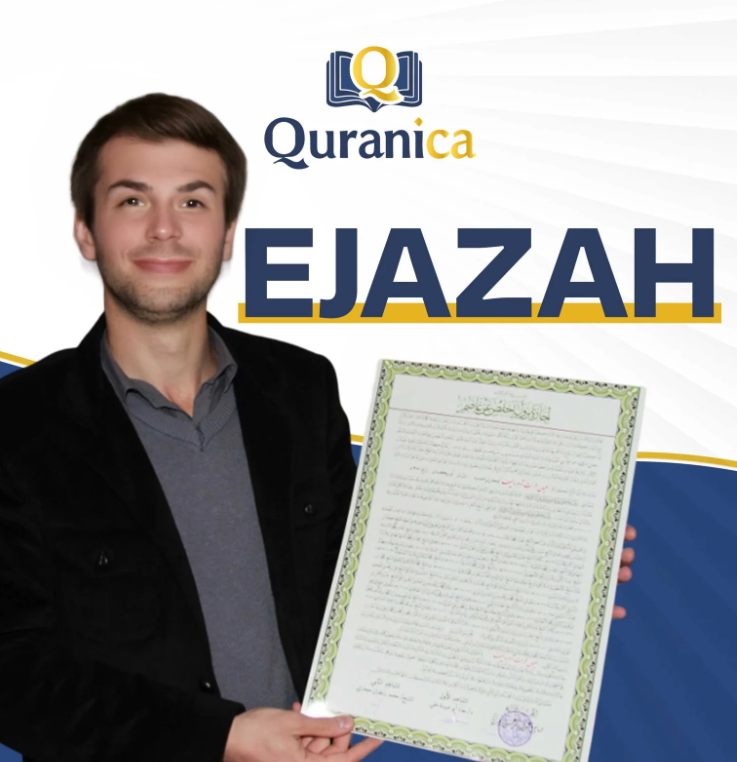
This level of daily revision is where a teacher’s guidance becomes most valuable. A structured Online Ijazah Course ensures your revision is as disciplined as your new memorization, which is the key to true, long-term mastery.
2. What is the weekly revision plan?
This is the “day off” (e.g., your Saturday) that we built into the 6-page-per-week schedule.
On this day, you do not memorize anything new. Your only task is to recite all six new pages from the past week to your teacher.
You also use this day to strengthen any older sections that felt weak during your daily revision. This weekly check-up is vital for long-term retention.
3. How do I manage revision as my Hifdh grows over 2 years?
Your “Old Memorization” portion is the key. Once you have memorized a few Juz’ (parts), you must recite a portion of them every single day.
A sustainable 2-year plan involves reciting at least 1 Juz’ (20 pages) of old memorization daily. This allows you to review your entire Hifdh every month or two.
This “rotating” revision ensures that page 1 is reviewed just as often as page 500.
Specific Challenges for Non-Arabs in a 2-Year Quran Memorization Plan
As a non-Arab student, you face unique challenges with language and comprehension.
The 2-year pace is ideal for you, as it gives you the extra time needed to address these hurdles properly.
1. How do I memorize when I don’t understand the Arabic?
You must read a simple, reliable translation of the page before you begin memorizing it.
Knowing the general story, theme, or command on the page provides “context hooks” for your brain. It changes the task from memorizing meaningless sounds to memorizing a message.
This makes retention significantly easier and the process more spiritually rewarding.
2. How do I handle similar-sounding verses (Mutashabihat)?
You must create a special notebook specifically for these similar verses. This is a critical skill for Hifdh.
When you encounter two verses that are nearly identical, write them side-by-side in your notebook. Use a red pen to circle or highlight the single word or phrase that is different.
This focused comparison is crucial, and the 2-year plan gives you time to do it carefully.
Read Also: How To Memorize Quran In 1 Year
Sample of 2-Year Quran Memorizarion Plan Weekly Table
This table illustrates the practical, daily balance between new lessons and constant revision that defines the 2-year plan.
| Day | Task 1: Old Revision | Task 2: Recent Revision | Task 3: New Memorization |
| Day 1 (e.g., Sunday) | Recite 1 Juz’ (or set portion) | Recite last 7-10 pages | Memorize 1 New Page (Page 1) |
| Day 2 (Monday) | Recite 1 Juz’ (or set portion) | Recite last 7-10 pages | Memorize 1 New Page (Page 2) |
| Day 3 (Tuesday) | Recite 1 Juz’ (or set portion) | Recite last 7-10 pages | Memorize 1 New Page (Page 3) |
| Day 4 (Wednesday) | Recite 1 Juz’ (or set portion) | Recite last 7-10 pages | Memorize 1 New Page (Page 4) |
| Day 5 (Thursday) | Recite 1 Juz’ (or set portion) | Recite last 7-10 pages | Memorize 1 New Page (Page 5) |
| Day 6 (Friday) | Recite 1 Juz’ (or set portion) | Recite last 7-10 pages | Memorize 1 New Page (Page 6) |
| Day 7 (Saturday) | Recite 1 Juz’ (or set portion) | Consolidate & Perfect all 6 new pages from the week | None (No new page) |
Read Also: How Long Does It Take To Memorize The Quran?
Start Hifz with The Quranica Method for 2-Year Quran Memorization
A 2-year Hifdh plan is a journey of patience, and having the right guide is essential. At Quranica, we specialize in helping non-Arab students succeed on this exact path.
Our teachers are not just native Arab speakers; many are qualified graduates of Al-Azhar University.
They hold Ijazahs (certification to teach) and have years of experience guiding foreign students through the specific challenges of pronunciation and memorization.
We offer a complete path at competitive prices, from building your foundation to achieving mastery:
- Hifz programs for adults
- Hifz classes for Ladies and sisters
- Hifz classes for kids
- Learn Quran with Tajweed (To build your foundation)
- Online Ijazah Course (To master and teach)
Start your 2-year journey with a teacher who truly understands your goals.
Explore our full range of courses.
Conclusion
Memorizing the Quran in two years is not just a goal—it’s a disciplined, life-changing journey built on balance, intention, and consistency. By following a clear structure of daily memorization and steady revision, you give your heart and mind the time they need to absorb Allah’s words deeply and meaningfully.
With the right teacher, sincere intention, and a well-paced plan, you can achieve lasting memorization without burnout. This two-year path ensures not only completion but mastery—transforming your relationship with the Quran into one of clarity, confidence, and lifelong connection.






0 Comments