In a nutshell: Learning to read the Quran in Arabic becomes simple when approached step by step. By recognizing letter families, practicing accurate pronunciation, applying vowel marks, and understanding how letters connect, beginners can quickly progress. Starting with short surahs and gradually working with a teacher ensures steady improvement and a deeper spiritual connection.
The thought of reading the Quran in its original Arabic script begins with a single step. The truth is, the Arabic alphabet is a beautiful and logical system that is much easier to learn than you might think.
This guide will gently walk you through the simplest, most manageable steps to begin reading the words of Allah with confidence.
Step 1: Mastering the Arabic Alphabet with Smart Techniques for Beginners
Your entire journey to reading the Quran rests on this first, most important step: mastering the Arabic alphabet.
But mastering it doesn’t have to be difficult; by using a few smart techniques from the very beginning, you can learn it much more easily and quickly than you think.
1. Learn Faster by Grouping Arabic Letters by Shape
The secret to learning the alphabet efficiently is to see the patterns. Instead of memorizing 28 unique letters, you only need to learn about 10 core shapes. Many letters are simply variations of one shape, distinguished only by dots (nuqat).
A. The “Boat” Family of Arabic Letters
The letters ب (Baa), ت (Taa), and ث (Thaa) all share the same basic “boat” shape. Once you recognize the shape, you just need to remember the dots: one dot below is ‘b’, two dots above is ‘t’, and three dots above is ‘th’.
B. The “Hook” Family of Arabic Letters
Similarly, the letters ج (Jeem), ح (Haa), and خ (Khaa) share the same curved form. The only difference is the dot: a dot inside for ‘j’, no dot for ‘h’, and a dot on top for ‘kh’.
C. The “Sister” Letters of Arabic Letters
You will also find pairs that look identical except for a dot, making them easy to learn together. Examples include د (Dal) & ذ (Dhal) and ر (Ra) & ز (Zay).
2. Focus on Correct Pronunciation (Makhraj) from Day One
Every Arabic letter has a precise point of articulation (Makharij al-Huruf)—a specific “home” in the mouth, throat, or lips where its correct sound is produced.
While you don’t need to master the entire science of it at this stage, being aware of this concept is vital.
When you learn a new letter, don’t just learn its sound; listen carefully and try to imitate where the sound is coming from.
For example, the letter ع (Ayn) comes from the middle of the throat, a place English speakers rarely use. Trying to produce the sound from its correct home, even imperfectly at first, builds good habits for the future.
This initial focus on correct pronunciation is the difference between building your foundation on solid rock versus sand.
3. Differentiate Between Similar Sounds from the Start
For a non-native speaker, many Arabic sounds can seem very similar. Paying close attention to these subtle differences from day one is a crucial habit that will save you from mistakes later on.
A. The Light ‘T’ vs. The Heavy ‘T’
Notice the difference between ت (taa) and ط (ṭaa). The ت is a light sound, made with the front of the tongue, like the ‘t’ in “tea.” The ط is a heavy, emphatic sound, made by raising the back of the tongue toward the roof of the mouth.
B. The Light ‘S’ vs. The Heavy ‘S’
Differentiate between س (seen) and ص (ṣaad). The س is a light hissing sound, like the ‘s’ in “seek.” The ص is a heavier sound, also produced by raising the back of the tongue, giving it a fuller, thicker quality.
4. Read Quran in Arabic with Vowels (Harakat)
The letters of the alphabet are silent on their own. Short vowel markings, called Harakat, are what give them sound and bring them to life, telling you exactly how to pronounce each letter.
The Three Main Vowels
The three primary vowels are Fatha (a dash above the letter, making an ‘a’ sound), Kasra (a dash below, making an ‘i’ sound), and Dammah (a small loop above, making a ‘u’ sound).
For example, the letter ‘ب’ (Baa) with these vowels becomes بَ (ba), بِ (bi), and بُ (bu). These simple markings are the key to sounding out every word in the Quran.
Our Arabic Lessons for Beginners course at Quranica is designed to gently introduce you to the language of the Quran, helping you build a deeper, more meaningful relationship with every verse you read.
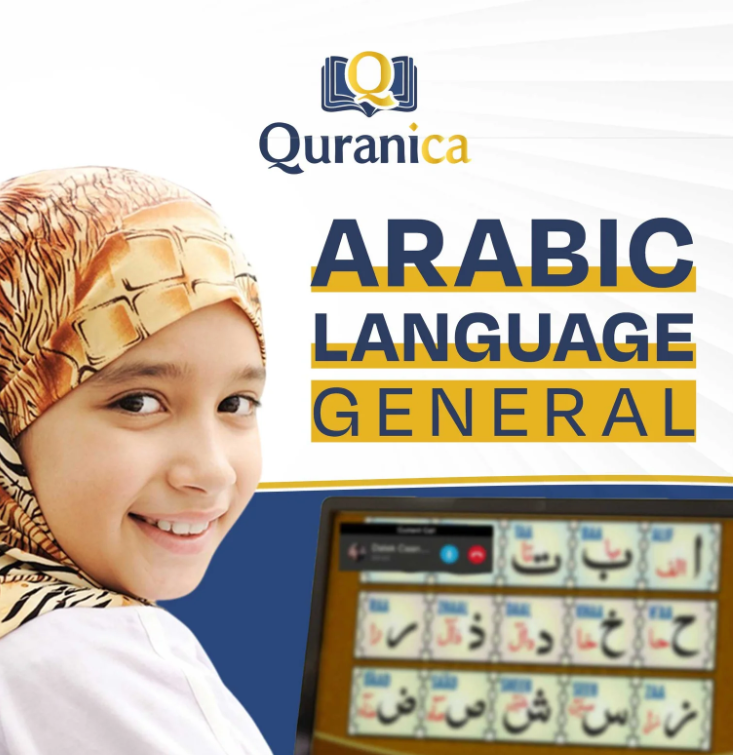
Step 2: Know How Letters Connect to Identify Quranic Words
This is where individual letters come together to form the blessed words of the Quran.
Understanding how letters connect is a simple and logical skill that will quickly move you from recognizing the alphabet to reading complete words.
1. Understanding How Letters Connect in a Word
Most letters in the Arabic alphabet are designed to connect to the letter that follows them. To do this, they simply change their shape slightly by dropping their final “tail” or curve, allowing them to flow into the next letter.
Let’s take the letter ‘ب’ (Baa).
- When it is alone or at the end of a word, it has its full shape: ب
- When it is at the beginning of a word, it becomes a simple curve ready to connect: بـ
- When it is in the middle, it connects from both sides: ـبـ
This simple logic applies to most letters, making the system easy to learn.
2. Identify the Six “One-Way Connector” Letters
To make reading even easier, there is a simple rule to remember. Six letters in the alphabet are “one-way connectors,” meaning they will connect to the letter before them, but never to the letter after them.
These six letters are:
Alif (ا),
Dal (د),
Dhal (ذ),
Ra (ر),
Zay (ز),
and Waw (و).
When you see one of these letters, you know it creates a small visual break in the word. This is a helpful clue for a beginner.
For example, look at the word “أَرَادَ” (arāda) from the Quran. It contains three of these letters.
The Alif (ا) does not connect to the Ra (ر), and the Ra (ر) does not connect to the Dal (د). This rule explains why the word has clear breaks within it.
Step 3: Your 3-Step Method to Read Any Simple Quranic Word
Reading a word becomes very simple when you follow this three-step process. We will use the word “خَلَقَ” (khalaqa), meaning “He created,” as our example.
1. Scan and Identify the Letters
Look at the word “خَلَقَ” and identify the core shape of each of the three letters. You will see the shapes for Khaa (خ), Laam (ل), and Qaaf (ق).
2. Apply the Vowel Sound
Look at the small marking (harakah) on each letter. In “خَلَقَ“, each of the three letters has a Fatha ( ــَــ ) on top, which makes the ‘a’ sound. So you have: kha + la + qa.
3. Blend the Sounds from Right to Left
Now, simply blend the sounds together smoothly from right to left to pronounce the full word. kha… la… qa… becomes “خَلَقَ” (khalaqa).
By following this simple method of Scan, Apply, and Blend, you can begin to sound out many words in the Quran.
Join our online Quran Reading Course and start your journey with expert guidance, step by step—from learning Arabic letters to reading fluently with Tajweed. Enroll today and begin reading the Quran with confidence!

Step 4: Start Practicing with the Short Surahs
This is the moment where your learning comes to life. The most effective way to build your reading skill and confidence is to immediately apply your knowledge to the short, beautiful surahs at the end of the Quran (Juz’ Amma).
1. Why Start with the Short Surahs?
These chapters are the perfect training ground because they offer quick, rewarding accomplishments.
Their short verses, simple words, and powerful rhythm help to train your tongue and your ear, making the experience of reading your first full surah a joyful and motivating success.
2. A Practical Method for Your First Practice
Adopt a simple, step-by-step approach for each new surah you practice. This method turns a potentially overwhelming task into a clear and manageable exercise.
A. First: read the English translation of the entire surah to understand its message.
Knowing the meaning beforehand makes the Arabic words feel more familiar and easier to recognize as you read them.
B. Second: listen to a slow and clear recitation of the surah by a Qari like Sheikh Al-Husary.
Listen two or three times to let the rhythm and the flow of the verses settle in your mind before you even try to read.
C. Third: deconstruct the very first verse, word by word.
Let’s practice with the first verse of Surah Al-Falaq:
“قُلْ أَعُوذُ بِرَبِّ الْفَلَقِ”
“Qul a’uzu bi-Rabbil-falaq”
“Say, ‘I seek refuge in the Lord of daybreak'” (Al-Falaq: 1).
First word: “قُلْ” (Qul). You see the letter Qaaf with a Dammah (qu) followed by the letter Laam with a Sukun (l). You blend them: Qul.
Second word: “أَعُوذُ” (a’uzu). You see Alif with a Fatha (a), followed by Ayn with a Dammah (‘u), which is then elongated by the letter Waw.
Third and fourth words: “بِرَبِّ الْفَلَقِ” (bi-Rabbil-falaq). You can see how the words are connected and read together, blending the sounds you have learned.
This slow, careful deconstruction of each word is how you build the skill of reading accurately.
3. Recommended Starting List to Read Quran in Arabic For Beginners
Start with Surah Al-Ikhlas, then move to Al-Falaq and An-Nas. After mastering these, a wonderful next step is Surah Al-Asr.
“وَالْعَصْرِ”
“Wal-‘asr”
“By time,” (Al-Asr: 1).
Seeing how you can read a profound and complete verse with just a few letters is a beautiful milestone in your journey.
Our Learn Tajweed for Beginners course provides a supportive, step-by-step environment where experienced tutors guide you from basic reading to correct and beautiful recitation, ensuring your relationship with the Quran continues to grow.
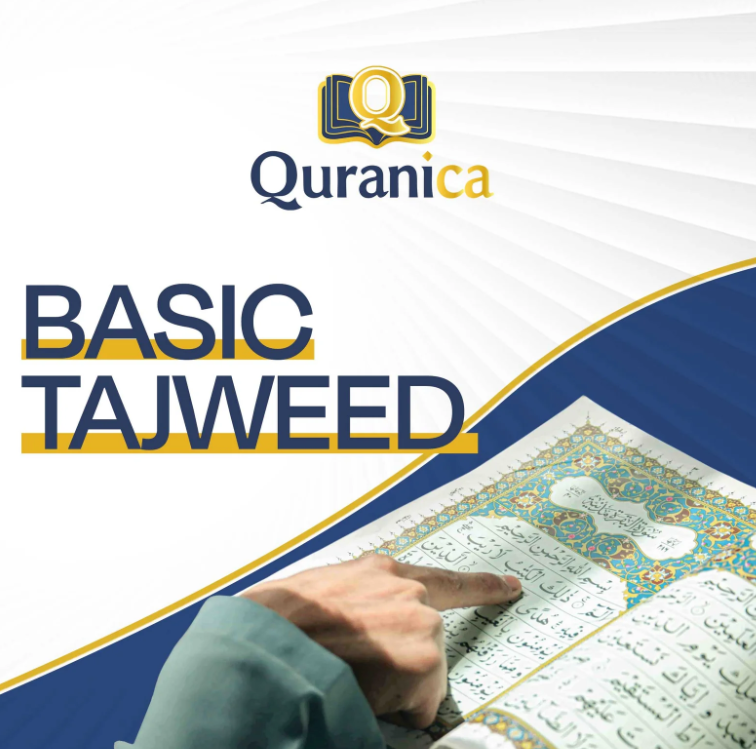
Step 5: Get the Help of a Teacher to Read Quran in Arabic Easily and Correctly
These steps make it very easy for you to start reading on your own. To ensure your pronunciation is correct and to move from basic reading to fluent recitation, the guidance of a teacher is essential.
1. Why You Need a Guide to Read Quran in Arabic
A teacher can listen to you and provide the immediate feedback needed to correct your pronunciation.
A book or a recording can show you the correct way, but only a teacher can tell you if you are doing it correctly.
2. The Next Step in Your Quranic Path
Once you have used these steps to build a basic foundation, finding a qualified teacher is the next easy step.
They will take the skills you have learned and guide you toward the beautiful and rewarding goal of fluent recitation.
Read Also: Advanced Quran Recitation with Tajweed Rules
Start Your Easy Path with Quranica From Reading to Reciting
Quranica is here to help you take the next step with confidence: turning the letters you’ve learned into a beautiful, flowing, and correct recitation.
Patient, Gentle Teachers
Our native Arab tutors, many of whom are Al-Azhar graduates, specialize in making beginners feel comfortable, confident, and supported.
A Proven Step-by-Step Method
We build upon what you’ve just learned, guiding you smoothly from basic reading to the rules of Tajweed in a way that is simple and easy to follow.
Learn Correctly, the First Time
Study with peace of mind under teachers who are certified with an Ijazah, ensuring your pronunciation is authentic from your very first word.
Our Learn Quran Reading course is the perfect place to perfect your new skills, and when you are ready, our Learn Tajweed for Beginners program is the natural next step on your easy path.
Explore our full range of courses.
Join a Quranica course today!
Conclusion
Mastering the Arabic alphabet is the foundation of Quran reading, and grouping letters by shared shapes makes the process much easier.
Recognizing similar sounds and practicing their correct articulation builds solid habits from the very beginning.
Learning vowel markings, or Harakat, breathes life into letters and allows beginners to sound out words accurately.
Understanding how letters connect and spotting the six non-connecting letters helps in identifying Quranic words with ease.
A simple three-step method—scanning letters, applying vowel sounds, and blending them—enables learners to read full words smoothly.
Applying this knowledge to short surahs, such as Al-Ikhlas or Al-Falaq, provides both practice and motivation.
0 Comments