
Helping children memorize the Quran is a journey built on love, patience, and gentle consistency. By modeling attachment to the Quran, creating a joyful home environment, starting with short surahs, and using playful, structured techniques, parents can nurture this bond naturally. Daily routines, engaging revision methods, and supportive teachers further ensure that memorization becomes a lifelong source of comfort and faith.
Inviting the Quran into your child’s heart is one of the most beautiful gifts a parent can offer. This journey is not about pressure or force, but about nurturing a lifelong friendship between your child and the Book of Allah.
This guide provides gentle, practical, and love-centered steps to help you and your child embark on this blessed journey of memorization together.
Step 1: Start by Being a Quranic Role Model to Make Your Child Memorize Quran
Your child’s love for the Quran will begin with seeing your love for it. Before you teach them a single verse, let them see and feel the importance of the Quran in your own life.
1. Let Your Child See You Recite Quran
Children learn by imitation. When they see you making time to read the Quran, handling the Mushaf with respect, and finding peace in its recitation, they will naturally understand its value.
2. Fill Your Home with the Quran
Play a beautiful recitation of the Quran softly in the background while your child is playing or before they go to sleep.
This passive listening helps their ears become familiar with the rhythm and sound of the Quran, making memorization easier later on.
Step 2: Create a Joyful Learning Space to Make Your Child Memorize Quran
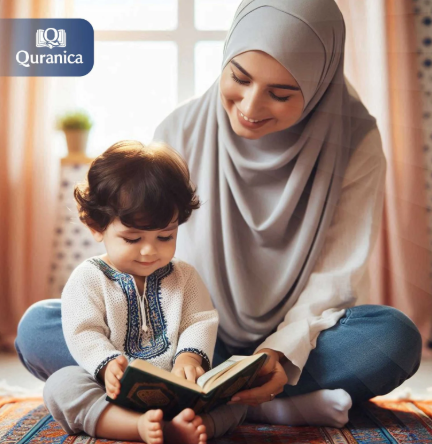
A child’s learning environment should be a place of warmth, comfort, and happiness. Creating a special “Quran corner” can help your child associate the Quran with positive feelings.
1. Designate a Special “Quran Corner”
Choose a clean, cozy, and quiet area in your home for your memorization sessions. You can make it special with a soft rug, some comfortable cushions, and good lighting.
2. Keep the Quran corner Positive and Encouraging
This space should be free from any scolding or pressure. It is a place for praise, gentle encouragement, and celebrating small achievements. The goal is to make it a place your child looks forward to visiting each day.
Step 3: Use Short Surahs to Help Your Child Memorize Quran
The best way to begin is by choosing a starting point that is achievable and confidence-boosting. The short, rhythmic chapters at the end of the Quran (Juz’ Amma) are perfectly designed for a child’s mind and heart.
1. Juz’ Amma is Perfect for a Child’s First Steps
The surahs in Juz’ Amma are ideal for children not just because they are short, but because their themes are foundational.
They speak of Allah’s oneness, His beautiful creation, and core morals in a powerful, concise, and rhythmic way that captivates a child’s attention.
2. A Recommended Path for a Confident Start
Start with Surah An-Nas, then Al-Falaq, and then Al-Ikhlas.
Once mastered, you can move to slightly longer ones like Surah Al-Masad and An-Nasr, gradually building your child’s memorization stamina.
3. Link the Surah to a Simple, Core Idea
Even if your child does not speak Arabic, you can create a powerful memory link by associating each surah with its core meaning.
This transforms the recitation from mere sounds into a meaningful message.
For example, when teaching Surah Al-Ikhlas, you can make it a special routine. Each time you recite it together, finish by saying with a warm smile, “This is the surah that tells us Allah is One,” while holding up one finger.
“قُلْ هُوَ اللَّهُ أَحَدٌ”
“Qul huwal-laahu ahad”
“Say, ‘He is Allah, [who is] One.'” (Al-Ikhlas: 1).
This simple physical action connects the sound of the surah to its profound meaning in a way a child can instantly grasp and remember.
4. Celebrate the First Accomplishment Joyfully
When your child successfully memorizes their first full surah, it is a momentous occasion.
This feeling of success is the best motivation, so celebrate it in a way that creates a lasting, happy memory.
For instance, after they can recite Surah An-Nas perfectly, you could have their favorite dessert and announce, “This is our special celebration because you have placed the beautiful words of Allah safely in your heart!”
This positive reinforcement builds a deep, emotional connection of joy and love for the Quran.
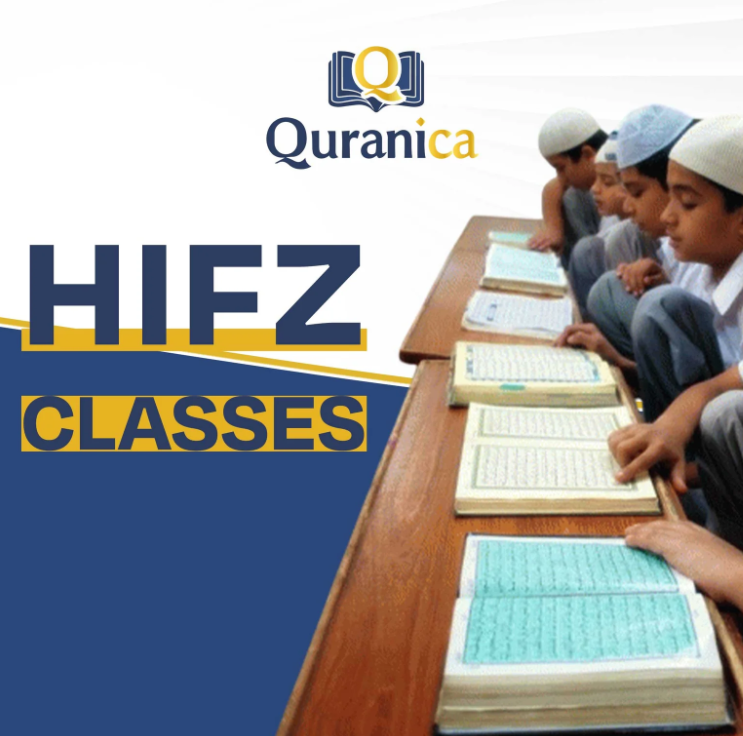
As your child gains this initial confidence, channeling their excitement into a structured path can make all the difference. This is the very principle behind our Quran Hifz classes for kids, where we begin with the joy of Juz’ Amma and build a supportive foundation for their entire journey.
Step 4: A Listen-and-Repeat Technique to Memorize Quran Fast for Kids
The most natural and effective way for a child to memorize Quran fast for kids is the same way they learned to speak: by listening and repeating.
This method is built on patience and a warm connection between you and your child, turning learning into a beautiful shared experience.
1. Apply the “Three Recitations” Rule
This is a structured way to introduce a new piece of a verse that makes learning effective and pressure-free. It involves three stages of listening and reciting.
First, the Parent’s Recitation
You recite the small chunk of the verse (e.g., one or two words) 3-5 times with clear, beautiful Tajweed.
During this time, your child’s only job is to listen intently and point to the words in the Mushaf. This builds their auditory memory without the stress of performing.
Second, Reciting Together
After they have listened, you recite the same chunk together 3-5 times. This builds their confidence and helps them match your pace and rhythm in a supportive way.
Third, the Child’s Recitation
Finally, you ask your child to try reciting it on their own. They might recite it perfectly, or they might make a mistake—either way, your role is to offer gentle encouragement and praise for their effort.
2. Use the “Building Blocks” Method to Connect Verses
A child’s memory works by connecting small, solid pieces of information. Instead of teaching a full verse at once, build it piece by piece, ensuring each block is firm before adding the next.
Let’s take the beginning of Surah Al-Asr as a practical example:
Block 1
Start with the first verse, “وَالْعَصْرِ” (Wal-‘asr). Apply the “Three Recitations” rule until your child is comfortable with this single block.
Block 2
Move to the first part of the next verse, “إِنَّ الْإِنسَانَ” (Innal-insāna). Master this block using the same “Three Recitations” method.
Link Blocks 1 & 2
Now, connect them. Recite both blocks together: “وَالْعَصْرِ، إِنَّ الْإِنسَانَ“. Repeat this combined phrase several times until it flows smoothly.
Block 3
Now, teach the final part of the verse, “لَفِي خُسْرٍ” (lafee khusr), as a new block.
Link All Blocks
Finally, join all the pieces together to form the complete thought: “وَالْعَصْرِ، إِنَّ الْإِنسَانَ لَفِي خُسْرٍ“. This method ensures the memory is strong and the verses are linked correctly from the start.
3. Engage the Senses with Movement and Hand Gestures
For children, especially non-Arabs, connecting words to physical actions makes them far more memorable and fun.
This kinesthetic learning technique helps anchor the meaning and sound in their minds.
When you recite a word like “السَّمَاءِ” (as-samā’ – the sky), you and your child can point upwards. For “الْأَرْضِ” (al-‘arḍ – the earth), you can point downwards.
For a verse with a number, like in Surah Al-Ikhlas, “قُلْ هُوَ اللَّهُ أَحَدٌ” (Qul huwa Allahu aḥad), you can raise one finger when you say “أَحَدٌ” (One).
This turns recitation into a gentle, interactive activity that engages their whole body in the act of learning.
4. Use and Stories to Keep Your Child Engaged
Tell your child the story behind a surah in a simple, engaging way before you begin memorizing it. Children’s minds are built for stories, and knowing the context makes the verses meaningful and much easier to remember.
For example, before teaching Surah Al-Fil, tell them the amazing story of Abraha’s army of elephants and how Allah protected the Kaaba with tiny birds.
“أَلَمْ تَرَ كَيْفْ فَعَلَ رَبُّكَ بِأَصْحَابِ الْفِيلِ”
“Alam tara kayfa fa’ala rabbuka bi-as-haabil feel”
“Have you not considered, [O Muhammad], how your Lord dealt with the companions of the elephant?” (Al-Fil: 1).
Knowing this exciting story first makes the verses come alive for your child.
Similarly, before Surah Al-Masad, you can briefly explain that it was about a man who hurt the Prophet (ﷺ), and that Allah is teaching us the consequences of bad actions.
It’s this combination of expertise and joy that forms the core of our Tajweed for kids program, designed to make the rules of recitation feel like an exciting discovery rather than a difficult lesson.
Step 5: Keep Sessions Short and Consistent
For a child, the secret to fast and effective memorization is not long hours, but short and consistent daily sessions.
A child’s attention span is limited, and learning should always end on a positive note.
1. The 15-Minute Rule
Keep your memorization sessions very short, especially for young children. 10 to 15 minutes of focused, happy learning is far more productive than a 30-minute session that ends in frustration.
2. The Power of a Daily Routine
A short session every single day builds a powerful habit and keeps the information fresh in your child’s mind.
Consistency is what creates momentum and makes memorization feel easy and natural.
Read Also: Fastest Way to Memorize Quran
Step 6: Help Your Kid Retain What They Memorize
Revision for a child should be a natural and gentle part of their day, not a stressful test.
The goal is to weave what they have learned into the fabric of their daily life, making the Quran a constant, comforting companion.
1. Weave Revision into Your Daily Rhythm
Incorporate their memorized surahs into the natural flow of your family’s day. When revision is a part of your routine, it becomes a habit of the heart rather than a chore.
A beautiful way to do this is to have a “Surah of the Day,” where you and your child try to recite one of their memorized surahs together at different times, like in the car on the way to school or while setting the table for dinner.
When you pray your optional (Sunnah) prayers at home, you can also stand near your child and audibly recite the surah they are revising.
This provides a live, loving model and beautifully integrates revision into the act of worship itself.
2. Turn Revision into a Gentle Activity
Children learn best through play, and revision can be turned into a lighthearted and enjoyable activity.
This removes any feeling of being tested and keeps the experience positive and engaging.
You can play “Complete the Verse,” where you recite the first half of a verse and your child joyfully recites the second half. Another simple game is “Guess the Surah”.
These simple games build confidence and test recall in a low-pressure, loving way.
3. Use the Power of Passive Listening
A child’s mind is like a sponge, and it absorbs what it hears consistently. Regularly playing recordings of the surahs your child has memorized is an effortless way to reinforce their learning.
Find a reciter (Qari) whose voice your child loves and make them your family’s “Quran companion.”
Hearing the same beautiful recitation regularly helps solidify the correct pronunciation, rhythm, and melody in your child’s memory.
Play the surah they are revising softly in the background during breakfast or before bedtime.
This constant, gentle exposure works on the subconscious mind, strengthening their retention without any active effort.
4. The “Listen and Point” Reading Review
A powerful technique for older children is to connect their auditory memory with their visual memory of the words.
This method strengthens their ability to recognize the words in the Mushaf, a crucial skill for long-term retention.
Open the Quran to a surah your child has already memorized. As you or a recording recites the verses, have your child follow along with their finger, pointing to each word as it is spoken.
This simple act of tracking the words builds a strong link between the sound of the verse and its written form, solidifying the memory from two different angles.
Step 8: Find a Child-Friendly Quran Teacher
As your child progresses, the guidance of a skilled teacher becomes invaluable. It is important to find a teacher who not only knows the Quran but also knows and loves to teach children.
1. What to Look for in a Teacher
Look for a teacher who is patient, kind, and uses positive and encouraging language. A good children’s teacher knows how to make learning fun and can build a warm and trusting relationship with your child.
2. A Partner in Your Journey
A great teacher will work with you as a partner. They will understand your goals, give you feedback on how to support your child at home, and share in the joy of your child’s progress.
Read Also: How to Memorize Quran Without Forgetting?
Begin Your Child’s Joyful Quran Journey at Quranica Today
At Quranica, we believe that a child’s relationship with the Quran should be built on a foundation of happiness, patience, and love.
Our entire program is designed around the unique needs of young learners, ensuring they feel supported and inspired every step of the way.
Teachers with a Gift for Teaching Kids
We connect your child with patient and kind native Arab teachers who are not only masters of the Quran but also specialize in engaging young hearts and minds.
A Legacy of Trusted Knowledge
Our mentors are proud graduates of Al-Azhar University, carrying an authentic and trusted tradition of Islamic learning.
Certified and Qualified
Rest assured that your child is learning correctly from tutors who hold an Ijazah, a certification to teach the Quran that connects them to an unbroken chain of scholars.
We offer a range of programs designed to grow with your child, from their first steps in Learn Quran Reading to our flagship Quran Hifz Classes for Kids and specialized Juz’ 30 Memorization courses.
Explore the full range of our courses
Enroll in a class today!
Conclusion
A child’s connection with the Quran begins by observing their parents’ example and living in a home filled with its recitation and respect. When the Quran is present in daily life, children naturally develop affection for it.
Creating a warm, inviting learning space and beginning with short, rhythmic surahs helps children build confidence.
Associating verses with simple meanings and celebrating small milestones makes the experience joyful and lasting.
Listening, repeating, and using movement or stories deepen memorization while keeping the process interactive. Short but consistent daily sessions foster steady progress without pressure.
Revision through play, passive listening, and family routines ensures retention, while a kind, child-friendly teacher can provide valuable guidance.





0 Comments