Understanding where to pause and resume while reciting the Quran is essential for protecting its meaning and flow. The rules of Waqf (stopping) and Ibtidā’ (starting) guide the reciter in choosing pauses that preserve grammar, context, and clarity. These principles ensure that every breath supports, rather than distorts, the message of the Quran.
Many students of Tajweed spend years perfecting the articulation points (Makharij) and characteristics (Sifat) of letters, yet they neglect the invisible grammar that holds the recitation together: the rules of Waqf (Stopping) and Ibtidā’ (Starting).
If you stop at the wrong moment, you risk severing the connection between a verb and its subject, or worse, negating a commandment entirely.
This guide ensurs that your breath serves the meaning of the Quran rather than disrupting it.
Rules of Stopping When Reading Quran
In the science of Tajweed, stopping is dictated by the semantic relationship between the word you just uttered and the word that follows, we call it rules of Waqf and Ibtida.
We categorize stops into four distinct types based on how complete the meaning is at the point of the pause.
1. Waqf Tāmm (The Complete Stop)
This is the ideal stop. It implies a total clean break. You stop here because the meaning is fully complete, and the text that follows has absolutely no attachment to what came before it—neither in grammar (Laft han) nor in immediate meaning (Ma’nan).
You will typically find this stop at the end of a Surah, the conclusion of a story, or when the Quran shifts topics entirely—such as moving from the description of the Believers to the description of the Disbelievers, or from the torment of Hellfire to the bliss of Paradise.
The Rule of Waqf Tāmm: It is excellent to stop here, and you should start purely from the next word.
Example: The Shift from Believers to Disbelievers
Here, the description of the successful believers ends completely. The next verse begins a new description of the disbelievers.
“أُولَٰئِكَ عَلَىٰ هُدًى مِّن رَّبِّهِمْ ۖ وَأُولَٰئِكَ هُمُ الْمُفْلِحُونَ”
“Ula-ika ‘ala hudan min rabbihim waula-ika humu almuflihoon”
“Those are on [right] guidance from their Lord, and it is those who are the successful.” (Surah Al-Baqarah: 5)
(You stop here. Then you begin fresh with Verse 6: “Indeed, those who disbelieve…”)
The Sub-Type: Waqf Lazim (The Mandatory Stop / Waqf Bayan)
Within the category of Complete Stops lies the “Mandatory Stop” (often marked with a small {م}).
This is a critical safety stop used to clarify meaning (Bayan) where connecting the words would create a disastrous misunderstanding in the listener’s mind.
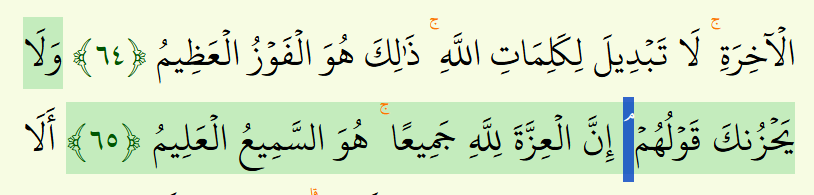
Example: Preventing Blasphemy
If you connect the first phrase to the second, it would sound as if the “speech” of the disbelievers is what claims that “Honor belongs to Allah.” We stop to sever that link.
“وَلَا يَحْزُنكَ قَوْلُهُمْ ۘ إِنَّ الْعِزَّةَ لِلَّهِ جَمِيعًا”
“Wala yahzunka qawluhum. Inna al-‘izzata lillahi jamee’an”
“And let not their speech grieve you. Indeed, honor [due to power] belongs to Allah entirely.” (Surah Yunus: 65)
2. Waqf Kāfi (The Sufficient Stop)
This is a common stop for the fluent reciter. Here, the meaning is complete, and the grammar is severed (the next sentence is a fresh grammatical structure), but the topic is still related. The narrative is ongoing.
The Rule of Waqf Kāfi: It is good to stop here, and it is good to start from the next word without repeating.
Example: Continuing the Narrative
In Surah Quraysh, you can stop after mentioning “The House” (Ka’bah). The next phrase describes the Lord of that House. Grammatically, it is a new start, but the meaning is deeply connected to the previous line.
“فَلْيَعْبُدُوا رَبَّ هَذَا الْبَيْتِ”
“Falya’budoo Rabba hadha al-Bayt”
“Let them worship the Lord of this House,” (Surah Quraysh: 3)
(You stop here. Then continue to Verse 4: “Who has fed them…”)
This is exactly why in our Online Quran Recitation Course, we train you to manage your breath and navigate these silences. A true reciter knows that the silence between words is just as important as the words themselves.
Enroll Now in Qurainca’s Quran Recitation Course

Read Also: Benefits and Rewards of Reading Quran Daily
3. Waqf Hasan (The Good Stop)
Here lies a subtle trap for the learner. A “Good Stop” means you have paused at a word where the meaning is understandable and complete in itself, but it is still strongly attached to what follows both in meaning AND grammar (I’rab).
The Rule of Waqf Hasan: You may stop here to take a breath because the meaning makes sense. However, you usually cannot start from the next word. You must generally go back one or two words to bridge the grammatical gap.
The Sunnah of Verse Ends
If a Waqf Hasan occurs at the very end of an Ayah (Verse), you are allowed to stop and start the next verse without repeating, even if they are grammatically linked.
This is because it was the Sunnah (practice) of the Prophet (PBUH) to stop at the heads of verses (Ra’s al-Ayah).
Example 1: The Sunnah Stop (Allowed)
In Surah Ar-Rum, the verses are grammatically one long sentence. However, because they are distinct verses, you may stop at the end of each one without going back.
“غُلِبَتِ الرُّومُ”
“Ghulibati ar-Room”
“The Byzantines have been defeated.” (Surah Ar-Rum: 2)
(You stop here. Then start Verse 3: “In the nearest land…” even though it is connected to the defeat mentioned before).
Example 2: The Mid-Verse (Must Repeat)
If you stop in the middle of a verse, you must be careful. In this verse, stopping at “The Messenger” is physically possible (the sentence makes sense).
But starting immediately with “And yourselves” is ugly (Qabīh) because it breaks the context of who is being expelled.
“يُخْرِجُونَ الرَّسُولَ وَإِيَّاكُمْ”
“Yukhrijoona ar-rasoola wa-iyyakum”
“…expelling the Messenger and yourselves…” (Surah Al-Mumtahanah: 1)
(If you stop at “The Messenger”, you cannot start at “And yourselves”. You must go back and recite: “Expelling the Messenger and yourselves…”)
Read Also: What Are the Manners and Etiquette of Reading The Quran?
4. Waqf Qabīh (The Ugly or Deficient Stop)
This is the stop every reciter must avoid. It occurs when you pause in the middle of a connected phrase, resulting in an incomplete or severely distorted meaning. This happens if you stop between a subject and its predicate, or a preposition and its object.
If you stop here due to a sneeze or lack of breath (Waqf Idtirari), you are sinful only if you do not go back and correct it. You must immediately replay the phrase to complete the meaning.
Example of a Waqf Qabīh (stopping early changes the decree):
“يَا أَيُّهَا الَّذِينَ آمَنُوا لَا تَقْرَبُوا الصَّلَاةَ وَأَنتُمْ سُكَارَىٰ”
“Ya ayyuha allatheena amanoo la taqraboo assalata waantum sukara”
“O you who have believed, do not approach prayer while you are intoxicated” (An-Nisa 4:43)
If one stops at “Prayer” (omitting “while you are intoxicated”), the command becomes “Do not approach prayer,” which is a disastrous distortion of Islamic law.
In our Learn Quran with Tajweed classes, our tutors focus heavily on this ‘semantic safety,’ ensuring you don’t just sound good, but that your recitation remains exact.
Enroll Now in Quranica’s Tajweed Course
The Visual Signs of Where to Stop While Reading Quran
To aid reciters who are not fluent in Arabic grammar, scholars have placed specific symbols above the line of text.
These are the traffic signals of the Mushaf. Ignoring them is akin to running a red light; you endanger the integrity of the message.
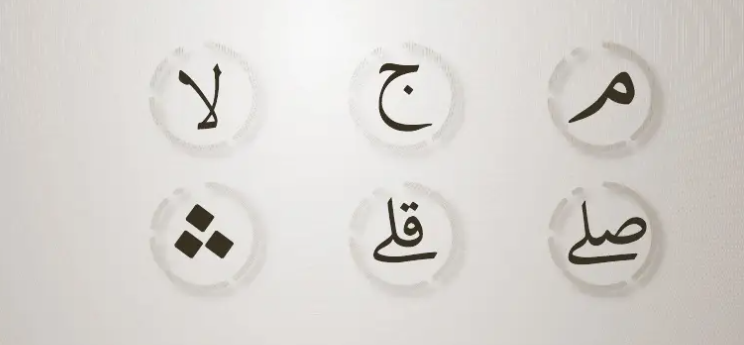
1. The Mandatory Stop (Meem) {م}
The small horizontal Meem {م} indicates a compulsory stop. Here, the connection between the two parts of the sentence is such that continuing would alter the meaning entirely.
When you see this, you must treat it as a meaning barrier. Stop, breathe, and treat the next word as a new beginning.
2. The Prohibition of Stopping (La) {لا}
The Lam-Alif {لا} is the direct opposite. It signifies “No.” You should not stop here. If you run out of breath at this sign, you must go back a few words and connect them to what follows.
Stopping voluntarily here often breaks a sentence in a way that leaves the listener confused.
3. The Permissible Stop (Jeem) {ج}
The Jeem {ج} represents Ja’iz (allowed). It implies a 50/50 situation. The meaning is balanced whether you stop or continue.
You have total freedom here based on your breath capacity and the rhythm of your recitation.
4. The Preference to Continue (Sad-Lam-Ya) {صلي}
The sign {صلي} is a contraction for “Connection is better.” While stopping is technically permissible and not sinful, the phrasing flows more beautifully and the meaning is more robust if you push through. Use your breath management to bridge this gap if possible.
5. The Preference to Stop (Qaf-Lam-Ya) {قلي}
The sign {قلي} stands for “Stopping is better.” You can continue if you wish, but the scholars of syntax have determined that a pause here highlights the meaning more effectively. It often marks the end of a specific clause within a long verse.
6. The Three dots
You will see three dots arranged in a triangle, appearing twice in close proximity. The rule is specific: you may stop at the first symbol, OR the second symbol, but never both. You must choose which phrasing you want to highlight.
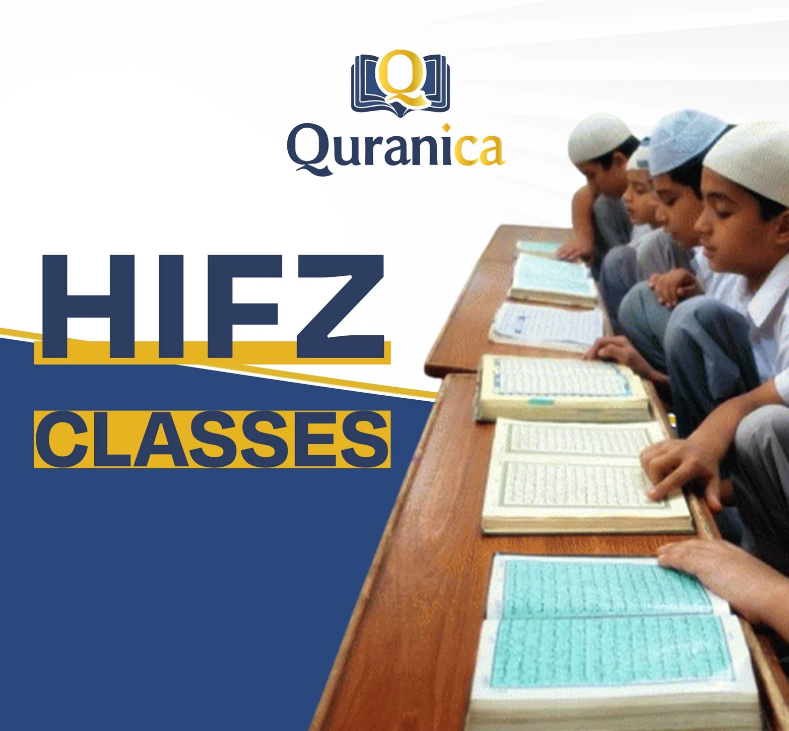
Students in our Quran Memorization and Hifz programs find that mastering these stopping points doesn’t just improve their breath—it actually accelerates their ability to retain verses by breaking them into meaningful blocks.
Enroll Now in Quranica’s Memorization and Hifz programs
Rules of Starting After Stopping in Quran
When you run out of breath in the middle of a verse (an emergency stop), you cannot simply gulp air and pronounce the next word.
That creates a disjointed, robotic recitation. You must perform what we call a “Review.”
You must look back at the sentence structure. Is the word you just stopped on attached to the previous one? If you stopped on a descriptor (Adjective), you cannot start with the Noun it describes; you must go back to the Noun.
The Golden Rule of Ibtidā’:
Always restart from a word that creates a complete, meaningful link to what follows. If you are unsure, it is safer to go back two or three words to ensure you have picked up the thread of the sentence properly.
Never start with a word that depends on what came before it (like starting with “And” or “But” without the context). Learn how to start reading Quran daily.
Advanced Breathing Techniques and Emergency Stops in Recitation
The reality of reciting the Quran is that human breath is limited. We call the unplanned stop Waqf Idtirari (Compelled Stop). Even the greatest Qaris run out of air. The difference is how they handle it.
The Eye-Breath Coordination
An expert reciter does not read word-by-word; they scan the line ahead. As you recite, your eyes should be scanning for the next valid resting place ({ج}, {قلي}, or end of verse).
If you sense your breath failing, do not wait until your lungs are completely empty. Select a Hasan (Good) stop proactively before you gasp.
Maintaining the Narrative Arc
Recitation is storytelling. When you stop and restart, you must maintain the same pitch and emotional tone.
If you stop on a note of warning, do not restart on a note of joy. The restart should feel like a seamless patch, invisible to the listener, sewing the verse back together.
By mastering these rules of Waqf and Ibtidā’, you move from merely reading the text to truly conveying the Divine Message.
You honor the Quran not just by pronouncing it correctly, but by respecting its silence as much as its sound.
Read Also: Scientific and Spiritual Benefits of Reading Quran
Transform Your Recitation with Quranica
Applying these rules seamlessly requires practice and expert guidance. At Quranica, we don’t just teach you to read; we connect you to the living tradition of the Quran.
Our instructors are Native Arab speakers, many of whom are Al-Azhar scholars and holders of prestigious Ijazah certificates.
We have years of experience teaching non-Arabic speakers, breaking down complex Tajweed rules into simple, actionable steps.
We offer premium education at highly competitive pricing, ensuring that financial barriers never stand between you and the Book of Allah.
Whether you are a complete beginner or looking to perfect your Qira’at, we have a path for you:
- Foundations: Start with Noorani Qaida or Learn Arabic for Beginners .
- Mastery: Perfect your flow with our Tajweed Course.
- Commitment: Begin your spiritual journey with Quran Memorization and Hifz or earn your certification through our Online Ijazah Course.
Explore our full range of courses.
Book your free evaluation class and start your first real lesson today.
Conclusion
Different types of pauses shape the listener’s understanding, from complete stops that mark a full shift in meaning to prohibited ones that would disrupt the verse.
Recognizing these distinctions helps a reciter maintain both accuracy and beauty in their reading.
Visual symbols in the Mushaf act as signposts, showing where stopping is required, discouraged, or optional. By following these markers, readers avoid grammatical breaks and preserve the intended message behind every phrase.

0 Comments