The journey with the Quran begins by learning its script and sounds, then progresses to beautifying recitation through Tajweed, exploring meanings with Tafsir, and committing verses to memory. It continues by living according to its guidance in daily life, supported by Fiqh, Sunnah, and Tazkiyah. At every stage, the presence of a knowledgeable teacher ensures authenticity, clarity, and a deeper spiritual bond.
Your relationship with the Holy Quran is a lifelong journey. It is a companionship that grows and deepens with every stage, transforming you from a stranger to the Arabic script into a person whose heart, mind, and soul are illuminated by the light of divine guidance. This guide outlines the major stages of that blessed journey.
Stage 1: Learning to Read the Quranic Arabic Script
This stage is about learning the sacred script, transforming what may seem like intricate symbols into clear, meaningful words that you can sound out with your own voice.
1. Start with the Correct Sound and Shape of Each Letter
Your journey begins by mastering the 28 letters, focusing equally on recognizing their shape and producing their correct sound from the precise point of articulation (makhraj).
For non-Arab learners, it is vital from day one to differentiate between sounds that may not exist in your native language, such as the deep sound of ‘ع’ (Ayn) versus the simple ‘ا’ (Alif), or the airy ‘ح’ (Haa) versus the light ‘هـ’ (haa).
2. Use Pattern Recognition to Learn Faster
An effective technique to accelerate learning is to group the letters by their core shape, rather than memorizing 28 unique forms.
This method of pattern recognition is especially helpful for students unfamiliar with the script.
For example, you can master three letters at once by learning the “boat” shape. The letters ب (Baa), ت (Taa), and ث (Thaa) all share this form.
This allows you to learn one shape and simply focus on the number and position of the dots to distinguish between them.
3. Understand How Vowels Give Life to Arabic Letters
The letters on their own are silent consonants. It is the short vowel markings, or Harakat, that give them sound and bring them to life. Think of them as the engine that makes the letters move.
The three primary vowels are the Fatha ( ــَــ ) for an ‘a’ sound, the Kasra ( ــِــ ) for an ‘i’ sound, and the Dammah ( ــُــ ) for a ‘u’ sound.
A letter like ‘م’ (Meem), which has an ‘m’ sound, becomes مَ (ma), مِ (mi), and مُ (mu) with these vowels.
4. Learn the Art of Connecting Letters to Form Words
The beauty of the Quranic script lies in how the letters flow together to form words. Most letters change their shape slightly to connect to their neighbors, having an initial, medial, and final form.
Let’s take the three separate letters: ع (Ayn), م (Meem), and ل (Laam). To form the word “عَمِلَ” (‘amila), meaning “he worked,” they transform and connect seamlessly.
Recognizing the core shape of each letter within the connected word is the key skill you will develop here.
5. Read Your First Word from the Quran
The culmination of these steps is the blessed moment you read your first complete word from the Mushaf.
Let’s apply what we’ve learned to the first word of Surah Al-Ikhlas, “قُلْ” (Qul), which means “Say.”
This word is formed from two letters: a ‘ق’ (Qaaf) with a Dammah (giving it the ‘Qu’ sound), followed by a ‘ل’ (Laam) with a Sukoon ( ــْــ ), which indicates no vowel.
You simply join the sounds: Qu + l = Qul. This is the moment the journey becomes real, as you directly pronounce a command from Allah.
A guided path, like our Arabic Lessons for Beginners, is designed to build your skills step-by-step, making your journey of reading the Quran feel even more natural and intuitive.
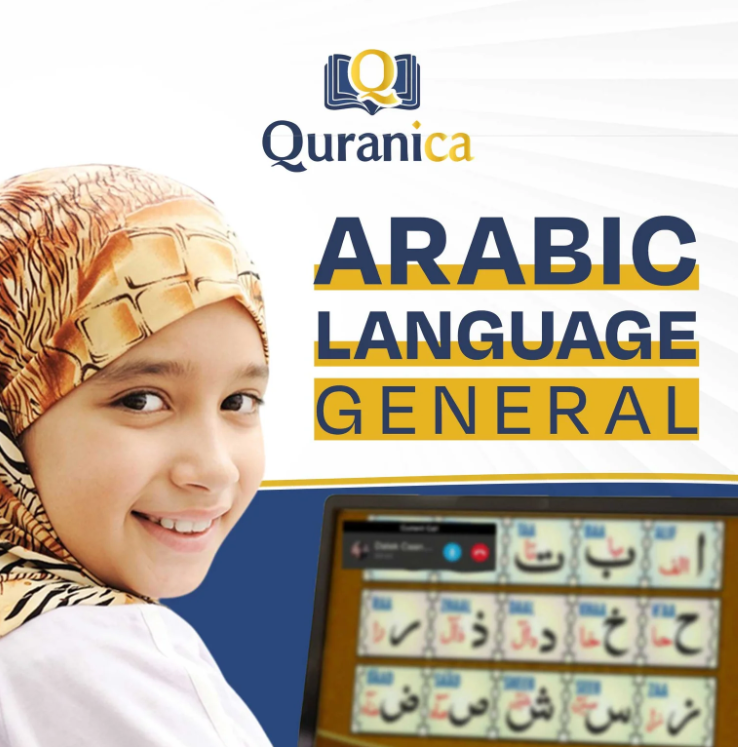
Stage 2: Beautifying Your Recitation with Tajweed
Once you can confidently read the words, your journey deepens.
This next stage is about moving from simply pronouncing the letters to giving each letter its due right (ḥaqq), transforming your reading into a beautiful, precise, and moving recitation (Tilawah) as it was revealed.
1. Giving Each Letter Its Right (Makharij and Sifat)
This is where you learn that each letter is a unique creation with a precise point of origin (makhraj) and a specific set of characteristics (sifat).
For a non-Arab learner, this means learning to physically distinguish between sounds that might seem similar.
For example, the “light” letter ‘ت’ (taa) is produced with a flat tongue, creating a soft sound.
In contrast, the “heavy” letter ‘ط’ (ṭaa) requires raising the back of the tongue, producing a much fuller, more emphatic sound.
Let’s look at the difference in the Quran: “التَّائِبُونَ” “At-ta’iboon” “The repentant ones…” (At-Tawbah: 112). Here, the ‘ت’ is light and gentle.
“الطَّامَّةُ” “At-ṭaammah” “The overwhelming catastrophe.” (An-Nazi’at: 34). Here, the ‘ط’ is strong and heavy, reflecting the weight of the word’s meaning.
2. Unlocking the Inherent Rhythm and Melody of the Quran
Tajweed also introduces you to the principles that create the Quran’s unique and captivating rhythm.
This is not about adding a melody, but about revealing the melody that is already embedded within the text through the correct application of its rules.
The most fundamental of these are the elongations (Madd), where vowel sounds are stretched for a specific duration.
Another key element is the ghunnah, a beautiful, gentle nasal sound that accompanies the letters ‘ن’ (Noon) and ‘م’ (Meem) in certain situations.
Consider the simple word: “قَالَ” “qāla” “He said” The sound ‘qaa’ is held for two counts because the fatha is followed by an Alif.
This is different from a word without Madd, like “خَلَقَ” (khalaqa), where each vowel is short. This precise timing is the foundation of the Quran’s rhythmic beauty.
3. Reciting with Tarteel
The purpose of learning these rules is to fulfill the divine command to recite the Quran with Tarteel—a slow, measured, and clear recitation that allows for reflection.
It is this mindful pace that allows the beauty of the sounds and the depth of the meanings to enter the heart.
This practice is directly inspired by the instruction from Allah Himself:
“وَرَتِّلِ الْقُرْآنَ تَرْتِيلًا”
“Wa rattilil-Qur’aana tarteela”
“And recite the Qur’an with measured recitation.” (Al-Muzzammil: 4).
This verse reminds us that the goal of Tajweed is not just technical perfection, but a means to a deeper, more reflective connection with the words of Allah.
A structured program like our Learn Tajweed for Beginners course is designed to take you gently from the very basics to a confident and correct recitation, all within a supportive and encouraging environment.
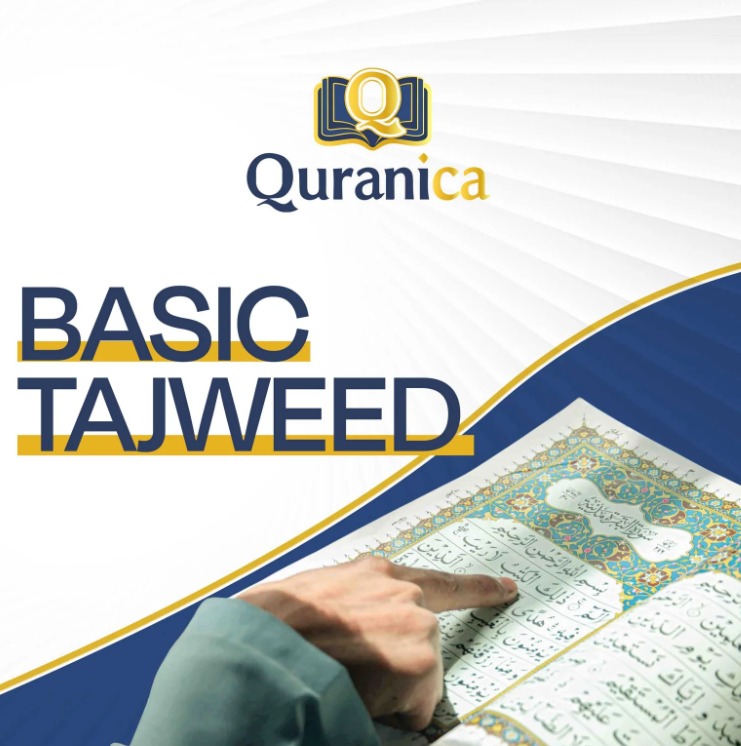
Stage 3: Deepening Your Understanding (Tafsir)
This is the stage where your journey moves from the tongue to the mind.
After learning to pronounce the words, you seek to understand the profound meanings and guidance they contain.
1. Beginning with Translation
The first step in this stage is to read a reliable translation of the Quran in your own language. This gives you access to the general meaning of the verses you are reciting.
2. Engage with a Beginner-Friendly Commentary (Tafsir)
Now you are ready to explore the Tafsir. It is wise to begin with a commentary that is concise and written in clear, accessible language, such as the abridged English versions of Tafsir Ibn Kathir or Tafsir As-Sa’di.
3. Study the Reasons for Revelation (Asbab al-Nuzul)
A crucial step for a non-Arab student is to learn why a verse was revealed.
The “reasons for revelation” provide the historical and social context that illuminates the meaning in a way a simple translation cannot.
For example, the opening verses of Surah ‘Abasa (“He Frowned”) were revealed when the Prophet (peace be upon him) was speaking to a Qurayshi leader and a blind man, Abdullah ibn Umm Maktum, came seeking knowledge.
Knowing this story brings a profound depth to your understanding of the verses and the universal importance of sincerity and humility.
Read Also: How to Learn Quran?
Stage 4: Committing the Quran to Heart (Hifz)
This beautiful stage is about moving the Quran from your mind into your heart. Memorization (Hifz) makes the words of Allah a part of your very being, a constant companion you carry with you.
1. The Three-Part Hifz Session: New, Recent, and Old Review
An effective Hifz journey is built on a structured daily session divided into three essential parts.
This system ensures a balance between learning new verses and retaining what you have already memorized.
A. Your New Lesson
This is the small portion of new verses you aim to memorize for the day. The focus must be on perfect recitation (Tajweed) and solid memorization, even if it’s just a few verses.
B. Your Recent Review
This is the crucial review of the lessons from the past 7-10 days. This daily repetition is what transfers the verses from your short-term to your medium-term memory.
C. Your Old Review
This is the review of a larger, older portion of your memorization, typically at least one full Juz’.
This is the engine of long-term retention, ensuring that no part of your memorization is ever abandoned.
2. The Incremental Linking Method for New Lessons
The strongest way to memorize your new lesson is not to learn it as one large block, but to build it incrementally, verse by verse.
This method creates strong links between the verses, making them flow smoothly from memory.
- First, perfect the recitation and memorization of the first verse until you can recite it flawlessly without looking.
- Next, perfect the second verse in the same way.
- Then, you must link them by reciting the first and second verses together from memory 7-15 times.
- Only after the link is strong should you move on to the third verse, which you will then link to the first two.
For instance, when memorizing Surah Al-Fatiha, you first master “الْحَمْدُ لِلَّهِ رَبِّ الْعَالَمِينَ“. Then you master “الرَّحْمَٰنِ الرَّحِيمِ“.
Immediately, you must practice reciting both together from memory before even attempting to learn “مَالِكِ يَوْمِ الدِّينِ“. This technique makes your memorization as strong as a chain.
3. Making Revision a Lifelong Commitment
The true goal of Hifz is not the speed of memorization, but the strength of retention. Forgetting is a natural human tendency, and the only way to overcome it is through a disciplined and lifelong commitment to revision.
Your daily review is not a secondary task; it is the main task that protects what you have already achieved. Think of your new lesson as planting a seed.
The daily review is the watering that allows it to sprout, and the consistent old review is the sunlight that allows it to grow into a strong, unshakeable tree.
For those who are ready to embark on this noble endeavor, our Hifz Program for Adults provides a systematic path, with proven techniques and expert mentorship to help you commit the words of Allah to your heart.
Stage 5: Living by the Guidance of the Quran
This is the ultimate and continuous stage of the journey, where the Quran moves from your heart to your limbs. It is the lifelong process of translating the words you have read, understood, and memorized into beautiful character, righteous actions, and a comprehensive worldview.
1. Understanding Fiqh (Islamic Jurisprudence)
Living by the Quran requires you to understand how its broad principles are translated into specific, practical rulings for daily life.
This is the science of Fiqh, which provides the methodology for applying Quranic guidance to matters of worship, family life, and societal interactions.
For example, the Quran establishes the principles of justice in trade and financial dealings. Consider the verse:
“يَا أَيُّهَا الَّذِينَ آمَنُوا إِذَا تَدَايَنتُم بِدَيْنٍ إِلَىٰ أَجَلٍ مُّسَمًّى فَاكْتُبُوهُ”
“Ya ayyuhal-lazeena amanoo itha tadayantum bidaynin ila ajalin musamman faktubooh”
“O you who have believed, when you contract a debt for a specified term, write it down.” (Al-Baqarah: 282).
Studying the Fiqh of transactions helps you apply the wisdom of this verse correctly, ensuring fairness and clarity in your financial commitments, thus truly living by its guidance.
2. Studying the Sunnah and Hadith
The Quran repeatedly commands us to obey and follow the Prophet Muhammad (peace be upon him).
Therefore, a crucial part of living by the Quran is to study his life (Sirah) and his traditions (Sunnah) as preserved in the Hadith, for he is the perfect human embodiment of the Quran’s teachings.
3. Connecting with the Science of Tazkiyah
The ultimate goal of the Quran’s guidance is to purify the inner self. Living by the Quran is therefore an internal journey as much as an external one.
This leads to the study of Tazkiyah (purification of the soul), which focuses on cultivating virtues like sincerity (ikhlas), gratitude (shukr), and trust in Allah (tawakkul).
As you can see, truly living by the Quran opens the doors to a vast and interconnected landscape of Islamic knowledge.
To navigate this landscape effectively, many students find that a comprehensive Islamic Studies Online Course provides the structured guidance needed to explore these essential sciences in a balanced and authentic way.
Read Also: How To Learn Quran At Home?

Stage 6: Finding a Teacher for Your Quran Journey
No meaningful journey is undertaken without a guide. A qualified teacher is your essential companion through every stage, holding your hand and illuminating the path ahead.
1. Guidance Through Every Stage
A teacher shows you the first letter, corrects your recitation, explains the deeper meanings, and tests your memorization. Their role evolves as you progress, but their guidance remains crucial.
2. An Unbroken Chain of Knowledge
Learning from a teacher connects you to an unbroken chain of knowledge (sanad) that goes all the way back to the Prophet (peace be upon him). This ensures the knowledge you receive is authentic, blessed, and correct.
Read Also: Can I Learn Quran By Myself? And How?
Begin Your Quran Leaning Journey with Quranica Today
At Quranica, we are dedicated to being your guide through every single stage of your lifelong journey with the Quran, from the first letter you learn to the deepest wisdom you uncover.
We provide the authentic, expert guidance you need to progress with confidence and sincerity, no matter where you are on the path.
Guides for Every Stage
Our patient, native Arab teachers, many of whom are graduates of the prestigious Al-Azhar University, are qualified to guide you from the absolute basics to the most advanced levels of study.
An Unbroken Chain of Knowledge
Learn with peace of mind, knowing your mentor is certified with an Ijazah, connecting you to an authentic and unbroken chain of Quranic transmission.
A Path for a Lifetime
Our comprehensive curriculum is designed to grow with you, offering a structured and supportive environment for your entire journey.
Whether you are at the very beginning with our Learn Quran Reading course, beautifying your recitation with Learn Quran with Tajweed, committing the words to your heart through Quran Memorization, or seeking the ultimate goal in our Online Ijazah Program, we have a dedicated teacher for you.
Quranica offers a complete curriculum for your entire family, with specialised courses in:
- Learn Quran with Tajweed (for all levels)
- Quran Memorization (Hifz) Programs
- Ijazah Course
- Islamic Studies
- Ten Qirat
Explore our full range of courses.
Join a Quranica course today!
Conclusion
Mastering the Arabic script is the foundation of the Quranic journey, where learners move from recognizing letters to reading their first word. This stage transforms symbols into living sounds that carry divine meaning.
Tajweed then refines the recitation, giving each letter its right and revealing the natural rhythm of the Quran. With measured recitation, the words touch both the heart and the soul, bringing clarity and beauty to every verse.
Understanding through Tafsir opens the door to context and wisdom, while Hifz engrains the Quran into one’s heart through structured memorization and lifelong review. Together, these stages preserve and deepen the connection.
The Quran’s purpose is lived out in action—guiding worship, character, and daily life, supported by the Sunnah and spiritual purification. With the help of a teacher, this journey remains authentic, blessed, and ever-growing.

0 Comments