Learning the Quran as an adult varies widely, but most beginners gain reading fluency within a few months and reach memorization goals over several years. Progress depends on consistent daily practice, strong reading skills before memorizing, and a balanced routine of new learning and revision.
We at Quranica, have sat across from tens of students who look exactly like you. You have a full-time job, perhaps a family, endless notifications pinging on your phone, and a deep, persistent desire to connect with the Quran.
You look at the Mushaf—over 600 pages of dense Arabic text—and you do the mental math. It feels impossible. You see children in online videos finishing their Hifz in two years and wonder if you missed the boat.
You didn’t.
Let’s break this down without the sugar-coating, using real timelines I’ve seen work for busy adults living in the West.
How Long Does it Take to Learn The Quran
If you are a complete beginner starting from zero in learning Quran, expect to spend 3 to 6 months to achieve reading fluency with basic Tajweed rules, assuming you study for 30 minutes a day.
To memorize the entire Quran (Hifz), the average adult with a full-time job takes between 3 to 5 years of consistent daily effort.
However, if your goal is simply to read the Arabic script correctly without memorization, most students achieve competence in roughly 100 to 150 hours of direct learning and practice.
What Does It Means to Learn The Quran?
We need to clarify your finish line because “learning” is a vague term. In our long years of teaching, We’ve seen students get discouraged because they conflate three very different stages of this journey.
1. First is Reading from the Mushaf
For non-Arab speakers, this is the steepest hill to climb initially. You are rewiring your brain to recognize a new script, read from right to left, and produce sounds that don’t exist in English, like the heavy ‘Daad’ ض or the throat-clearing ‘Haa’ ح.
This stage is frustrating if you do it alone. We designed our Learn Quran Reading course specifically for this struggle—taking you from staring at abstract shapes to connecting letters with confidence in weeks, not years.
Enroll Now in Quranica’s Learn Quran Reading Course
2. Second is Tajweed
This is the science of proper pronunciation. You can read the Quran without knowing the theoretical definition of Idgham or Ikhfa, but applying the sounds is mandatory. Learning the rules takes weeks; mastering the application takes a lifetime.
3. Third is Hifz, or memorization
This is what most people mean when they ask about the timeline. This is the act of committing the words to heart so you can recite them in prayer without the book.
Read also: Quran Learning Tools For Kids
The Hurdle for Non-Arabic Speakers in Learning The Quran
If you grew up speaking English, French, or German, your timeline looks different from someone who grew up in Cairo or Amman. The biggest bottleneck we see in Western students is rushing the reading phase to get to the memorizing phase.
Moving past the question of whether reading quran fard or sunnah, you cannot memorize what you cannot read fluently.
When you try to memorize a page while still struggling to decode the letters, you are fighting a war on two fronts.
Your brain is exhausted by the act of reading, leaving no energy for retention. We usually pause our students who want to start Hifz immediately.
We tell them to spend six months just reading. Read until the letters flow like water. Once your reading speed increases, your memorization time drops drasticall.
Realistic Timelines for Learning Quran Reading
Let’s look at the data. Based on the students we have tracked over the years, here is what the path to reading fluency usually looks like.
| Current Level | Goal | Daily Commitment | Estimated Timeline |
| Absolute Beginner | Recognize alphabet & vowels | 20 mins / day | 2 – 3 Weeks |
| Knows Alphabet | Connect letters & read words | 30 mins / day | 1 – 2 Months |
| Slow Reader | Fluent Reading | 30 mins / day | 3 – 5 Months |
| Fluent Reader | Applied Tajweed Mastery | 45 Mins / day | 5 – 9 Months |
Note that “Fluent Reading” here doesn’t mean you understand the Arabic meaning. It means you can open any page of the Mushaf and recite it smoothly without stumbling over every third word.
Fixing your pronunciation early saves you huge headaches later. In our Tajweed for Beginners classes, we focus on this ‘quality over quantity’ approach, ensuring your tongue masters the difficult sounds before you try to memorize them.
Enroll Now in Quranica’s Tajweed Course
Timelines For Memorizing The Whole Quran
This is the big commitment. The Quran consists of approximately 604 pages (in the standard Madani script).
The math seems simple, but the reality involves the psychology of human memory. You aren’t a computer hard drive; you are a human being who forgets.
We have created a breakdown of how long full memorization takes based on different lifestyle intensities.
| Student Profile | Daily Routine | New Memorization Rate | Completion Time |
| The “Busy Professional” | 30 mins/day (Consistent) | 2-3 lines | 7 – 8 Years |
| The “Dedicated Student” | 1 hour/day | Half a page | 3 – 4 Years |
| The “Aggressive Learner” | 2+ hours/day | 1 full page | 1.5 – 2 Years |
| The “Full-Time Student” | 4-6 hours/day | 2+ pages | 8 – 10 Months |
Most of the people reading this blog fall into the “Busy Professional” or “Dedicated Student” categories. And that is perfectly fine.
The 8-year path is just as noble as the 2-year path. In fact, the slower path often leads to stronger retention because the verses have settled in your heart over a longer period and we recommend the 3-year plan.
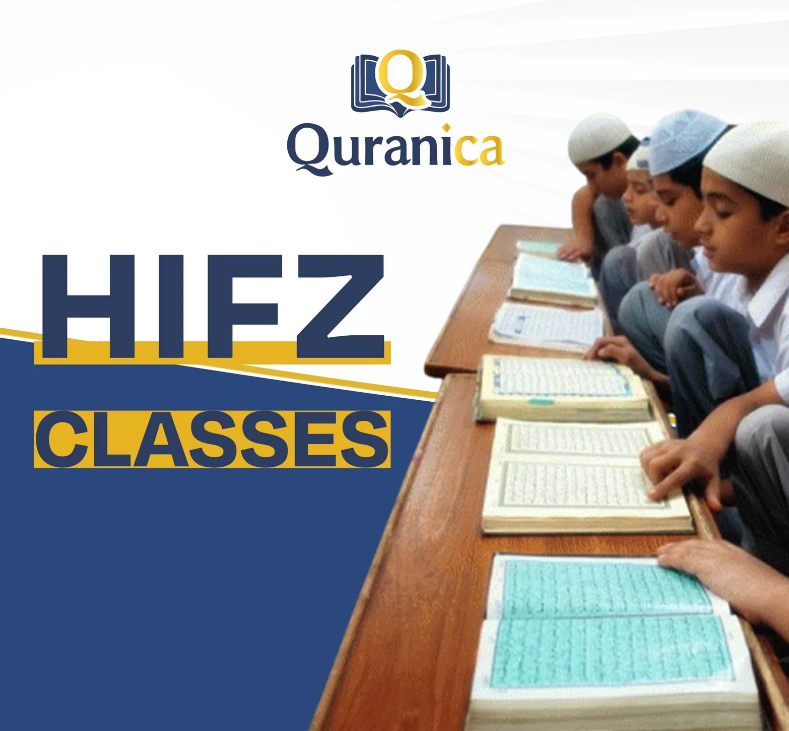
A dedicated online Hifz program is often the most effective way to connect with an expert teacher who specializes in guiding learners at a sustainable pace.
Enroll Now in Quranica’s Quran Hifz programs
Factors that speed up learning the Quran
Why does one student finish in three years while another takes ten? It rarely has to do with IQ. In our long years of teaching, three specific variables determine your speed.
1. Consistency beats Intensity
The student who studies for 20 minutes every single morning before work will always outperform the student who crams for five hours on Sunday.
The Quran escapes the mind faster than camels escape their tying ropes. Daily contact is the only way to retain it.
2. The Teacher’s Role
You need a mentor, not just a checker. A good tutor knows when to push you and when to tell you to take a break because you are burning out.
If you are trying to do this alone via YouTube, you will likely waste months correcting pronunciation errors that a teacher could have fixed in minutes.
3. Age and Memory Agility
Children memorize quickly but forget quickly. Adults memorize slowly because we try to use logic to connect verses, but once we lock it in, we tend to understand the structure better.
Do not be discouraged by your age. Some of our strongest Hafiz students started in their 50s.
Read Also: How to Learn Reading Quran?
The Forgotten Factor Of Muraja’ah Or Revision
Here is the expert insight that most concise guides ignore: Memorization is easy; retention is hard.
If you memorize one page a day, you will finish the Quran in less than two years. But if you don’t have a robust revision (Muraja’ah) schedule, by the time you reach the end, you will have forgotten the beginning.
You must view your memory like a bucket with a small hole in the bottom. You have to keep pouring water in to keep it full.
A realistic schedule involves spending 30% of your time on new lessons and 70% of your time reviewing old material. If you have 60 minutes a day, only use 15 minutes for new verses.
Spend the rest polishing what you already know. If you neglect revision, your timeline to “finish” the Quran becomes infinite because you are constantly re-memorizing the same chapters.
Psychological Barriers That Extend The Timeline
The timeline extends when you stop. It sounds obvious, but consistency is the only magic trick in this game.
We often see a pattern where a student goes hard for three weeks, misses a day due to a work deadline, feels guilty, misses another day, and then drops off for a month.
That one month off sets you back three months in memory strength.
The Quran describes its own revelation as a gradual process to strengthen the heart.
“وَقُرْءَانًا فَرَقْنَـٰهُ لِتَقْرَأَهُۥ عَلَى ٱلنَّاسِ عَلَىٰ مُكْثٍ وَنَزَّلْنَـٰهُ تَنزِيلًا”
“Wa-qur’anan faraqnahu litaqra-ahu ‘ala annasin ‘ala mukthin wanazzalnahu tanzeela”
“And [it is] a Qur’an which We have separated [by intervals] that you might recite it to the people over a prolonged period. And We have sent it down progressively.” (Al-Isra 17:106)
Your journey mirrors this reality. It is meant to be done “ala mukthin”—at intervals, ove
Read Also: Quran Learning Games
Start Your Quran Learning Path with Quranica Today
At Quranica, we pair you with native Arab tutors who are graduates of Al-Azhar University—the world’s most prestigious center of Islamic learning.
They hold Ijazah, meaning they have a connected chain of transmission back to the Prophet (PBUH).
More importantly, they have years of experience teaching Western students. They understand your struggles, your accent, and your busy schedule.
Pick the path that fits your goal:
Just starting out?
Build a solid foundation with Learn Quran Reading Course or specifically Noorani Qaida.
Want to perfect your recitation?
Join our Learn Quran with Tajweed or the Online Quran Recitation Course.
Ready to commit to memory?
We have specialized tracks for everyone: Hifz Program for Adults, Quran Hifz Classes for Kids, and dedicated Hifz Classes for Ladies and Sisters.
For your children
Give them the best start with Islamic Studies for Kids or Learn Arabic for Kids.
Explore our full range of courses.
Book your free evaluation class and start your first real lesson today.
Conclusion
Mastering Quran reading, Tajweed, and memorization unfolds step by step, with each stage building on the one before it.
Adults often need several months to read confidently and much longer to complete memorization, especially when balancing work and family life. What matters most is creating a routine that fits your lifestyle.
Steady daily contact with the Quran outperforms occasional long sessions, and having a knowledgeable teacher accelerates progress while preventing unnoticed mistakes.
Age, memory habits, and learning pace all play a role, but none of them limit a sincere student from moving forward.





0 Comments