Advanced Quran Recitation with Tajweed Rules
Advancing in Tajweed means going beyond the basics to refine precision in pronunciation, merging rules, elongations, and subtle pauses. From mastering complex letters and nuanced Idgham to handling rare Madd forms and unique Hafs cases, every step deepens fluency. This journey ultimately leads to Ijazah, linking one’s recitation to the unbroken chain of Quranic transmission.
For the student who has mastered the fundamentals of Tajweed and is now striving for a higher level of precision, the journey into advanced recitation begins.
This guide is for those who are ready to move beyond the basics and into the finer, more intricate details of the science, aiming for the noble goal of Itqan—the perfection of recitation. This is not a review of the basics, but a direct path into the heart of advanced Tajweed.
Step 1: Deepening Your Knowledge of Makharij and Sifat
Mastery begins by refining what you already know. Moving to an advanced level means going beyond just knowing the articulation points and qualities of letters to perfecting their application in every context.
1. Perfecting the Articulation of Complex Letters
This involves a deeper focus on letters that are commonly mispronounced even by proficient readers, such as the Dad (ض).
Advanced study requires perfecting its quality of Istitalah (elongation of the sound) to distinguish it fully from the Dha’ (ظ).
2. Distinguishing Between Permanent and Conditional Qualities
An advanced student must understand the difference between Sifat Lazimah (permanent qualities inherent to a letter) and Sifat ‘Aridah (conditional qualities that appear in specific contexts), such as the rules of Tafkhim (heaviness) and Tarqiq (lightness) for the letter Ra’ (ر).
Step 2: Perfecting Advanced Idgham Rules
While you have mastered the Idgham of Noon Sakinah, advanced Tajweed covers the merging of letters that meet in three other specific relationships.
This rule applies when the first of the two meeting letters is saakin.
1. Idgham Al-Mutamathilayn (The Two Identical Letters)
This is the merging of two identical letters, identical in both their makhraj and sifat. The first letter is merged completely into the second, which is then pronounced with a shaddah.
“اذْهَب بِّكِتَابِي هَٰذَا”
“Idhhab bikitabee hadha”
“Take this letter of mine…” (An-Naml: 28).
Here, the first ‘ب’ (Baa) with a sukoon is merged into the second ‘ب’ with a kasra.
2. Idgham Al-Mutajanisayn (The Two Homogeneous Letters)
This is the merging of two letters that share the same makhraj (articulation point) but have different sifat (qualities). The first letter is merged into the second.
“وَقَالَت طَّائِفَةٌ مِّنْ أَهْلِ الْكِتَابِ”
“Wa qalat ta-ifatun min ahlil kitab”
“And a faction of the People of the Scripture say…” (Aal-E-Imran: 72).
Here, the ‘ت’ (Taa) with a sukoon is merged into the ‘ط’ (Ṭa) because they share the same makhraj.
3. Idgham Al-Mutaqaribayn (The Two Approximate Letters)
This is the merging of two letters that have very close, but not identical, articulation points.
This rule has specific letter combinations, the most common being the merging of ‘ل’ (Laam) into ‘ر’ (Ra’).
“وَقُل رَّبِّ زِدْنِي عِلْمًا”
“Wa qul rabbi zidnee ‘ilma”
“And say, ‘My Lord, increase me in knowledge.'” (Taha: 114).
Here, the ‘ل’ (Laam) with a sukoon is merged completely into the ‘ر’ (Ra’).
For those who thrive in a structured learning environment, these topics are covered in-depth and with personalized guidance in our Advanced Tajweed Course, designed to take your recitation from proficient to truly masterful.
Step 3: Mastering Advanced Quran Recitation with Complex Madd Rules
Mastery of recitation requires a precise understanding of the different types of elongation (Madd) beyond the basic rules.
For the advanced student, this means perfecting the application of Al-Madd Al-Lazim and distinguishing between other nuanced types of Madd.
1. Al-Madd Al-Lazim Al-Kalimi Al-Muthaqqal (The Heavy Necessary Madd in a Word)
This occurs when a madd letter is followed by a letter with a shaddah within the same word.
The shaddah signifies a permanent sukoon (as it consists of a saakin letter followed by a voweled one), necessitating the full six-count elongation.
“فَإِذَا جَاءَتِ الطَّامَّةُ الْكُبْرَىٰ”
“Fa-itha jaa-ati at-taammatul kubra”
“But when there comes the greatest Overwhelming Calamity.” (An-Nazi’at: 34).
Here, the madd letter Alif in “الطَّامَّةُ” is followed by a Meem with a shaddah, requiring a six-count stretch.
2. Al-Madd Al-Lazim Al-Kalimi Al-Mukhaffaf (The Light Necessary Madd in a Word)
This occurs when a madd letter is followed by a letter with a permanent sukoon (not a shaddah) within the same word.
This is an extremely rare rule, appearing only in one specific word in the entire Quran.
“آلْآنَ وَقَدْ كُنتُم بِهِ تَسْتَعْجِلُونَ”
“Aal-aana wa qad kuntum bihi tasta’jiloon“
“Now? And you were before impatient for it.” (Yunus: 51).
The word “آلْآنَ” is the only example, where the madd letter is followed by a Laam with a permanent sukoon.
3. Al-Madd Al-Lazim Al-Harfi Al-Muthaqqal (The Heavy Necessary Madd in a Letter)
This occurs only in the isolated letters that begin some surahs (Al-Huruf Al-Muqatta’ah). It happens when one of these letters, when its name is spelled out, ends in a saakin letter that is then merged (idgham) into the letter that follows it.
“الۤمۤ”
“Alif Laaam Meeem”
“Alif, Lam, Meem.” (Al-Baqarah: 1).
The name of the letter Laam, spelled “لَام” (Lām), ends with a saakin Meem. This Meem merges into the Meem that begins the name of the next letter, “مِيم” (Mīm), causing a heavy six-count elongation on the Alif in Laam.
4. Al-Madd Al-Lazim Al-Harfi Al-Mukhaffaf (The Light Necessary Madd in a Letter)
This also occurs in the isolated letters at the beginning of surahs. It happens when a letter’s name, when spelled out, contains a madd letter followed by a saakin letter that is not merged into the next letter.
“قۤ ۚ وَالْقُرْآنِ الْمَجِيدِ“
“Qaaaf; wal Qur’aanil Majeed”
“Qaf. By the glorious Qur’an.” (Qaf: 1).
The name of the letter Qaf, spelled “قَاف” (Qāf), contains a madd Alif followed by a saakin Faa. The sound is elongated for six counts without any merging.
5. Distinguishing Other Nuanced Madd Rules
Beyond Al-Madd Al-Lazim, an advanced student must master other specific types of elongation.
One such example is Madd Al-Farq (The Madd of Differentiation), which is also held for six counts. It occurs when a hamzah of questioning (hamzatul istifham) precedes a word beginning with a hamzatul wasl, stretching the sound to differentiate the meaning from a simple statement.
“قُلْ آلذَّكَرَيْنِ حَرَّمَ أَمِ الْأُنثَيَيْنِ”
“Qul aaaldhakarayni harrama amil unthayayn”
“Say, ‘Is it the two males He has forbidden or the two females…?'” (Al-An’am: 144).
The elongation on “آلذَّكَرَيْنِ” clarifies that it is a question, not a statement.
Before diving into the more complex rules that follow, many dedicated students find it beneficial to get a precise assessment of their current skills. A specialized Tajweed Test and Practice session can pinpoint any subtle areas for improvement, ensuring your foundation is perfectly solid for the journey ahead.
Step 4: Understanding the Different Types of Sakt
A Sakt is a unique rule in the Hafs narration. It involves a very brief pause in recitation without taking a breath, distinguishing it from a full stop (Waqf).
1. Defining Sakt
It is a momentary cutting off of the sound while reciting, for a duration shorter than a normal stop, after which the recitation is resumed immediately.
2.The Four Obligatory Sakt in Hafs ‘an ‘Asim
There are four specific places in the Hafs narration where performing Sakt is obligatory. These are in Surah Al-Kahf (18:1-2), Surah Ya-Sin (36:52), Surah Al-Qiyamah (75:27), and Surah Al-Mutaffifin (83:14).
“وَلَمْ يَجْعَل لَّهُ عِوَجًا ۜ قَيِّمًا”
“wa lam yaj’al lahu ‘iwaja. Qayyiman”
“…and has not made for it any deviance. [He has made it] straight…” (Al-Kahf: 1-2).
A brief, breathless pause must be made on the word ‘iwaja before continuing to the next word.
Step 5: Exploring Advanced Tajweed Rules like Ar-Rawm and Al-Ishmam
Ar-Rawm and Al-Ishmam are two highly advanced and subtle techniques related to how one can pause on the last letter of a word.
They are not typically heard in general recitation but are essential for complete mastery.
1. Ar-Rawm (The Slight Sound)
Ar-Rawm is the act of pronouncing only a portion of the vowel on the last letter of a word when stopping.
The sound is so soft that it should only be audible to someone very close to the reciter.
2. Al-Ishmam (The Hinting of Lips)
Al-Ishmam is the act of circling the lips, as if to pronounce a Dammah, immediately after pronouncing the final letter with a sukoon.
It is a purely visual cue with no sound, indicating the original vowel was a Dammah.
Step 6: Handle Unique Words and Special Cases in the Hafs Narration
The narration of Hafs ‘an ‘Asim contains several unique words that are recited in a special manner. Knowing these is a hallmark of an advanced student.
1. Al-Imalah (The Leaning)
Imalah is the “leaning” of the sound of a Fatha towards a Kasra. In the entire Quran, for the Hafs narration, this only occurs in one place, on the word “مَجْر۪يهَا” (majreha) in Surah Hud (11:41).
2. At-Tashil (The Facilitation)
Tashil is the “facilitating” of a Hamzah by pronouncing it with a sound that is between a pure Hamzah and its corresponding madd letter. This occurs in the Hafs narration only on the word “ءَا۬عْجَمِيٌّ” (a’jamiyyun) in Surah Fussilat (41:44).
Step 7: Working Towards an Ijazah in Recitation
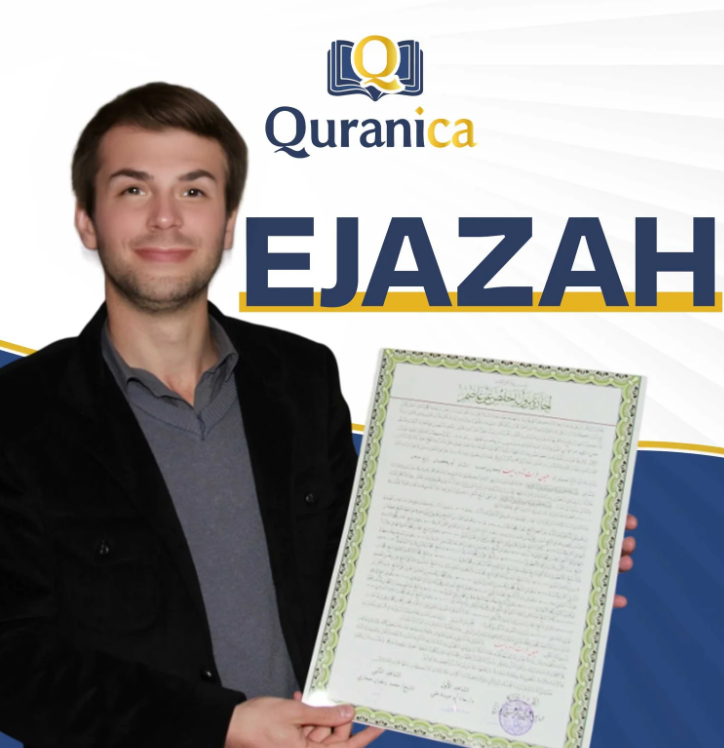
For the dedicated student, the culmination of advanced Tajweed study is to obtain an Ijazah.
This is the ultimate goal that connects your knowledge to the unbroken chain of Quranic transmission.
1. What is an Ijazah?
An Ijazah is a license or certification from a qualified teacher with a chain of transmission (sanad) that goes all the way back to the Prophet Muhammad (peace be upon him). It certifies that your recitation is perfect and you are qualified to teach others.
2. The Final Step in Your Advanced Tajweed Rules Journey
Seeking an Ijazah involves reciting the entire Quran from memory to a certified teacher. It is the highest level of study, ensuring that every rule, from the most basic to the most advanced, has been perfected.
For those who are ready to commit to this ultimate stage of mastery, a dedicated program like Quranica’s Online Ijazah Course provides the structured, one-on-one mentorship from a certified teacher needed to complete this blessed and final step in your journey.
Read Also: How to Read Quran in Arabic Easy?
Begin Your Path to Itqan with Quranica
The journey from proficiency to mastery (Itqan) in the science of Tajweed requires more than just knowledge; it demands mentorship from those who have already walked the path and perfected the art.
At Quranica, we provide a scholarly environment where dedicated students can refine their skills under the guidance of true experts.
Study with Masters of the Science
Learn one-on-one with senior native Arab instructors, many of whom are distinguished graduates of Al-Azhar University, holding the highest certifications in Tajweed and the Ten Qira’at.
An Unbroken Chain of Knowledge
Receive instruction from teachers who hold an Ijazah with a sanad (an unbroken chain of transmission) that connects directly back to the Prophet Muhammad (peace be upon him).
A Rigorous, Scholarly Approach
Our curriculum is designed for the serious student, focusing on the deep, intricate details of the science with the meticulousness it deserves.
Whether you are seeking to perfect your skills in our Advanced Tajweed Course, explore the rich diversity of recitation in the Ten Qirat Course, or embark on the ultimate journey of validation with our Online Ijazah Program, Quranica provides the expert guidance you need.
Quranica offers a complete curriculum for your entire family, with specialised courses in:
- Learn Quran with Tajweed (for all levels)
- Quran Memorization (Hifz) Programs
- Ijazah Course
- Islamic Studies
- Ten Qirat
Explore our full range of courses.
Join a Quranica course today!
Conclusion
Advanced Tajweed begins with refining articulation, focusing on complex letters like Ḍād (ض) and distinguishing permanent from conditional qualities, ensuring clarity in every sound.
The journey continues with advanced Idgham, where identical, homogeneous, and closely related letters merge smoothly. These rules demand attentiveness, as even subtle differences in makhraj or sifat affect the integrity of the recitation.
Mastery of elongations, especially the rare forms of Madd Lazim, adds beauty and rhythm to the Quran. Learning when to extend for six counts and recognizing rare cases like “آلآنَ” develops both technical skill and sensitivity to meaning.
Beyond these, students refine pauses with Sakt, subtle cues like Ar-Rawm and Ishmam, and special Hafs-only cases such as Imalah and Tashil.
The culmination of this path is obtaining an Ijazah, the highest certification connecting reciters to the Prophet’s own tradition.


0 Comments