
What is Objectives of Hajj ? Every year at these times the hearts hurt and souls wish to journey to the Sacred House . It is the desire of every Muslim to have the honor of making this visit, to seek forgiveness and to respond to the call of Ibrahim (Abraham) — peace be upon him — which Allah ordered him to convey to all the people.
Hajj is one of the greatest pillars of Islam and one of its highest ranks. This is proven by the fact that Allah (SWT) mentioned Hajj in more than one place in the Quran. Hajj is mentioned in Surah Al-Baqarah, Surah Aal ‘Imran, Surah Al-Ma’idah, Surah At-Tawbah and Surah Al-Hajj, the only surah named after one of the pillars of Islam. The manasik of Hajj have been described by Allah in the Quran in more detail than other acts of worship. This indicates the care of Allah for this pillar and its great status with Him.
Whoever reflects the Quranic verses of Hajj will find that there are a number of spiritual objectives of hajj that the Muslim – especially the pilgrim – should think about and remember. Knowing the goals, wisdoms and purposes of worship helps a lot in honoring it and having presence of heart while doing it. One of the reasons for the weakening of the impact of Hajj in some Muslims is the excessive focus on the Islamic legal rulings at the expense of reflection of its higher purposes. So let us explore some of the spiritual objectives of Hajj in the light of the Quran.
First Objective: Achieving Tawheed (Oneness of Allah) and Sincerity to Him
Allah (SWT) did not order Ibrahim (peace be upon him) to build the House but to establish His Oneness. This is clearly evident in the relationship of the command to build the House with the prohibition of shirk (associating partners with Allah), in His saying:
“إِذْ بَوَّأْنَا لِإِبْرَاهِيمَ مَكَانَ الْبَيْتِ أَنْ لَا تُشْرِكْ بِي شَيْئًا وَطَهِّرْ بَيْتِيَ لِلطَّائِفِينَ وَالْقَائِمِينَ وَالرُّكَّعِ السُّجُودِ”
“And [mention, O Muhammad], when We designated for Abraham the site of the House, [saying], “Do not associate anything with Me and purify My House for those who perform Tawaf and those who stand [in prayer] and those who bow and prostrate.” (Surah Al-Hajj, 22:26):
Tawheed has its greatest fruit in sincerity. Allah commanded His slaves to be sincere in Hajj, saying:
“وَأَتِمُّوا الْحَجَّ وَالْعُمْرَةَ لِلَّهِ“
“And complete the Hajj and ‘umrah for Allah“
Imam Al-Ghazali advised the pilgrim to be sincere and warned against showing off, saying:
His intention should be for Allah alone, without showing off and reputation-seeking. Tell him that nothing of his intention or action is accepted but what is sincere. And the worst of sins is to intend the House of Allah while intending other than Him. He must correct his intention by sincerity, and sincerity is achieved by avoiding all types of riya’ (showing off). Let him take heed to exchange not the better for the worse.” so let him beware of exchanging what is lower for what is better” .
👉 Join Now our Quran classes can help you build a deeper understanding of the Quran and turn knowledge into consistent action.
Second objective: To realize the meaning of servitude and submission to Allah
Realizing servitude and submission to Allah Considers to be the most important objectives of hajj. One amazing thing about Hajj that sets it apart from all the other pillars of Islam, is that its purpose is not immediately obvious, and that’s the point.
The wisdom of other worship acts is clear.
By giving up desires and even lawful pleasures, fasting teaches self-discipline and God-consciousness. Zakat purifies wealth and helps the needy, and in this way strengthens the bonds of the Muslim community.
Hajj is different when a pilgrim wears ihram, performs tawaf, sa‘i between Safa and Marwah, standing at Arafah, and so on. he does not do so because he fully knows why. He does this only because Allah has ordered him to do so. No further explanation needed, and there is lies the real objective of Hajj.
You can discover more in our Islamic studies online course.

Third Objective: Purifying the Soul from Blameworthy Traits
During Hajj, Allah forbade indecency, sin and argument :
“فَلَا رَفَثَ وَلَا فُسُوقَ وَلَا جِدَالَ فِي الْحَجِّ”
Al-Sa‘di Said : that this prohibitions are to dignify the sanctity of Hajj, and it trains the believer to leave such traits even after the Hajj because it is forbidden at all times. It is one of humility and worship and cleansing to bring the Hajj to fruition and be rewarded with Paradise.
Fourth Objective: Preparing for the Hereafter (Akhirah)
One of the greatest objectives of Hajj is to remind all believers of the Hereafter and prepare the heart for the meeting with Allah. All of manasik of hajj carries a powerful reminder that this life is temporary and that the true destination is the Hereafter Aldar Al-Akhirah.
When a Muslim wears the ihram and takes off all luxurious clothes, it reminds him of a reality he tries to escape from and that his soul dislikes.
yet it will inevitably reach us, and we will all drink from its cup: the departure from this worldly life and the transition to the life of the grave and then the Hereafter. Allah (SWT) said:
“كُلُّ نَفْسٍ ذَائِقَةُ الْمَوْتِ ثُمَّ إِلَيْنَا تُرْجَعُونَ”
Every soul will taste death. Then to Us will you be returned.
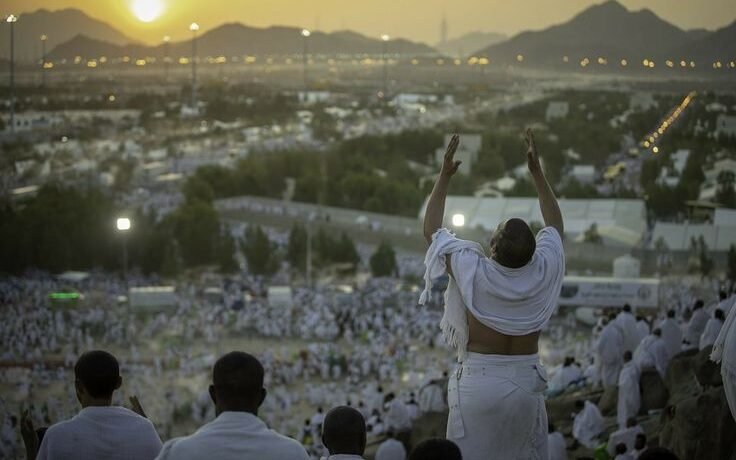
The Hajj itself emulates the journey of life. The pilgrim leaves his family and routine for a journey of hope, humility and repentance. But the special standing at Arafah is best remembered in our standing before Allah on the Last Day – powerless except for His mercy.
Fifth Objective: Honoring the Symbols of Allah(SWT)
The rituals of Allah are the outward signs of His religion, His commands and prohibitions by which He has prescribed worship for us. Reverence for these rituals is a sign of a servant’s closeness to his Lord and a clear indication of his piety. It is a major objective of Hajj; when a Muslim becomes accustomed to venerating the rituals of God, represented in the acts of Hajj such as circumambulation, standing at Arafat, stoning the Jamarat, sacrificing the sacrificial animal, and so on, this cultivates within him reverence for God’s commands and piety at all times.
“ذَٰلِكَ وَمَن يُعَظِّمْ شَعَائِرَ اللَّهِ فَإِنَّهَا مِن تَقْوَى الْقُلُوبِ “
That [is so]. And whoever honors the symbols of Allah – indeed, it is from the piety of hearts.
Sixth Objective: Balance between Earthly and Heavenly Interests
Islam allows combining worship and lawful trade during Hajj:
There is no blame upon you if you seek bounty from your Lord. [Al-Baqarah: 198]
And also:
“that they may witness benefits for themselves and pronounce the name of Allah on known days. [Al-Hajj 28]
“Trade is permissible in Hajj as long as it does not divert from the main purpose of worship,” Al-Sa‘di said.
Seventh Objective: Connecting the Heart to the Remembrance of Allah
Allah repeatedly couples Hajj with dhikr (remembrance):
“…when you leave Arafah, remember Allah at Al-Mash’ar Al-Haram…” [Al-Baqarah: 198-200]
Ibn Al-Qayyim said: “Dhikr is the heart and soul of the Hajj.”
Eighth Objective: Establishing Equality Among People
One of the major objectives of hajj is to ensure equality of the people.
Hajj means equality: rich and poor, Arab and non-Arab, stand shoulder to shoulder wearing same clothes, seeking for mercy and forgiveness.
Allah says:
“ثُمَّ أَفِيضُوا۟ مِنْ حَيْثُ أَفَاضَ ٱلنَّاسُ وَٱسْتَغْفِرُوا۟ ٱللَّهَ ۚ إِنَّ ٱللَّهَ غَفُورٌۭ رَّحِيمٌۭ”
depart from where the people depart [Al-Baqarah: 199]
Islam destroys class distinctions and unites mankind only by taqwa.
Ninth Objective : Accuracy and Discipline
Hajj is restricted to certain times and places and restricted order of manasik, teaching Muslims discipline and order in everything they do.
“ٱلْحَجُّ أَشْهُرٌۭ مَّعْلُومَـٰتٌۭ ۚ”
“Hajj is in the well-known months. [Al-Baqarah: 197]
This teach Muslims discipline and order in everything they do.
Tenth objective: To consolidate the unity of the Ummah
One of the beautiful objectives of Hajj is bringing Muslims together from all nations, strengthening unity:
“وَٱعْتَصِمُوا۟ بِحَبْلِ ٱللَّهِ جَمِيعًۭا وَلَا تَفَرَّقُوا۟ ۚ”
“And hold fast all together by the rope of Allah, and do not be divided”
Conclusion:
Hajj is not only journey to Makkah — but it is also a spiritual journey back to Allah. A journey of repentance from negligence, sincerity from distraction, humility from pride, and hope from despair. It reminds the believer of the transient nature of this world, the peace to be found only in the remembrance of Allah, and the final destination which is the Hereafter.
Those who are not blessed with Hajj this year can still benefit from its meanings. The First 10 days of Dhul Hijjah are among the greatest days with Allah filled with opportunities for worship, repentance, dhikr, charity, fasting and drawing closer to Him. A sincere heart may reach Allah before the feet reach His Sacred House.
The objectives of Hajj and the wisdoms behind this great act of worship are far too many to be covered in one article. Every ritual of Hajj teaches us the great lessons of sincerity, submission, patience, remembrance of Allah, unity and preparation for the Hereafter.
Deep reflection on the verses of the Qur’an relating to the Hajj will reveal treasures of guidance which will bring life to the heart and strengthen faith. For further exploration of this topic, you might also be interested in reading Quranic Verses on Hajj In Arabic & English
Book Free Trial Now with expert tutors!






0 Comments